

Space-grown artificial retinas are offering new hope for curing blindness, as LambdaVision and Tango Space leverage the International Space Station (ISS) to manufacture retinas that could restore vision for people with age-related macular degeneration or retinitis pigmentosa.
For decades, scientists have struggled to create artificial retinas on Earth due to gravity-induced imperfections. Now, microgravity research on the ISS is overcoming these hurdles, potentially revolutionizing treatment for millions worldwide.
Find Original Home Decor sparking conversation at Grand Goldman Shop.

Why Space? The Microgravity Advantage
Manufacturing artificial retinas on Earth faces significant challenges: sedimentation, uneven layering, and low reproducibility. In microgravity, these issues diminish, allowing for more uniform and higher-quality production.
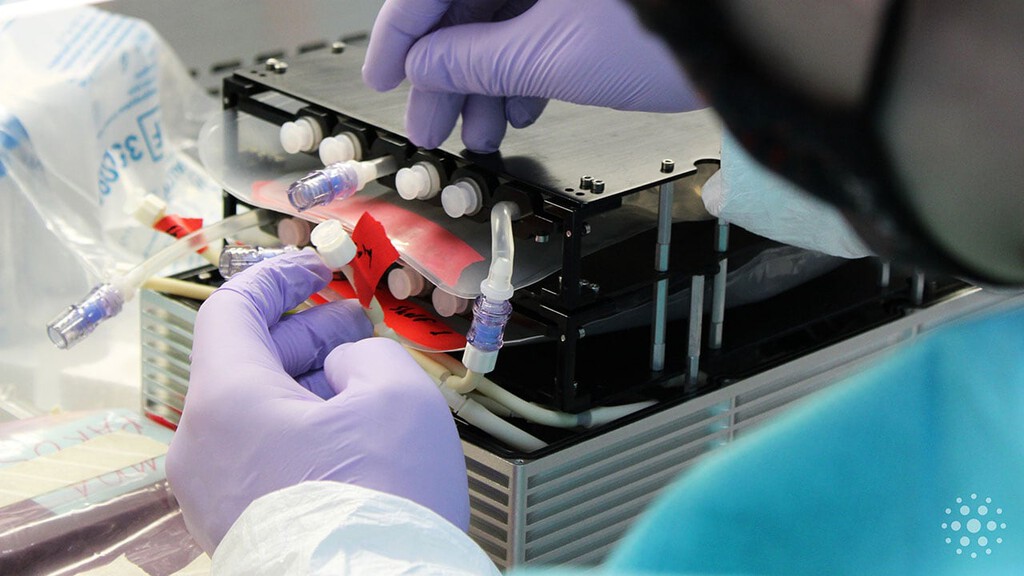
LambdaVision, in collaboration with Tango Space, has conducted 10 research missions over the past nine years on the ISS. These missions have focused on perfecting the development of artificial retinas in space, yielding improvements in uniformity, optical performance, and reproducibility.
How Artificial Retinas Work
Artificial retinas are thin films made of proteins that mimic the light-sensitive cells in the human eye. When implanted, they stimulate remaining retinal cells, potentially restoring some vision.
LambdaVision’s approach uses bacteriorhodopsin, a protein that generates electrical signals when exposed to light. Creating multilayer films with this protein is delicate; even minor imperfections can reduce efficiency.
Breakthroughs from ISS Research
The ISS experiments have led to several key advancements. The team has achieved better layer uniformity, which is critical for optimal light absorption and signal generation.
Optical performance has improved, meaning the artificial retinas can more effectively convert light into electrical impulses. Reproducibility has also increased, making large-scale production more feasible.
Additionally, the microgravity environment requires less material for each retina, reducing costs and resource use.
What This Means for Patients
For individuals with degenerative eye diseases like macular degeneration or retinitis pigmentosa, these advancements could translate into more effective and accessible treatments. The longer history behind the story is traced in Near-Death Experiences Drawn by 50 People Reveal Four Geometric Patterns.
Current treatments only slow disease progression; artificial retinas aim to restore lost vision. With improved manufacturing, the path to clinical trials and eventual commercialization becomes clearer. The background to this story is set out in Eclipse Eye Damage: How to Tell If You Burned Your Retina. A related thread runs through Science: latest articles. Earlier coverage in Japanese Scientists Create Lunar Fertilizer Using Air and Plasma shows how the argument developed.
Challenges and Future Directions
Despite progress, significant hurdles remain. The artificial retinas must undergo rigorous testing for safety and efficacy in humans. Regulatory approval will be a lengthy process. A closer look at the same subject appears in First Real Study of Menstruation in Microgravity Set for 2027. Anyone following the wider picture can start with China Tests Space Reproduction: Can Babies Be Born in Orbit. The same theme surfaces in Ötzi the Iceman: 5,300-Year-Old Mummy Holds Living Microbes, which takes a different angle.
Scalability is another concern: while space manufacturing offers quality benefits, the cost and logistics of ISS production are substantial. LambdaVision and Tango Space are exploring ways to automate and expand production. Context on how this played out before sits in Jeff Bezos: AI Will Multiply Jobs Despite Workforce Reduction. A companion piece, Space-Grown Artificial Retinas: A New Hope for Blindness, approaches the same subject from another angle.
FAQ
What are artificial retinas?
Artificial retinas are implantable devices made of light-sensitive proteins that mimic the function of retinal cells. They are designed to restore vision in people with degenerative retinal diseases.
Why manufacture artificial retinas in space?
Microgravity reduces sedimentation and allows for more uniform layering of proteins, resulting in higher-quality artificial retinas with better optical performance and reproducibility.
How close are we to a cure for blindness?
While artificial retinas show promise, they are not yet a cure. Clinical trials are needed to prove safety and efficacy. However, the advancements from space research bring us closer to effective treatments.
What diseases could artificial retinas treat?
Artificial retinas target conditions like age-related macular degeneration and retinitis pigmentosa, which involve the degeneration of photoreceptor cells in the retina.
While the road to a cure is long, the convergence of space technology and medical research offers a promising new chapter in the fight against blindness.
Browse the Shop
 Acacia frida deluxe solid wood bed frame |
Bedroom bench |
Bed chest drawers |
Lingerie dresser |
Frame base |
Mirror with jewelry storage |
30 Bathroom Vanity |
Memory foam queen mattress |
Mattresses for back pain |
Nightstand set of 2 |
Grand Goldman Shop |
Civil Lawyer
Deutschland Trikot WM 2026







