

NASA's X-59 supersonic jet has officially broken the sound barrier, reaching Mach 1.1 in a landmark test flight that could reshape the future of commercial aviation. The uncrewed aircraft, designed to fly faster than sound while producing a much quieter sonic boom, completed an 81-minute mission from Edwards Air Force Base in California on Friday.
Pilot Jim "Clue" Less took off and landed at the base, with the X-59 hitting a top speed of approximately Mach 1.1—about 1,150 km/h—at an altitude of roughly 13,200 meters. The milestone is part of NASA's Quesst mission, which aims to demonstrate that supersonic flight can be achieved without the disruptive noise that has long plagued the industry.
Find Original Home Decor sparking conversation at Grand Goldman Shop.

Why the X-59's Quiet Supersonic Technology Matters
Commercial aviation has chased the promise of faster-than-sound travel for decades, but the obstacle has never been just speed. The real challenge is the shockwaves generated by supersonic aircraft, which can be perceived on the ground as a loud sonic boom. These booms have historically led to regulations banning supersonic flights over land, effectively limiting their commercial viability.
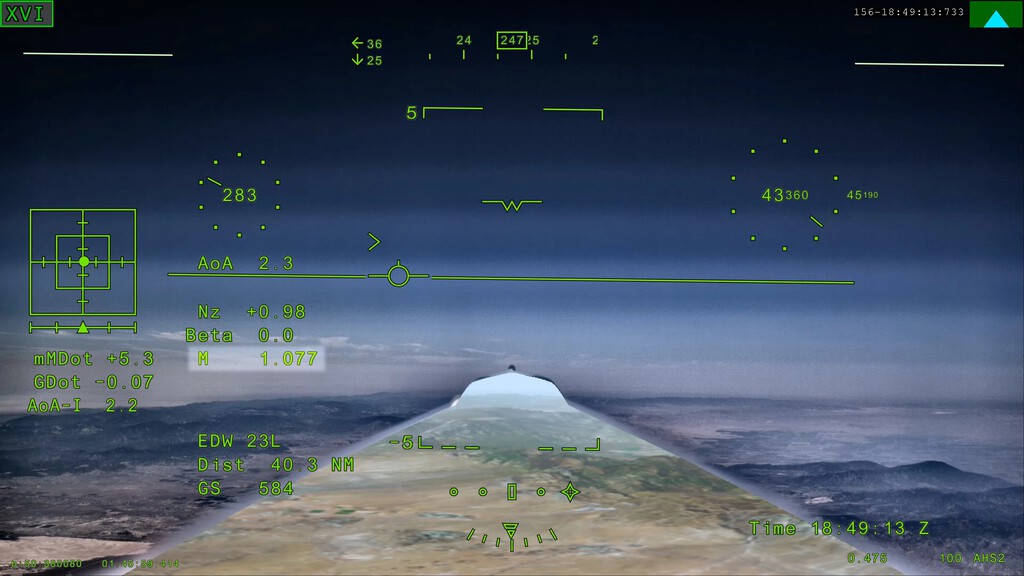
The X-59 is designed to test an alternative: reaching supersonic speeds with a much softer acoustic signature. NASA hopes this technology will reduce the sonic boom to a gentle thump, making supersonic overland flight more acceptable to communities below.
Inside the Quesst Mission: Goals and Next Steps
The Quesst mission is not yet about commercial routes. Instead, it focuses on proving the technology and gathering data on how people on the ground perceive the quieter sonic boom. The recent Mach 1.1 flight is a critical step in validating the aircraft's flight qualities and supersonic performance.
According to NASA, the next phase will involve flying the X-59 over select communities to collect feedback on the noise levels. This data will be shared with regulators, potentially informing new rules that could allow supersonic flights over land.
Key Takeaways from the X-59 Milestone
- First supersonic flight: The X-59 reached Mach 1.1, marking its first time breaking the sound barrier.
- Quiet boom technology: The aircraft is designed to produce a softer sonic boom, reducing noise impact on the ground.
- Mission duration: The test flight lasted 81 minutes, taking off and landing at Edwards Air Force Base.
- Altitude and speed: The X-59 flew at about 13,200 meters and roughly 1,150 km/h.
- Future community tests: NASA plans to fly over residential areas to gauge public reaction to the quieter boom.
How the X-59 Compares to Previous Supersonic Aircraft
The X-59 represents a significant departure from earlier supersonic transports like the Concorde, which was retired in 2003. The Concorde's sonic boom was a major reason it was restricted to overwater routes, limiting its commercial success. The X-59 aims to overcome this limitation with its advanced design.
| Aircraft | Top Speed | Sonic Boom | Status |
|---|---|---|---|
| NASA X-59 | Mach 1.1 (approx. 1,150 km/h) | Quiet (targeted) | Testing |
| Concorde | Mach 2.04 (approx. 2,180 km/h) | Loud | Retired |
While the X-59 is slower than the Concorde, its focus on noise reduction could pave the way for a new generation of supersonic aircraft that can fly over land without causing disturbances.
What This Means for the Future of Commercial Aviation
If the X-59's technology proves successful, it could lead to a new era of commercial supersonic travel. Airlines could offer faster transcontinental flights, reducing travel times significantly. However, regulatory approval and public acceptance will be crucial. Context on how this played out before sits in NASA's X-59 Supersonic Jet Hits Mach 1.1 in Historic Test Flight.
NASA is working with the Federal Aviation Administration (FAA) and international regulators to develop noise standards for supersonic aircraft. The data from Quesst will be instrumental in shaping these rules. The background to this story is set out in Car: latest articles. A related thread runs through Russia's MC-21-310 Takes First Flight to Replace Boeing and Airbus.
Challenges Ahead
Despite the progress, several hurdles remain. The X-59 is a test aircraft, not a commercial prototype. Scaling the technology to passenger jets will require significant investment and engineering. Additionally, economic factors such as fuel efficiency and ticket pricing will determine viability. Earlier coverage in Boeing 737 MAX 7 Finally Certified by FAA After Years of Delays shows how the argument developed. A closer look at the same subject appears in Bombardier Global 8000 Sets Speed Record: What It Means.
Environmental concerns also loom large. Supersonic aircraft typically consume more fuel per passenger than subsonic jets, raising questions about emissions and sustainability. Anyone following the wider picture can start with NASA X-70 Fractal: New Experimental Aircraft Tests Unseen Maneuvers. The same theme surfaces in NASA's Exoplanet Size Gap: The Mystery No One Will Fund, which takes a different angle.
FAQ
What is the X-59?
The X-59 is a supersonic research aircraft developed by NASA to test quiet supersonic technology. It is part of the Quesst mission, which aims to reduce the sonic boom to a soft thump.
How fast did the X-59 fly?
During its latest test flight, the X-59 reached Mach 1.1, approximately 1,150 km/h, at an altitude of about 13,200 meters.
Why is quiet supersonic flight important?
Quiet supersonic flight could allow aircraft to fly over land without causing disruptive sonic booms, potentially opening up faster commercial routes that were previously banned.
When will we see supersonic commercial flights?
NASA is still in the testing phase, and regulatory approval will take time. Commercial supersonic flights are likely years away, but the X-59 is a critical step toward that future.
Browse the Shop
 Acacia frida deluxe solid wood bed frame |
Bedroom bench |
Bed chest drawers |
Lingerie dresser |
Frame base |
Mirror with jewelry storage |
30 Bathroom Vanity |
Memory foam queen mattress |
Mattresses for back pain |
Nightstand set of 2 |
Grand Goldman Shop |
Civil Lawyer
Deutschland Trikot WM 2026







