

The European Union is undergoing an energy transformation that goes beyond simply increasing renewable generation. A key part of this shift involves creating a more interconnected grid so that electricity can flow smoothly across borders. At the heart of this effort are two new submarine cables between Spain and Italy, known as Apollo Link and Iberia Link. These projects aim to connect the Iberian Peninsula with northern Italy, helping to integrate renewable energy and reduce bottlenecks.
Why Energy Interconnection Matters for Europe
The EU's energy transition has two main goals: moving to renewable sources and restructuring the grid to support cross-border electricity flows. As ENTSO-E, the European Network of Transmission System Operators for Electricity, points out, the success of this transition depends less on individual countries' generation and more on the ability to move energy efficiently between borders. The Iberian Peninsula, often called an "energy island" due to its limited interconnection capacity with the rest of Europe, is a prime example of the need for better links.
Find Original Home Decor sparking conversation at Grand Goldman Shop.

Without adequate transmission capacity, excess renewable energy can get trapped, leading to curtailment and missed economic opportunities. The new submarine cables are designed to address this by creating direct electricity highways between regions with surplus generation and those with high demand.
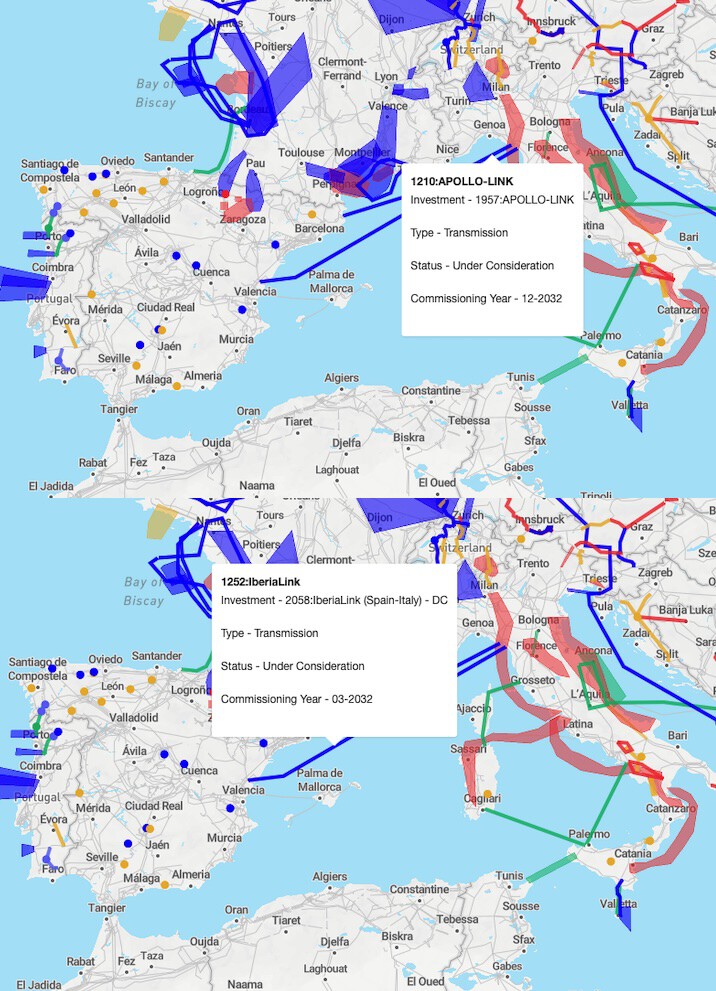
The Apollo Link and Iberia Link Projects
Apollo Link and Iberia Link are two independent high-voltage direct current (HVDC) submarine cable projects that would cross the Mediterranean Sea to connect Spain with northern Italy. While they are separate initiatives, they share a common mission: to enable a direct flow of electricity between Spain, which has significant renewable generation capacity, and Italy, which has high demand and limited domestic production.
These projects are part of ENTSO-E's recently published Ten-Year Network Development Plan (TYNDP) 2026, which includes nearly 200 transmission projects, 22 of them entirely new. The inclusion of these two cables highlights their strategic importance for the Iberian Peninsula and the broader European grid.
How the Cables Will Work
HVDC technology allows for efficient long-distance transmission with lower losses compared to alternating current (AC) systems. The cables will be laid on the seabed, connecting converter stations on each end. This setup enables precise control of power flows and enhances grid stability.
By linking Spain and Italy directly, the cables will help balance supply and demand across the region, especially as renewable penetration increases. They will also provide additional capacity for cross-border electricity trade, fostering competition and reducing prices.
Key Benefits of the Spain-Italy Interconnection
- Improved renewable integration: Allows excess solar and wind power from Spain to reach Italian consumers, reducing curtailment.
- Enhanced security of supply: Provides alternative pathways for electricity, reducing reliance on single routes.
- Economic savings: Enables cheaper electricity to flow to high-price areas, lowering costs for consumers.
- Support for EU climate goals: Facilitates the shift to a decarbonized energy system by maximizing renewable use.
- Grid resilience: Adds redundancy and flexibility to the European grid, helping manage fluctuations.
Comparison of the Two Projects
| Project | Route | Capacity | Status | Key Feature |
|---|---|---|---|---|
| Apollo Link | Spain to Italy (Mediterranean) | Not specified | Proposed (TYNDP 2026) | Independent HVDC link |
| Iberia Link | Spain to Italy (Mediterranean) | Not specified | Proposed (TYNDP 2026) | Independent HVDC link |
Note: Specific capacities and routes have not been detailed in the source article. The background to this story is set out in Ceuta to End Diesel Isolation with Submarine Power Cable Link. A related thread runs through Google's Submarine Cable Plan Makes Dominican Republic Digital Hub. Earlier coverage in Europe's Tech Sovereignty Starts With Submarine Cables, Not AI shows how the argument developed.
Challenges and What to Watch Next
While the projects offer significant benefits, they face challenges such as securing permits, financing, and coordinating between multiple countries. Submarine cables also require careful environmental assessment to minimize impact on marine ecosystems. A closer look at the same subject appears in Submarine Cables: 30 Years of Internet's Underwater Backbone. Anyone following the wider picture can start with Iran's Submarine Cable Toll Plan in Strait of Hormuz. The same theme surfaces in Greenland Becomes Key to EU Internet with Submarine Cable Plan, which takes a different angle.
Looking ahead, the inclusion in TYNDP 2026 is a crucial step, but the projects must still go through feasibility studies and regulatory approvals. Stakeholders should monitor ENTSO-E's updates and national regulatory decisions. If realized, these cables could serve as a model for other interconnections, further knitting together Europe's energy market. Context on how this played out before sits in Italy Suspends Schengen with Spain After Migrant Crisis. A companion piece, Italy Spain Border Controls Escalate EU Travel Feud, approaches the same subject from another angle.
FAQ
What are the Apollo Link and Iberia Link?
What are the Apollo Link and Iberia Link?
Apollo Link and Iberia Link are two proposed high-voltage direct current (HVDC) submarine cables that would connect Spain and Italy across the Mediterranean. They aim to enhance electricity interconnection between the Iberian Peninsula and northern Italy, supporting renewable energy integration.
Why are these cables important for Europe's energy transition?
These cables are important because they help move excess renewable energy from Spain to Italy, reducing curtailment and improving grid efficiency. They also contribute to the EU's goal of a more integrated and resilient energy market, essential for decarbonization.
What is the current status of these projects?
Both projects are included in ENTSO-E's Ten-Year Network Development Plan (TYNDP) 2026 as new transmission projects. They are in the early stages and will require further studies, approvals, and financing before construction begins.
How will these cables affect electricity prices?
By enabling more cross-border electricity trade, the cables can help balance supply and demand, potentially lowering prices in high-cost areas and reducing overall market volatility. However, the exact impact will depend on future market conditions and regulatory frameworks.
Browse the Shop
 Acacia frida deluxe solid wood bed frame |
Bedroom bench |
Bed chest drawers |
Lingerie dresser |
Frame base |
Mirror with jewelry storage |
30 Bathroom Vanity |
Memory foam queen mattress |
Mattresses for back pain |
Nightstand set of 2 |
Grand Goldman Shop |
Civil Lawyer
Deutschland Trikot WM 2026







