

Knowing how to hand-bind sheets requires drilling the signatures, sewing the sheets with cotton tapes, and applying a reinforcing spine. Afterwards, the block is joined to a cardboard cover wrapped in fabric and placed in a press to stabilize the vinyl glue.
Technical Specifications of Binding Materials
| Element | Recommended Material | Dimensions or Specs | Technical Notes |
|---|---|---|---|
| Sewing Thread | Strong twine | Medium thickness, high tensile strength | Avoid basting thread |
| Tape | Cotton | Approx. 2 cm wide | Structural support for the axis |
| Endpapers | Heavy cardstock | 700×1000 mm sheets | Connection between signatures and cover |
| Spine | Heavy paper or thin cardboard | Width equal to spine thickness | Choose according to grain direction |
| Cover | Rigid cardboard and fabric | Thickness increased by 2-3 mm | Fabric extends 100 mm per side |
| Adhesive | Vinyl glue for paper | Medium density | Controlled penetration between signatures |
| Pressing Time | Weight or manual press | Minimum 24 hours | Prevents deformation |
Materials and Structural Components
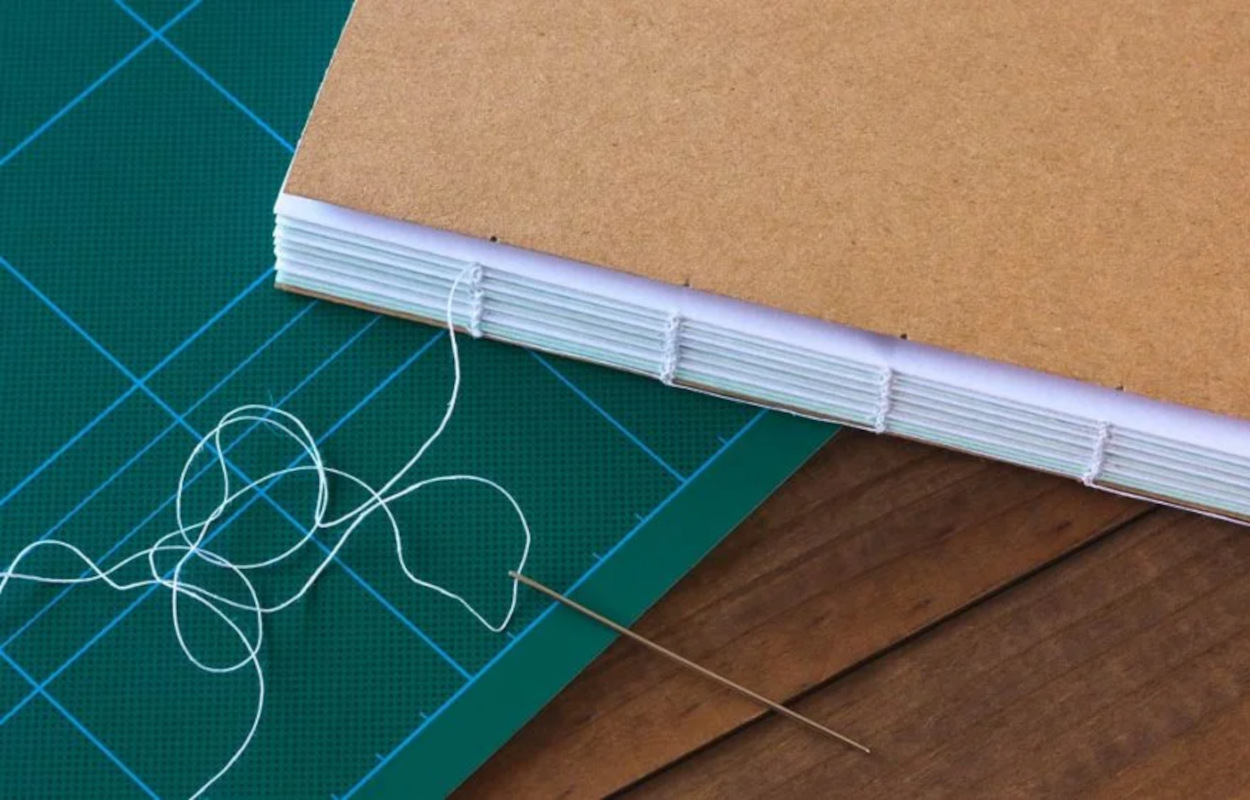
The selection of materials determines the longevity of the volume. Stable endpapers are made from cardstock available in large formats. The cardboard intended for the spines must have elasticity; to find the correct grain direction, perform a manual bend in both directions, choosing the direction that offers less resistance and avoids sharp creases. Vinyl glue for paper ensures the right flexibility for the spine without stiffening the overall structure.
Find Bleeding Edge Supplements at Scandalous Prices on iHerb.

Before you start, make sure you have a sturdy workspace. If you are setting up a dedicated crafting area, consider upgrading your desk or work surface for better comfort and organization.
How to Hand-Bind Sheets: Step-by-Step Guide
Step 1: Prepare the Signatures
Gather your sheets into groups (signatures) of 4-8 pages each. Fold each signature carefully and stack them in order. Use a bone folder to sharpen the creases.
Step 2: Drill Holes for Sewing
Mark and drill small holes along the fold of each signature. The number of holes depends on the size of your book, but typically 3-5 holes are used for a standard binding.
Step 3: Sew the Signatures
Using strong twine and cotton tapes, sew each signature together. Start from the center and work outward, ensuring the thread is tight but not too tight to avoid tearing the paper. The tapes should be placed at the holes for structural support.
Step 4: Apply the Spine
Apply a layer of vinyl glue to the spine of the sewn block. Attach a piece of heavy paper or thin cardboard (the spine piece) that matches the width of the book's spine. Press firmly to ensure adhesion.
Step 5: Attach the Endpapers
Glue the endpapers to the first and last signatures. These will connect the book block to the cover. Use heavy cardstock for durability.
Step 6: Create the Cover
Cut rigid cardboard slightly larger than your book block (add 2-3 mm on each side). Wrap the cardboard with fabric, leaving 100 mm of excess fabric on each side to fold over. Glue the fabric to the cardboard and let it dry.

Step 7: Assemble the Book
Apply glue to the endpapers and carefully attach the cover. Place the book in a press or under heavy weights for at least 24 hours to stabilize the structure and prevent warping.
For a professional finish, you can use a book press from our home improvement collection to ensure even pressure during drying. A dedicated press helps achieve perfectly flat pages and a crisp spine.
Step 8: Final Trimming (Optional)
Once dry, you can trim the edges of the pages for a clean, uniform look using a sharp knife and a straight edge.
Expert Tips for a Perfect Binding
- Grain direction matters: Always align the grain of the paper and cardboard parallel to the spine to prevent curling and cracking.
- Use quality thread: Avoid cheap thread that may break over time. High-tensile twine is best for durability.
- Don't rush the pressing: Allow the glue to cure for a full 24 hours under consistent pressure. This prevents the pages from warping and ensures a strong bond.
- Test your glue: Vinyl glue should be applied evenly and not too thick to avoid seepage between pages.
- Keep your tools sharp: Dull blades can tear paper and fabric, ruining your project. Invest in a good craft knife.
If you're looking to store your finished books or organize your crafting materials, a bookcase or shelving unit can keep everything tidy and accessible.
Frequently Asked Questions About Hand-Binding Sheets
What type of glue is best for bookbinding?
Vinyl glue (PVA) is the most common and recommended adhesive for bookbinding because it remains flexible when dry and does not become brittle over time. It also allows for controlled penetration between signatures, which is essential for a durable bind.
Can I bind a book without a press?
Yes, you can use heavy weights like stacks of books or bricks, but a dedicated book press provides even, consistent pressure, which is crucial for preventing warping and ensuring a professional finish. For best results, consider using a book press from our home improvement range.
How long does it take to hand-bind a book?
The actual sewing and assembly can take 2-4 hours, but the pressing and drying time requires at least 24 hours. Plan to complete the project over two days for the best results.
What paper is best for hand-binding?
Acid-free, medium-weight paper (around 80-120 gsm) is ideal for hand-binding because it is durable, folds well, and resists yellowing over time. Avoid thin, flimsy paper that may tear during sewing.
How do I choose the right fabric for the cover?
Choose a durable fabric like cotton, linen, or bookcloth that can withstand handling and glue. The fabric should be tightly woven to prevent glue from seeping through. For a decorative touch, you can also use patterned fabric or leather.
To display your handcrafted books, consider adding a display shelving unit to your living room or study. It's a great way to showcase your work and keep your collection organized.
Browse Grand Goldman Home Decor
Discover unique craftsmanship home decor and furniture at the Grand Goldman Shop.
Best Products We’ve Tested and Rated

Our testing team has hands-on reviews of pickleball equipment beginners paddles gear, breakfast champions morning meals fuel day, wimbledon awards player epic matches drama, 35mm rangefinder, and mat garage. Every option below was compared across price, build quality, and real-world performance, with honest pros and cons. We update these guides regularly as new models arrive, so the recommendations stay current.
Our testing team has hands-on reviews of gloves arthritic hands, gifts men, gloves on amazon, wedges beginners high handicappers, and golf pants. Every option below was compared across price, build quality, and real-world performance, with honest pros and cons. We update these guides regularly as new models arrive, so the recommendations stay current.
Browse the Shop
 Acacia frida deluxe solid wood bed frame |
Bedroom bench |
Bed chest drawers |
Lingerie dresser |
Frame base |
Mirror with jewelry storage |
30 Bathroom Vanity |
Memory foam queen mattress |
Mattresses for back pain |
Nightstand set of 2 |
Grand Goldman Shop |
Civil Lawyer
Deutschland Trikot WM 2026
Acacia frida deluxe solid wood bed frame |
Bedroom bench |
Bed chest drawers |
Lingerie dresser |
Frame base |
Mirror with jewelry storage |
30 Bathroom Vanity |
Memory foam queen mattress |
Mattresses for back pain |
Nightstand set of 2 |
Grand Goldman Shop |
Civil Lawyer
Deutschland Trikot WM 2026










