

Installing interior doors requires millimeter precision and a thorough understanding of structural components to ensure proper insulation and smooth operation. This guide breaks down the operational phases, from verifying rough opening tolerances to installing hardware, offering concrete solutions for every type of wall construction.
Technical Specifications & Installation Parameters
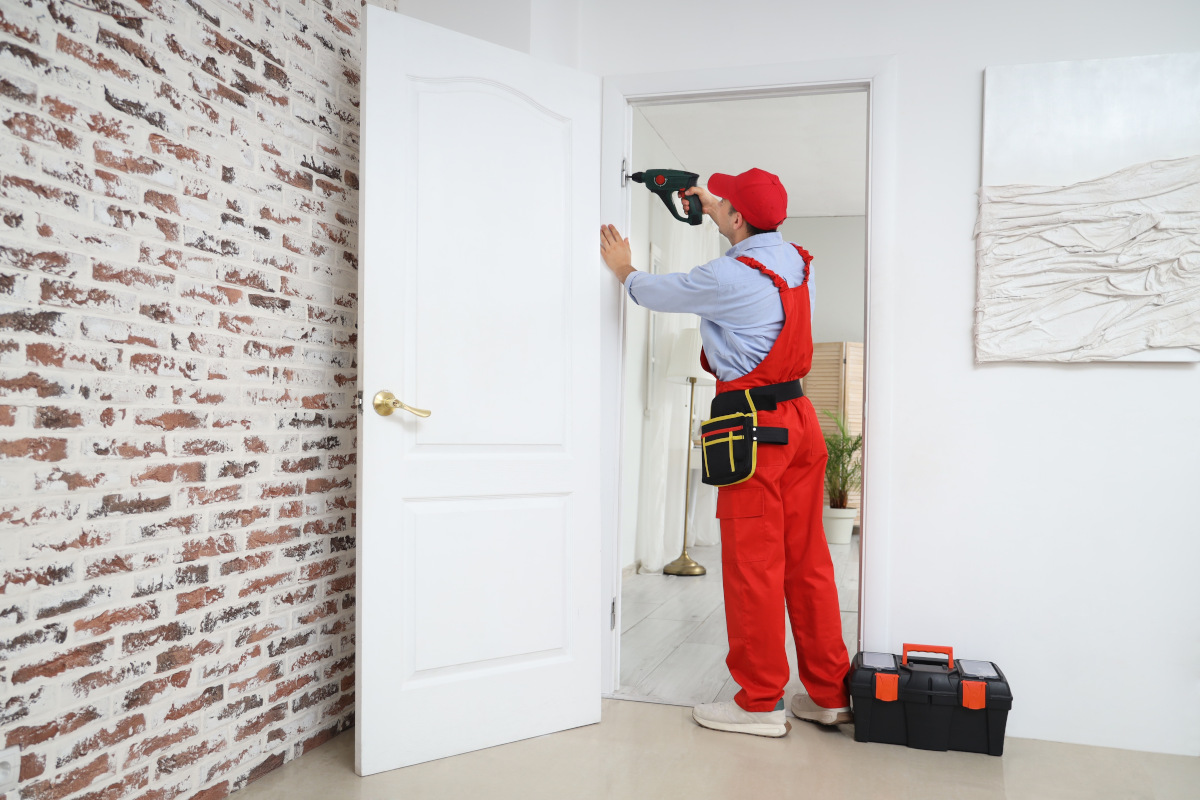
For a successful installation, you must consider standardized materials and dimensional requirements that affect the final result. Having the right home improvement tools on hand is the first step to a professional finish.
Find Bleeding Edge Supplements at Scandalous Prices on iHerb.

| Feature | Standard Specifications | Technical Notes |
|---|---|---|
| Clear Opening Sizes | 60, 70, 80, 90 x 210 cm | European standard for residential buildings |
| Frame Materials | Finger-jointed wood, MDF, Plywood | Choice based on stability and finish |
| Fastening Systems | PU foam, screws, metal anchors | Foam ensures thermal-acoustic insulation |
| Door Swing | Left or Right (Pull) | Must be defined at the time of order |
| Installation Time | 60 – 120 minutes | Varies based on the condition of the rough frame |
Handling Measurements & Non-Standard Sizes
Most buildings constructed in the last fifty years use standardized door openings. However, when working on historic buildings or non-standard openings, adaptation requires an analytical approach. If the opening is narrower than the commercial kit, you can work on the masonry (if non-load-bearing) using an angle grinder. Conversely, for excessively wide openings, use wood shims anchored to the sub-frame to compensate for the gap, which will then be aesthetically covered by the architraves.
For larger renovation projects, consider updating your lighting fixtures to match your new doors, or add a fresh look with new wall decor.
Interior Door Installation: Step-by-Step Guide
Step 1: Prepare the Rough Opening
Ensure the rough opening is plumb, level, and square. Remove any old framing or debris. The sub-frame must be clean and dry before proceeding.
Step 2: Assemble the Door Frame
Lay the frame components on the floor. Assemble the side jambs and head jamb using screws and wood glue. Ensure corners are perfectly square (90 degrees).
Step 3: Position the Frame in the Opening
Place the assembled frame into the rough opening. Use shims to adjust the frame until it is perfectly plumb and level. Check both the hinge side and the strike side.
Step 4: Secure the Frame
Drive screws through the frame and shims into the wall studs. For masonry walls, use appropriate anchors. Do not overtighten, as this can bow the frame.
Step 5: Install the Door Slab
Attach the hinges to the door slab first, then hang the door on the hinge side of the frame. Ensure there is a consistent gap (typically 2-3mm) around the top and sides of the door.

Step 6: Install Hardware
Mark and drill holes for the latch and strike plate. Install the door handle and lockset. Test the operation to ensure the latch aligns perfectly with the strike plate.
Step 7: Apply Expanding Foam
Once the door operates smoothly, apply low-expansion polyurethane foam in the gap between the frame and the wall. Do not overfill, as expanding foam can warp the frame.
Step 8: Install Architraves (Trim)
Cut the architraves to size with 45-degree miter cuts. Nail them in place, covering the gap between the frame and the wall. Fill nail holes and paint or stain as desired.
After installing your doors, complete the room's transformation with a new area rug or stylish curtains.
Expert Tip
Always use three hinges for solid core doors to prevent sagging over time. For bathrooms, ensure the gap at the bottom of the door is at least 20mm for ventilation. A well-installed door not only functions better but also improves the overall aesthetic of your home. Consider matching your new interior style with modern sofas or a functional desk for a home office.
Frequently Asked Questions (FAQ)
What is the standard size for an interior door?
The most common standard sizes for interior doors are 60 cm, 70 cm, 80 cm, and 90 cm wide by 210 cm tall. Always measure your rough opening before purchasing a door.
Can I install an interior door myself?
Yes, with the right tools and patience, a DIY enthusiast can install a pre-hung interior door. However, it requires precision in leveling and squaring the frame. Professional help is recommended for complex masonry walls or non-standard sizes.
What is the best material for an interior door frame?
Finger-jointed solid wood is excellent for stability and paintability. MDF is a cost-effective option that resists warping, while plywood offers high strength. Your choice depends on your budget and the humidity level of the room.
How long does it take to install one door?
For an experienced DIYer, installing a single pre-hung interior door typically takes between 60 to 120 minutes, not including drying time for paint or foam.
What should I do if my door opening is not standard?
If the opening is too small, you may need to enlarge it with a saw or grinder. If it is too large, you can build up the frame with wood shims and wider architraves. Custom-sized doors are also available for unique openings.
Enhance your newly renovated space with quality bathroom vanities, comfortable beds, or durable outdoor patio furniture for your garden. For outdoor projects, check out our selection of garden supplies and sheds.
Browse Grand Goldman Home Decor
Discover unique craftsmanship home decor and furniture at the Grand Goldman Shop.
Best Products We’ve Tested and Rated

Our testing team has hands-on reviews of shorts men, balls seniors, irons seniors, driver beginners, and rangefinder money. Every option below was compared across price, build quality, and real-world performance, with honest pros and cons. We update these guides regularly as new models arrive, so the recommendations stay current.
Our testing team has hands-on reviews of shoes walking, hybrid clubs, clubs beginners, clubs seniors, and shirts men. Every option below was compared across price, build quality, and real-world performance, with honest pros and cons. We update these guides regularly as new models arrive, so the recommendations stay current.
Browse the Shop
 Acacia frida deluxe solid wood bed frame |
Bedroom bench |
Bed chest drawers |
Lingerie dresser |
Frame base |
Mirror with jewelry storage |
30 Bathroom Vanity |
Memory foam queen mattress |
Mattresses for back pain |
Nightstand set of 2 |
Grand Goldman Shop |
Civil Lawyer
Deutschland Trikot WM 2026
Acacia frida deluxe solid wood bed frame |
Bedroom bench |
Bed chest drawers |
Lingerie dresser |
Frame base |
Mirror with jewelry storage |
30 Bathroom Vanity |
Memory foam queen mattress |
Mattresses for back pain |
Nightstand set of 2 |
Grand Goldman Shop |
Civil Lawyer
Deutschland Trikot WM 2026










