

The leap second is being phased out after a landmark vote in 2026, meaning atomic clocks will soon run free from Earth's rotation. On October 15, 2026, at the 28th General Conference on Weights and Measures, the Metre Convention decided to eliminate the leap second that has been patching time since 1972.
As a result, astronomical time and atomic time will drift apart until they are an hour apart—a process expected to take hundreds of years. Only then might measures be taken to realign them. For now, we can relax and let time flow, according to the Metre Convention, which argues this is best for our computer systems.
Find Original Home Decor sparking conversation at Grand Goldman Shop.

What Just Happened: The End of the Leap Second
Since 1972, 27 leap seconds have been added to atomic clock time to keep it synchronized with Earth's rotation. The goal was to ensure that astronomical time (UT1) and Coordinated Universal Time (UTC) never differed by more than 0.9 seconds.
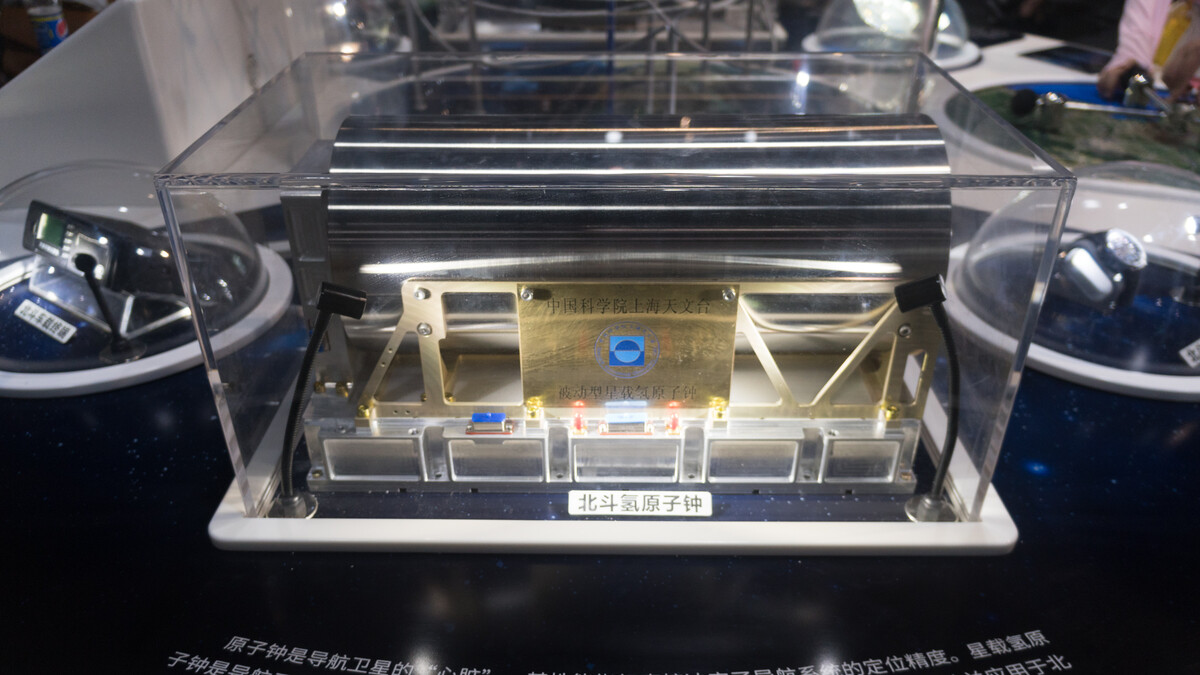
That decision has now been revoked after a meeting of the member states of the Metre Convention. Only Russia voted against the measure, so it will go forward: starting May 20, 2027, UTC will become a continuous time scale, never adjusted. This will remain the case until there is a one-hour difference.
Two Ways to Measure Time
Until 1960, the second was defined as 1/86,400 of a mean solar day. From 1960 to 1967, it was redefined based on Earth's orbital motion, and since 1967, the second has been defined by the vibrations of cesium atoms.
This atomic definition is incredibly stable, but Earth's rotation is not. The mismatch between the two is why leap seconds were introduced. Now, instead of patching, we will let the two time scales diverge.
Why Leap Seconds Exist
Earth's rotation is slowing down due to tidal friction, and it also wobbles due to geological and atmospheric effects. Atomic clocks, meanwhile, tick with extreme precision. Without leap seconds, UTC would gradually drift away from solar time.
Why the Change Matters for Technology
Leap seconds may seem harmless, but they can cause problems for computer systems that rely on precise timekeeping. Adding a second can disrupt software that assumes time always moves forward without jumps.
In 2012, a leap second caused outages on sites like Reddit, and in 2016, it affected Cloudflare's DNS service. By eliminating leap seconds, UTC becomes a continuous time scale, simplifying timekeeping for computers and networks.
- Simplified computing: No more leap second adjustments means fewer bugs and outages.
- Continuous UTC: Starting May 20, 2027, UTC will never be adjusted.
- Long-term drift: Atomic time and astronomical time will diverge by an hour over hundreds of years.
- Minimal opposition: Only Russia voted against the change.
- Future realignment: A leap hour may be considered when the difference reaches one hour.
What Happens Next?
After May 20, 2027, UTC will no longer be adjusted. Atomic time and astronomical time will gradually drift apart. It will take hundreds of years before they are an hour apart, at which point a leap hour could be introduced. The background to this story is set out in Science: latest articles.
For now, the focus is on ensuring that computer systems can handle the change. The Metre Convention believes this is the best path forward for technology. A related thread runs through Kolmanskop: The Diamond Boom Town Germany Built in the Desert. Earlier coverage in Leap Second Phase-Out: Atomic Clocks to Run Free After 2026 Vote shows how the argument developed.
Comparison of Time Scales
| Time Scale | Definition | Adjustments | Future |
|---|---|---|---|
| UTC (before 2027) | Atomic time with leap seconds | 27 leap seconds added since 1972 | Will become continuous |
| UTC (after May 20, 2027) | Continuous atomic time | No leap seconds | Will drift from UT1 |
| UT1 | Based on Earth's rotation | None | Will drift from UTC |
| TAI | International Atomic Time | None | Continuous |
FAQ
What is a leap second?
A leap second is an extra second added to UTC to keep it synchronized with Earth's rotation. Since 1972, 27 leap seconds have been added.
Why are leap seconds being eliminated?
Leap seconds can cause problems for computer systems that rely on continuous time. Eliminating them simplifies timekeeping for technology.
When will the change take effect?
The change takes effect on May 20, 2027, after which UTC will no longer be adjusted with leap seconds.
Will this affect everyday life?
No, the drift is extremely slow. It will take hundreds of years for the difference to reach one hour, so everyday life is unaffected.
Browse the Shop
 Acacia frida deluxe solid wood bed frame |
Bedroom bench |
Bed chest drawers |
Lingerie dresser |
Frame base |
Mirror with jewelry storage |
30 Bathroom Vanity |
Memory foam queen mattress |
Mattresses for back pain |
Nightstand set of 2 |
Grand Goldman Shop |
Civil Lawyer
Deutschland Trikot WM 2026







