

NASA has officially launched phase 1 of construction for its lunar base, awarding contracts worth hundreds of millions of dollars to six companies. This marks a significant step toward establishing a sustainable human presence on the Moon, even before the next crewed missions under the Artemis program.
The agency announced on Tuesday that it has selected Blue Origin, Astrobotic, Intuitive Machines, Astrolab, Lunar Outpost, and Firefly Aerospace to develop the necessary technologies for the first phase of the lunar base. The contracts cover 25 missions, including 21 lunar landings, with a focus on exploring the south pole region, testing technologies, and preparing for surface operations.
Find Original Home Decor sparking conversation at Grand Goldman Shop.

Why NASA Is Investing in Lunar Base Construction Now
Although NASA has not yet sent a new batch of astronauts to the Moon, the agency is laying the groundwork for future missions. The lunar south pole is of particular interest because of its potential water ice deposits, which could be used for life support and fuel production. By contracting commercial partners early, NASA aims to accelerate development and reduce costs through competition.
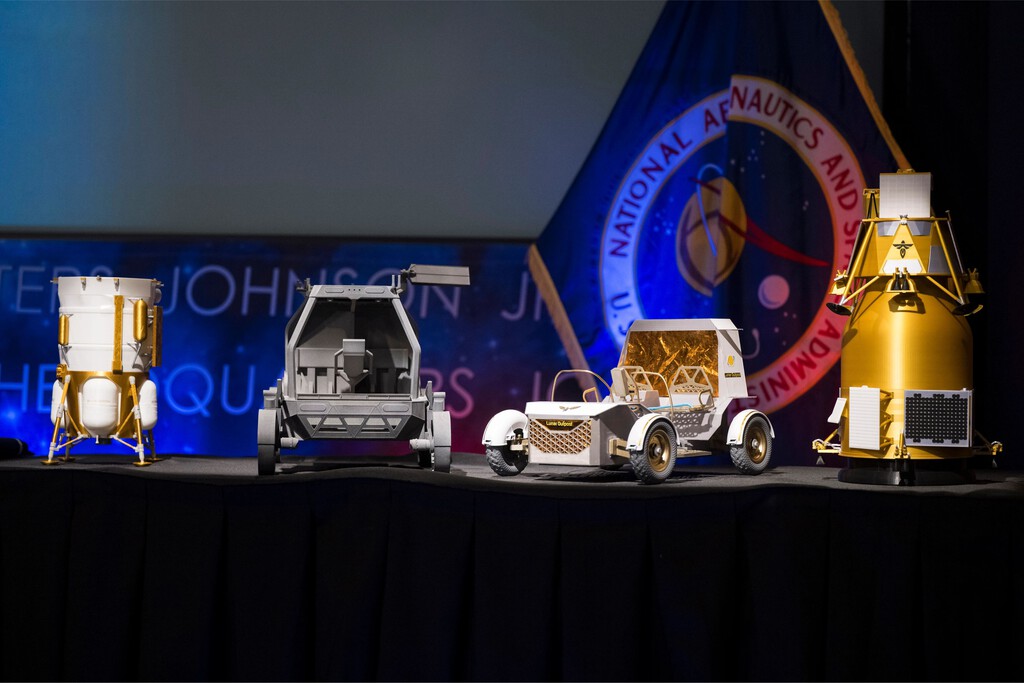
This approach mirrors the Commercial Lunar Payload Services (CLPS) program, which has already seen several landers sent to the Moon. However, the new contracts are specifically aimed at building infrastructure for a long-term base, not just delivering payloads.
The Six Companies Leading the Charge
The selected companies are a mix of established aerospace giants and startups. Blue Origin, founded by Jeff Bezos, is developing the Blue Moon lander, which will be used for both cargo and crew missions. Astrobotic, Intuitive Machines, and Firefly Aerospace have already been involved in CLPS missions, while Astrolab and Lunar Outpost are newer players focused on lunar rovers and habitats.
- Blue Origin – Leading the first mission, Moon Base 1, with its Blue Moon Mark 1 lander.
- Astrobotic – Known for its Peregrine lander and upcoming Griffin mission.
- Intuitive Machines – Successfully landed Odysseus near the south pole in 2024.
- Astrolab – Developing the FLEX rover for lunar surface operations.
- Lunar Outpost – Building small rovers and infrastructure for resource utilization.
- Firefly Aerospace – Working on the Blue Ghost lander for CLPS missions.
First Mission: Moon Base 1 by Blue Origin
The first mission, dubbed Moon Base 1, is expected to launch later this year on Blue Origin's Blue Moon Mark 1 lander. This is a precursor to the Blue Moon Mark 2, which is being developed as the human landing system for the Artemis missions. Moon Base 1 will carry payloads including the Stereo Cameras for Lunar Plume-Surface Studies (SCALPSS), which will capture high-resolution images of the lander's plume interacting with the lunar surface during descent.
This data is crucial for understanding how rocket exhaust affects the lunar regolith, which can impact future landings and base construction. The mission will also test technologies for precision landing and hazard avoidance.
What the 25 Missions Will Accomplish
The 25 missions planned under phase 1 will include 21 landings and various surface operations. They will focus on three main objectives: exploring the south pole region, testing technologies such as power generation, communications, and resource extraction, and preparing for sustained human presence. Each mission will build on the previous one, gradually establishing infrastructure and validating systems. The longer history behind the story is traced in NASA's Lunar Base Construction Begins with $100M Contracts.
According to NASA, these missions will also involve international partners and commercial payloads, fostering a growing lunar economy. The agency expects the data gathered to inform the design of the actual base, which could be assembled in the 2030s. The background to this story is set out in England Drought Crisis: Half Officially in Exceptionally Serious. A related thread runs through Google Pixel Watch 4: Officially announced with big changes. Earlier coverage in Amazfit T-Rex Ultra 2: Officially Announced, Solves and Beats shows how the argument developed.
Comparison of Key Lunar Landers
| Company | Lander | Status | Notable Feature |
|---|---|---|---|
| Blue Origin | Blue Moon Mark 1 | In development | Precursor to human lander |
| Astrobotic | Griffin | In development | Carrying VIPER rover |
| Intuitive Machines | Nova-C | Operational | First commercial lunar landing |
| Firefly Aerospace | Blue Ghost | In development | CLPS mission in 2024 |
The Road Ahead: Challenges and Opportunities
While the contracts represent a major step, significant challenges remain. Landing on the Moon is still risky, as demonstrated by recent failures. Moreover, coordinating 25 missions across six companies will require careful management. NASA hopes that competition will drive innovation and lower costs, but it also needs to ensure safety and reliability. A closer look at the same subject appears in Huawei Mate XTs: New Tri-Fold officially announced with a lower price. Anyone following the wider picture can start with Poco M8 5G and M8 Pro 5G: Officially announced with Snapdragon chips. The same theme surfaces in Realme 16 Pro+: Officially announced with 200MP main camera and 7,000mAh battery, which takes a different angle.
The lunar base is part of a broader strategy to establish a sustainable presence beyond low Earth orbit. It will serve as a testbed for technologies needed for Mars missions, such as in-situ resource utilization and advanced life support. If successful, the base could also become a hub for commercial activities, including tourism and resource extraction. Context on how this played out before sits in OnePlus 15 and Ace 6 officially launched – with mammoth batteries and 165Hz displays. A companion piece, SpaceX Launches First Commercial Nuclear Satellite Powered by Tritium, approaches the same subject from another angle.
FAQ
What is NASA's lunar base project?
NASA's lunar base project aims to establish a sustainable human presence on the Moon, starting with phase 1 focused on exploring the south pole and testing technologies through 25 robotic missions.
Which companies are involved in the first phase?
Six companies have been contracted: Blue Origin, Astrobotic, Intuitive Machines, Astrolab, Lunar Outpost, and Firefly Aerospace. They will develop landers, rovers, and other technologies.
When will the first mission launch?
The first mission, Moon Base 1 by Blue Origin, is expected to launch later this year. It will test landing technologies and collect data for future missions.
How much is NASA investing in the lunar base?
NASA has invested hundreds of millions of dollars in contracts for phase 1. The exact amount per company has not been disclosed, but the total is significant.
Browse the Shop
 Acacia frida deluxe solid wood bed frame |
Bedroom bench |
Bed chest drawers |
Lingerie dresser |
Frame base |
Mirror with jewelry storage |
30 Bathroom Vanity |
Memory foam queen mattress |
Mattresses for back pain |
Nightstand set of 2 |
Grand Goldman Shop |
Civil Lawyer
Deutschland Trikot WM 2026







