

For the first time, scientists have touched the event horizon of a black hole—not physically, but by analyzing gravitational waves emitted during a merger. This breakthrough, published in Nature, used the most powerful gravitational wave ever detected to probe the elusive boundary where gravity becomes absolute.
The detection occurred on January 14, 2025, when the signal was picked up by gravitational wave observatories. This wave was exceptionally intense, allowing researchers to attempt something they had long planned: to peer into the event horizon itself.
Find Original Home Decor sparking conversation at Grand Goldman Shop.

What Are Gravitational Waves and Event Horizons?
Gravitational waves are ripples in spacetime caused by massive accelerating objects, like colliding black holes. They were first predicted by Einstein's theory of general relativity and first directly detected in 2015.
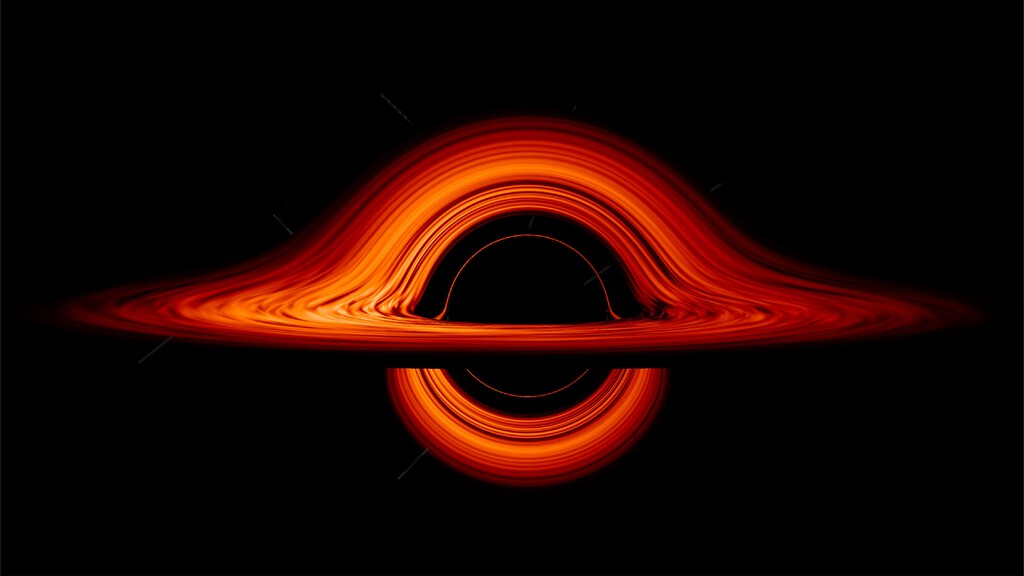
The event horizon is the boundary around a black hole beyond which nothing—not even light—can escape. It marks the point of no return. Studying it directly is impossible with traditional telescopes, but gravitational waves offer a way to "feel" it.
The Signal That Made It Possible
Since the first detection, techniques have improved dramatically, reducing background noise. This allows scientists to detect direct waves—a burst of gravitational radiation produced when two event horizons merge into one.
The January 2025 signal was particularly strong, making it the ideal candidate for this study. The team had been exploring options for years, waiting for a wave powerful enough to reveal the ringdown phase—the final moments of a merger.
- Ringdown is the phase after black holes merge, where the new black hole settles into a stable state.
- Analyzing ringdown waves provides clues about the event horizon and the nature of gravity.
- The January 2025 wave was the most intense ever recorded, enabling this analysis.
- This approach could test general relativity in extreme conditions.
- Future detectors may allow routine probing of event horizons.
How Did Scientists "Touch" the Event Horizon?
By analyzing the gravitational wave signal, researchers could isolate the ringdown—the final part of the waveform. This ringdown contains information about the newly formed black hole's event horizon.
Using advanced models, they compared the observed signal with theoretical predictions. The match was excellent, confirming that the event horizon behaves as expected from general relativity.
This is the closest we've come to "touching" a black hole: not with hands, but with mathematics and precise measurements of spacetime ripples.
Why This Matters for Astrophysics
This study opens a new window into black hole physics. By probing the event horizon, scientists can test fundamental laws of physics under extreme gravity.
It also validates the ringdown as a powerful tool. Future detections could reveal deviations from general relativity, hinting at new physics.
| Aspect | Before This Study | After This Study |
|---|---|---|
| Event horizon probing | Indirect only | Direct via ringdown |
| Signal strength required | Moderate | Very high |
| Noise reduction | Limited | Advanced |
| Tests of general relativity | Indirect | Direct in strong gravity |
What's Next for Black Hole Research?
The team plans to apply this technique to more gravitational wave signals. As detectors become more sensitive, we can expect more powerful waves to be captured. The background to this story is set out in Black Hole Merger That Broke All the Rules Had a Trick: Gravitational Lensing. A related thread runs through Einstein Was Right: Black Hole Image Confirms Relativity. Earlier coverage in Forbidden Black Holes Detected via Gravitational Waves New Study shows how the argument developed.
This could lead to a new era of gravitational wave astronomy, where event horizons are routinely probed. It may also help resolve mysteries like the nature of dark matter and the fate of information in black holes. A closer look at the same subject appears in Black Hole Mystery Solved: Three Eruptions in 35 Years. Anyone following the wider picture can start with Black Hole Star Discovery: New Cosmic Object Found. The same theme surfaces in Black Hole Splitting: New Study Reveals a Physics Loophole, which takes a different angle.
For now, this achievement stands as a testament to human curiosity and technological prowess. It brings us one step closer to understanding the most enigmatic objects in the universe. Context on how this played out before sits in Black Hole Plasma Jets Seen at 13 Times Light Speed. A companion piece, Fastest Known Star in Milky Way Discovered Orbiting Black Hole, approaches the same subject from another angle.
FAQ
What does it mean to "touch" a black hole's event horizon?
It means scientists have used gravitational wave data to directly probe the event horizon's properties, rather than just inferring them. This is done by analyzing the ringdown phase of a black hole merger.
Why was the January 2025 gravitational wave so important?
It was the most intense gravitational wave ever detected, providing a clear signal that allowed scientists to isolate and study the ringdown phase in detail.
How do gravitational waves help us study black holes?
Gravitational waves carry information about the masses and spins of merging black holes. The ringdown part of the wave reveals details about the final black hole's event horizon.
What are the implications for general relativity?
The observations matched predictions of general relativity, but future studies could reveal deviations that point to new physics beyond Einstein's theory.
Browse the Shop
 Acacia frida deluxe solid wood bed frame |
Bedroom bench |
Bed chest drawers |
Lingerie dresser |
Frame base |
Mirror with jewelry storage |
30 Bathroom Vanity |
Memory foam queen mattress |
Mattresses for back pain |
Nightstand set of 2 |
Grand Goldman Shop |
Civil Lawyer
Deutschland Trikot WM 2026







