

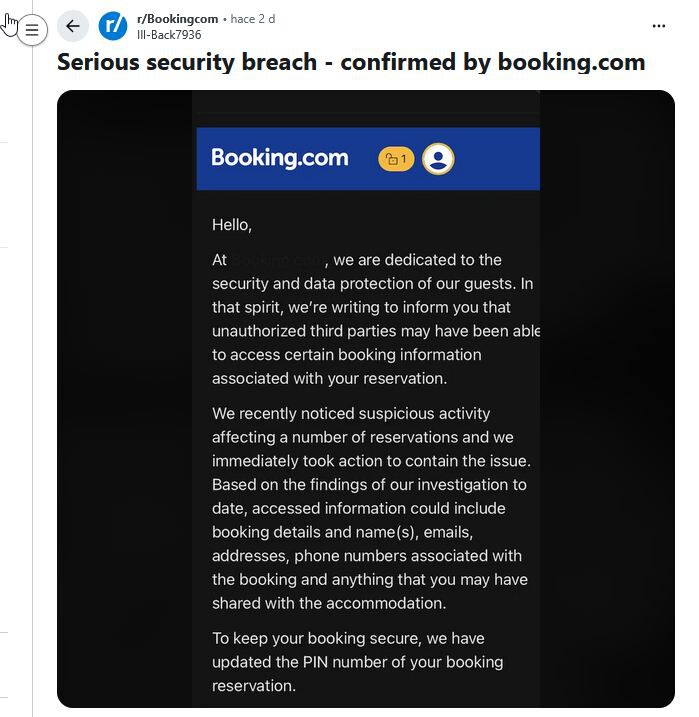
The recent Booking.com hack has exposed a new threat: follow-up phishing attacks that are here to stay. Over the weekend, several Booking users received unsettling emails warning that a cyberattacker may have accessed their reservation information. On Monday, Booking confirmed the security flaw but provided few details.
What Happened in the Booking.com Hack?
Booking.com has confirmed that a security breach occurred, but the company has not disclosed how the attackers gained access. It remains unclear whether Booking's systems were directly hacked or if the breach happened through other means. The incident affected an unknown number of users, and Booking has not specified the scope of the attack.
Find Original Home Decor sparking conversation at Grand Goldman Shop.

According to Booking, the compromised information includes names, email addresses, phone numbers, and reservation details. However, financial data such as credit card numbers were not part of the unauthorized access, and home addresses were also not exposed. To mitigate risks, Booking forced a reset of reservation PINs for all affected bookings, both active and past.
Why Follow-Up Phishing Attacks Are a Growing Concern
The Booking hack highlights a troubling trend: follow-up phishing attacks. These attacks occur after a data breach when cybercriminals use stolen information to craft convincing phishing messages. Because the attackers already have personal details like names, emails, and reservation information, they can personalize their messages and make them appear legitimate.
In the Booking case, victims received emails that appeared to come from Booking.com, warning about the breach. These emails could easily trick recipients into clicking malicious links or providing additional sensitive information. Such follow-up attacks are becoming more common and are likely to persist as long as data breaches occur.
How Follow-Up Phishing Works
Follow-up phishing typically unfolds in stages. First, attackers obtain data from a breach. Then, they use that data to send targeted phishing emails or messages. These messages often mimic official communications from the breached company, leveraging the trust victims have in that brand.
In the Booking incident, the phishing emails may have directed users to fake login pages or asked them to verify account details. Once users enter their credentials or personal information, attackers can use it for identity theft or further fraud.
What This Means for Consumers
Consumers need to be more vigilant than ever. Following a breach, it's crucial to verify the authenticity of any communication that requests personal information or directs you to click links. Even if an email appears to come from a trusted company, it could be a phishing attempt.
Booking's response—resetting reservation PINs—is a positive step, but it may not be enough to prevent follow-up attacks. Users should monitor their accounts for suspicious activity and consider changing passwords if they suspect compromise. The background to this story is set out in Asos Data Breach: Hacker Accessed Customer Data via Trusted Contact. A related thread runs through RNLI Data Breach: Supporters Warned After Cyber Attack. Earlier coverage in UK Investment Agency Data Breach Exposes 51 Officials shows how the argument developed.
Key Takeaways
- Booking.com confirmed a data breach affecting names, emails, phone numbers, and reservation details.
- Financial data and home addresses were not compromised.
- Attackers may use stolen data for follow-up phishing attacks.
- Booking reset reservation PINs for affected bookings.
- Consumers should verify communications and monitor accounts for suspicious activity.
Comparison of Data Breach Impacts
| Data Type | Compromised? | Risk Level |
|---|---|---|
| Names | Yes | Medium |
| Email addresses | Yes | High (phishing risk) |
| Phone numbers | Yes | Medium |
| Reservation details | Yes | Medium |
| Financial data | No | Low |
| Home addresses | No | Low |
What to Watch Next
As investigations continue, more details about the Booking hack may emerge. The company has not yet commented on the number of affected users or the specific attack vector. Consumers should stay informed and watch for updates from Booking and cybersecurity experts. A closer look at the same subject appears in Asos Hack Notification Sparks Data Breach Investigation. Anyone following the wider picture can start with Revolut Data Breach: $3M Ransom Demand After Crypto Hack. The same theme surfaces in Alcasec Data Breach: 2-Year Sentence Reveals Cybersecurity Gaps, which takes a different angle.
In the meantime, it's wise to enable two-factor authentication where possible and to be cautious of unsolicited messages. The rise of follow-up phishing attacks means that even after a breach is contained, the threat may linger. Context on how this played out before sits in UK State Investment Agency Data Breach Exposes Officials. A companion piece, Well Received Synonym: 21 Better Phrases for Work Emails — Explained, approaches the same subject from another angle.
FAQ
What information was compromised in the Booking.com hack?
The compromised information includes names, email addresses, phone numbers, and reservation details. Financial data and home addresses were not accessed.
What are follow-up phishing attacks?
Follow-up phishing attacks occur after a data breach when attackers use stolen information to craft convincing phishing messages. They often impersonate the breached company to trick victims into revealing more data.
How can I protect myself after the Booking.com hack?
Be cautious of unsolicited emails or messages, verify the sender's authenticity, avoid clicking suspicious links, and monitor your accounts for unusual activity. Consider changing your password if you suspect compromise.
Did Booking.com reset reservation PINs?
Yes, Booking.com forced a reset of reservation PINs for all affected bookings, both active and past, to mitigate potential risks.
Browse the Shop
 Acacia frida deluxe solid wood bed frame |
Bedroom bench |
Bed chest drawers |
Lingerie dresser |
Frame base |
Mirror with jewelry storage |
30 Bathroom Vanity |
Memory foam queen mattress |
Mattresses for back pain |
Nightstand set of 2 |
Grand Goldman Shop |
Civil Lawyer
Deutschland Trikot WM 2026







