


Apartheid was one of the most brutal and institutionalized systems of racial segregation in modern history. From 1948 to 1994, South Africa was ruled by a government that enforced strict laws separating people based on race, denying Black South Africans basic human rights while ensuring white minority rule.
This oppressive system wasn’t just about segregation—it was about economic, political, and social domination, enforced through legislation, police violence, and international isolation.
The origins of Apartheid laws date back to colonial rule and British occupation, but it was the National Party government that formally implemented apartheid in 1948. Key figures like Hendrik Verwoerd, often called the “architect of Apartheid,” designed policies that entrenched racial divisions, while leaders like Nelson Mandela and Desmond Tutu became global icons of resistance. The system sparked mass protests, including the Sharpeville Massacre (1960) and the Soweto Uprising (1976), which drew international condemnation and led to economic sanctions against South Africa.
Finally, in the early 1990s, under President F.W. de Klerk, negotiations began to dismantle apartheid, leading to Mandela’s historic election in 1994—a moment that marked the birth of modern democracy in South Africa. But apartheid’s legacy still lingers in economic inequality and racial tensions, making it essential to understand this dark chapter in history.
In this article, I’ll break down the key dates, figures, and events that defined apartheid, exploring how it shaped South Africa—and the world.
South African Apartheid: Key Events
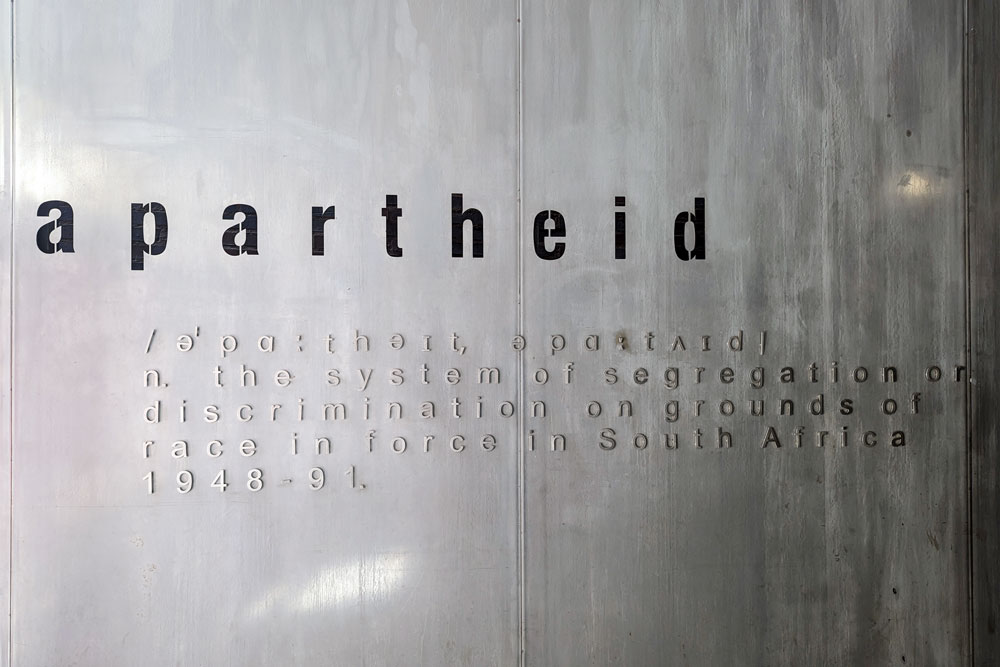
The word refers to the term “apartheid,” which means “separation” in Afrikaans , one of South Africa’s official languages. It is used to designate the system of racial segregation* and institutionalized discrimination that prevailed in South Africa for decades in the 20th century.
* Throughout the article we use the term “race” as it was applied during the years of Apartheid. But remember that there are no races and that we all belong to the same species, and what differentiates us are cultural, historical and biological aspects.
As you can imagine, it is a complex and multi-faceted topic, so in this post we only aim to provide an overview of its background, its development, key dates and talk about some of the most prominent figures, such as Nelson Mandela.
→ We recommend listening to Diana Uribe ’s “South African history” series, which you can find on various podcast platforms.
Background (very summarized)
Apartheid has its roots in South Africa's colonial history . During the 17th and 18th centuries, European settlers, mainly Boers of Dutch and later British origin , established settlements in the south of the country, from where they expanded into the rest of the country mainly to search for gold and precious minerals. The indigenous population, as well as slaves brought from Asia and Africa, suffered discrimination and oppression under colonial rule.
Beginnings of the Apartheid regime
The Apartheid system was formalized in the 1940s when the National Party, led by Dr. Daniel François Malan, came to power in the 1948 elections. This party enacted a series of discriminatory laws that legalized segregation on the basis of ethnic or cultural origin and discrimination.
Apartheid laws
During the Apartheid period in South Africa (1948-1994), numerous discriminatory laws and policies were enacted that segregated the population based on the colour of their skin and perpetuated white supremacy. To show you the absurdity of this regime, let's look at some of the most controversial laws (remember that we are in the historical context of the post-World War II period).
- Prohibited Marriage Act (1949) – This act made interracial marriages illegal, meaning that couples of different races could not legally marry.
- Population Registration Act (1950) - required all people to register based on their origin. Each individual was assigned to one of four main 'racial groups': white, black, coloured or Indian*. This classification determined every aspect of a person's life, from where they could live to what school they had to attend.
- Group Areas Act (1950) - Established specific areas for each group and prohibited people from living outside their "designated racial group area" without permission. This led to the creation of segregated neighbourhoods ( townships ) and limited the mobility of non-white people. Entire neighbourhoods such as the infamous Six District were also demolished .
- Bantustan Development Act (1951) : promoted the creation of Bantustans or "homelands", territories designated for different non-white populations, with the aim of justifying segregation.
- Bantu Education Act (1953) – This act segregated education, establishing separate schools for different racial groups. Schools for non-white people were generally under-resourced and underdeveloped, with the idea of perpetuating precariousness and poverty among “inferior races.”
- Pass Act (1952) : “Passes” were documents that regulated the mobility of non-white people. To travel or work outside their designated areas, people needed a special pass that required government approval.

* If during the racial classification it was not entirely clear to which group a person belonged, they were given the "pencil test " which consisted of inserting a pencil into their hair. If it rolled and slid, then they were classified as white, but if it stayed still it meant that their hair was hard and they were therefore classified as mixed-race or black.
These are just some of the laws and regulations that formed the legislative skeleton of Apartheid, which, as you can imagine, had a devastating impact on the lives of non-white people in the country.
We want to emphasise the absurd madness of all this, the world had just emerged from the Second World War, in which real atrocities had been committed. And not only was the teaching of “learning from history so as not to repeat it” not ignored, but even the political system of Apartheid was inspired by the Nuremberg laws of Nazi Germany.
Fight against Apartheid
Some of the key episodes and dates in the history of the struggle against the Apartheid regime were:
- Sharpeville Massacre (1960) , during which police opened fire on peaceful protesters, killing and injuring more than 180. It marked a turning point in the struggle against Apartheid.
- Soweto Massacre (1976) , in which hundreds of students lost their lives due to brutal police repression. We will tell you more about this tragic event later.
- 1990 : South African President Frederik de Klerk of Boer origin announces the legalization of the African National Congress (ANC) and the end of Apartheid.
- 1994 : The first elections open to the general population are held in South Africa, making Nelson Mandela the first black president in the country's history.
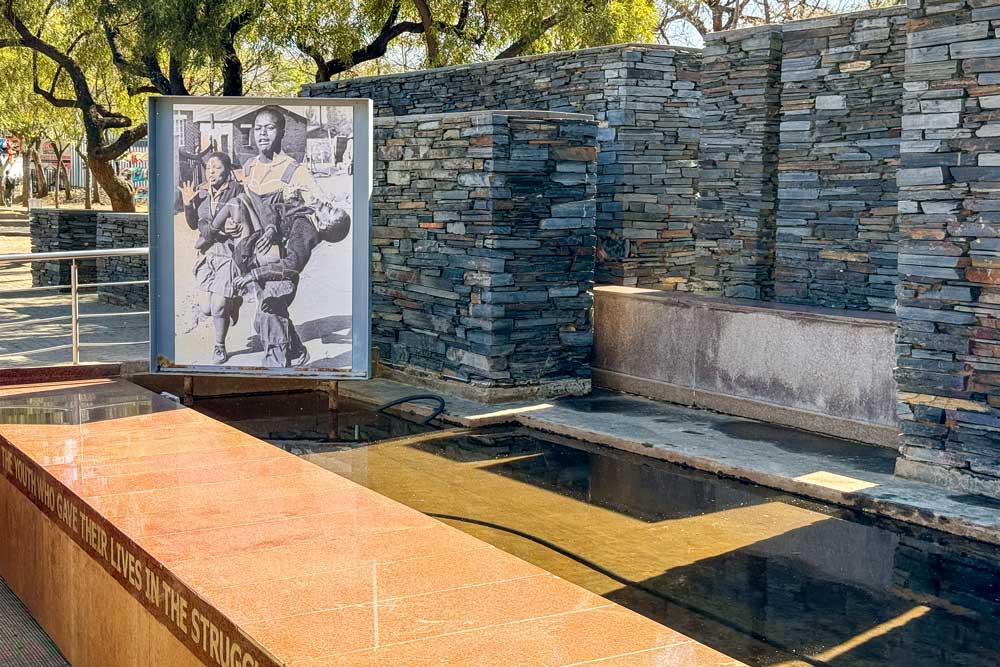
Soweto massacre and murder of Hector Pieterson
We believe it is necessary to delve deeper into the Soweto Massacre, as it is an important moment in the history of South Africa, and it is truly heartbreaking. It was a tragic event that occurred on June 16, 1976 in the township of Soweto , located southwest of Johannesburg . It was not just a dark chapter in the framework of Apartheid, but is considered the spark that lit the fuse of resistance against the system, both inside and outside the country, which is why it is of vital importance.
Let’s put this into context… Thousands of black students gathered to peacefully protest against the government’s policy of requiring teaching in Afrikaans , a language associated primarily with the white population, rather than in the students’ own native languages. The police responded in a violent and repressive manner, using guns and tear gas to disperse the protesters.
Police brutality resulted in the deaths of a significant number of students , although exact figures are disputed and vary (there are reports of hundreds of students killed). One of the young men who lost his life in the Soweto Massacre was Hector Pieterson , who has since become a symbol of the struggle against Apartheid. He was just 13 years old when he died on 16 June 1976.
The powerful photograph captured by journalist Sam Nzima immortalised the moment when Mbuyisa Makhubo, one of his companions, carried Hector’s dead body while his sister, Antoinette Sithole, ran to his side. The image became a powerful visual icon of the brutality of Apartheid and helped mobilise public opinion , both at home and abroad, against the government’s discriminatory policies and the fight for freedom and equality in South Africa.
Curiosity: Every June 16, Youth Day is celebrated in South Africa , remembering the bravery and sacrifice of the students who protested against Apartheid.
Key figures of Apartheid
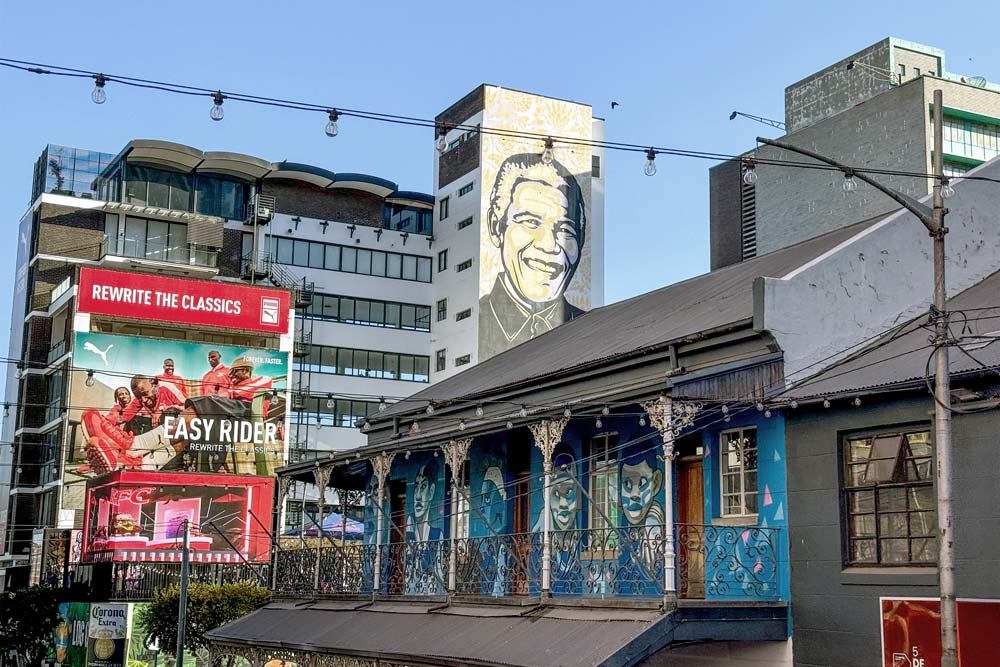
Some of the protagonists, for better or worse, of this chapter in South African history were:
- Nelson Mandela : an icon of the fight against Apartheid, imprisoned for 27 years and later the first black president of South Africa. We tell you more about him below.
- Desmond Tutu : Anglican archbishop and Nobel Peace Prize winner in 1984. He was a strong critic of apartheid, advocated justice and played a key role in the reconciliation process.
- Winnie Mandela : Not only was she Nelson Mandela's wife and voice during his years of imprisonment, she became an icon of the anti-Apartheid movement in her own right.
- Miriam Makeba : one of the many musicians who helped raise awareness against the oppressive system of Apartheid, with protest songs and activism in favour of human rights.
- Dr. Daniel François Malan : leader of the National Party, Prime Minister of South Africa in 1948 and one of the architects of Apartheid.
- Albertina Sisulu : a prominent anti-apartheid activist and leader of the African National Congress (ANC). She played a major role in organizing anti-apartheid mobilizations and campaigns.
- Steve Biko : founder of the Black Consciousness Movement and advocate of black consciousness and self-esteem. His death in police custody in 1977 sparked outrage and mobilisation against Apartheid.
- Oliver Tambo : ANC leader in exile and diplomat. He played a major role in mobilising against apartheid outside the country and in seeking international support.
- PW Botha : He was Prime Minister and then President of South Africa from 1978 to 1989. Despite growing international pressure to end Apartheid, Botha maintained a firm stance in defence of the system.
- Frederik de Klerk : South African president who played a crucial role in the elimination of apartheid and the transition to democracy.
Fall and end of Apartheid
The fall of Apartheid in South Africa was a complex and gradual process that ended with the establishment of a multiracial democracy in the country and was the result of a combination of events, among which we highlight:
– In 1986, South African President PW Botha suffers a stroke and is replaced by FW de Klerk as leader of the National Party and president of the country.
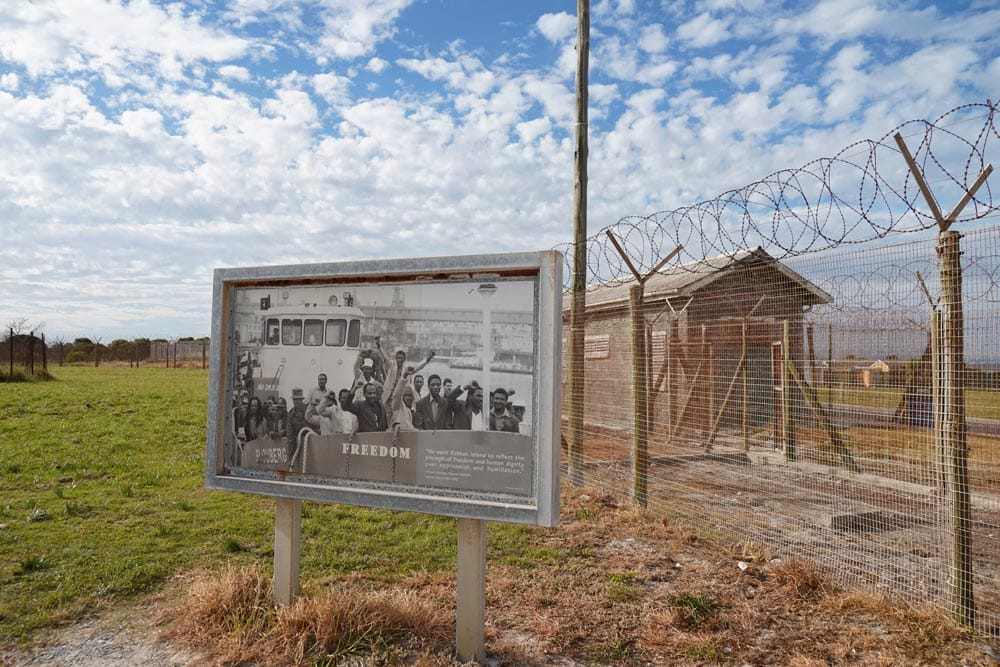
– In 1989, de Klerk announced a series of reforms that would mark the beginning of the end of Apartheid and legalised opposition groups such as the African National Congress (ANC) and the South African Communist Party (SACP). In September of the same year, he ordered the release of ANC leader Nelson Mandela, who had been imprisoned for 27 years. Mandela was released on 11 February 1990 , marking a crucial moment in the fight against Apartheid.
– During 1990 , most of the apartheid laws were repealed . In the following years, talks were held with opposition leaders and Mandela and de Klerk were jointly awarded the Nobel Peace Prize for their role in abolishing apartheid and promoting national reconciliation.
– In April 1994, the first open elections were held in South Africa and Nelson Mandela was elected as the first black president in its history, thus beginning a new era in the country.
– In 1995, the Truth and Reconciliation Commission was established , chaired by Desmond Tutu, with the idea of turning the page and providing a framework for coexistence between peoples.
Mandela, from prisoner to president
On 5 August 1962 , Nelson Mandela was arrested by South African authorities , charged with sabotage and other offences relating to his activities in the struggle against apartheid as a leading member of the African National Congress (ANC) . During the court proceedings, Mandela delivered a memorable speech in which he affirmed his commitment to equality and justice, expressing his willingness to sacrifice himself for a free and democratic South Africa.
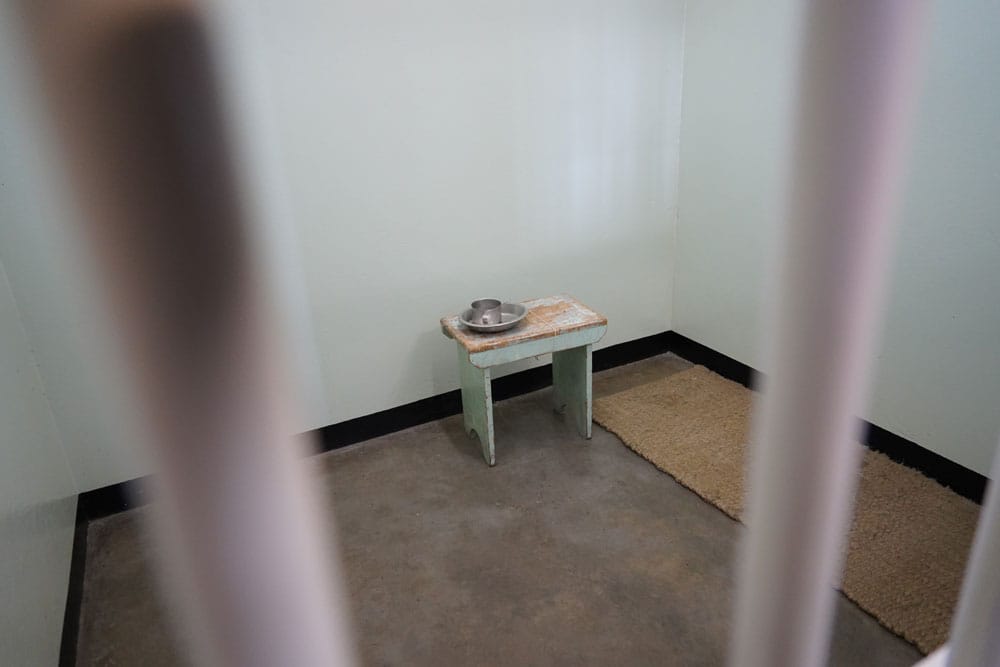
In 1964, Mandela was sentenced to life imprisonment and spent most of his 27-year imprisonment on Robben Island , a maximum-security facility. His imprisonment became an iconic symbol of the struggle against Apartheid . Mandela's release in 1990 marked the beginning of a process that eventually led to the abolition of Apartheid and the establishment of a democratic government in South Africa.
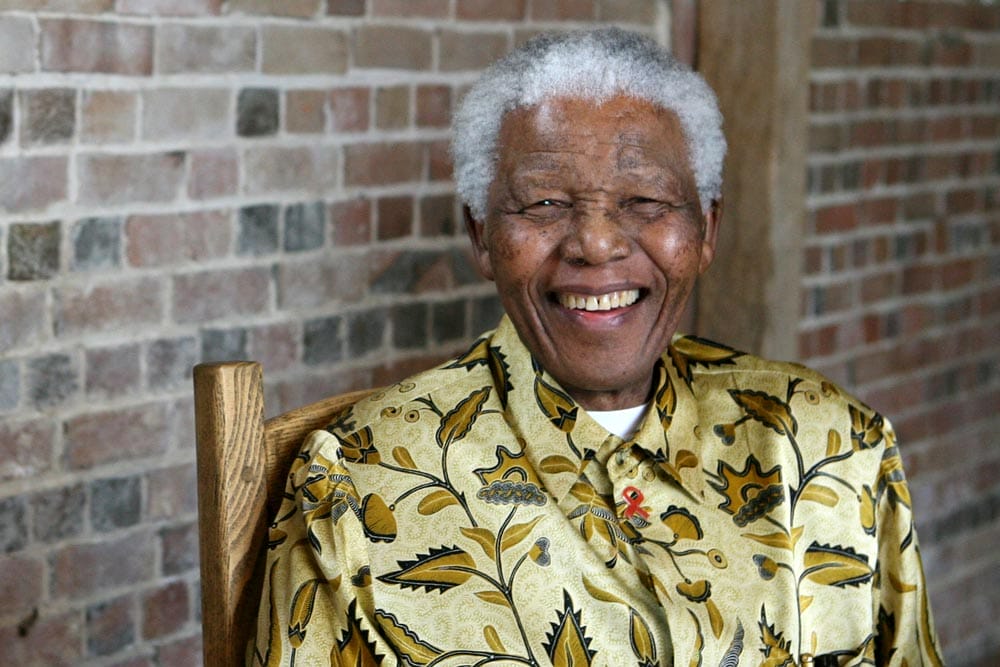
In recognition of his efforts to end the apartheid system and facilitate a peaceful transition to democracy, Nelson Mandela was awarded the Nobel Peace Prize in 1993 , sharing the honour with former South African president F. W. de Klerk. In 1994, Mandela made history by becoming South Africa's first black president to be elected in a post-apartheid democratic election.
Segregation in South Africa today
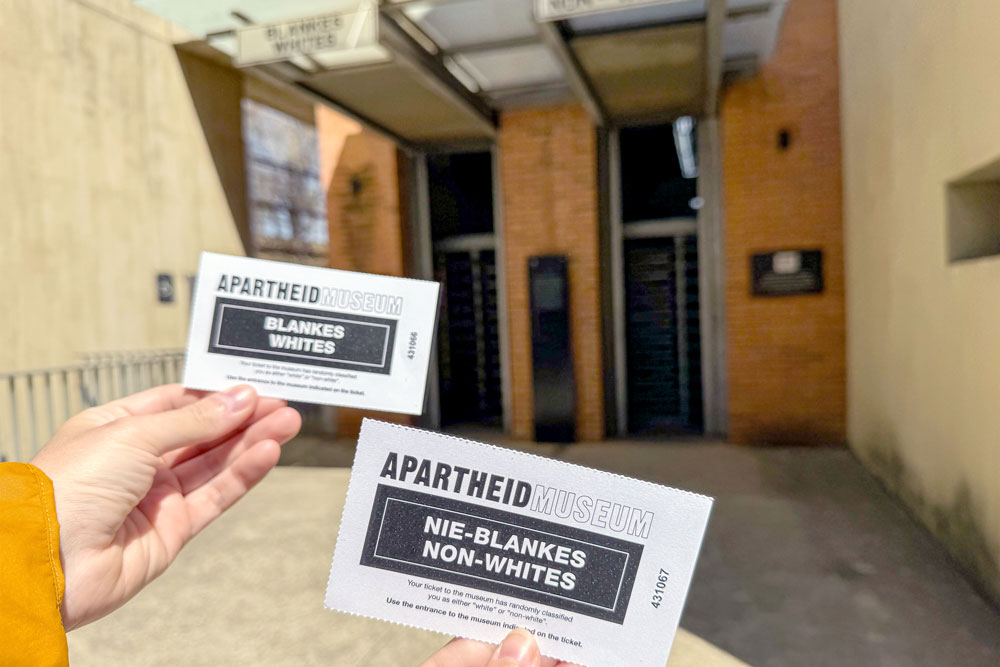
Today, South Africa is a democratic nation that promotes equality between peoples , although it is undeniable that the after-effects of Apartheid still have a significant impact on society and we ourselves were shocked by how visible and shocking segregation remains . Honestly, we were very impressed.
Although it is undeniable that South Africa has made significant progress since the end of Apartheid in 1994, based on our experience we can affirm that it still faces challenges in terms of social inequality. One of the great natural consequences of a system that discriminates against its population based on skin colour is the deep economic and social gaps , which do not help the cohesion of society and contribute to crime and insecurity on its streets.
It is clear that significant economic disparities persist between black and white communities. We were also told that although improvements have been made in the education system, the quality of education remains uneven . Disadvantaged communities often have less access to quality educational resources, which clearly perpetuates segregation.
Added to this is something that shocked us greatly: we assumed that townships no longer existed, and boy were we wrong… Residential segregation persists in many urban areas, with huge communities that reflect historical patterns of spatial segregation and living conditions that are nowhere near normal. For this reason, it is not unusual to see houses surrounded by electric fences or barbed wire, armed security services, etc… The truth is that it is a disheartening panorama.
Recommended films and books about Apartheid
These films and books offer a variety of perspectives on Apartheid and its impact on South Africa:
Movies:
«Invictus» : Directed by Clint Eastwood and starring Morgan Freeman as Nelson Mandela and Matt Damon as François Pienaar, this film tells the true story of how rugby helped unite South Africa during the transition from Apartheid to democracy.
“Sarafina!” – A musical that follows the story of a young student named Sarafina in the days leading up to the Soweto protests in 1976. The film highlights the role of young people in the fight against Apartheid.
«Cry Freedom» : Based on the life of Steve Biko, an anti-apartheid leader played by Denzel Washington, and his friendship with journalist Donald Woods, played by Kevin Kline, it offers a chilling look at the repression of the apartheid regime.
«In My Country» : tells the story of two journalists, an Afrikaner and an African-American, as they cover the Truth and Reconciliation Commission in South Africa during Apartheid.
Books:
"Long Walk to Freedom" - Nelson Mandela's autobiography - is essential reading for understanding his life, struggle and leadership in the fight against Apartheid and his subsequent presidency.
“Apartheid: Segregation in South Africa” : A short and concise summary book that tells the story of the system of racial segregation that ruled in South Africa from 1948 to 1994.
Alan Paton's "The Cry for the Beloved Land" is a classic novel that follows a black pastor and a white father as they search for their lost children in segregated South Africa.
We hope that this post has been useful to you in understanding what Apartheid was , how it was born and how it was fought. Although it is something that will never be fully understood, especially in the Western mind so many thousands of miles away, it is at least important to have a basis for understanding current South African society. Personally, we find it incredible, especially since we are talking about this racist system that was in force in the mid-90s.
Top Boutique Hotels
Best Boutique Hotel Honolulu | Best Boutique Hotel Orlando | Best Boutique Hotel Tampa | Best Boutique Hotel Medellin | Best Boutique Hotel Oregon | Best Boutique Hotel Osaka | Best Boutique Hotel Puerto Escondido | Best Boutique Hotel Seoul | Best Boutique Hotel Waikiki | Best Boutique Hotel Belize | Best Boutique Hotel Detroit | Best Boutique Hotel Virginia
Selected Boutique Hotels
Best Boutique Hotel Kauai Hawaii | Best Boutique Hotel Aruba | Best Boutique Hotel North Carolina | Best Boutique Hotel Salt Lake City | Best Boutique Hotel St Lucia | Best Boutique Hotel Ho Chi Minh | Best Boutique Hotel San Juan Puerto Rico | Best Boutique Hotel Caribbean | Best Boutique Hotel Santa Barbara | Best Boutique Hotel Nashville | Best Boutique Hotel Hawaii | Best Boutique Hotel Minneapolis | Best Boutique Hotel Cancun | Best Boutique Hotel Savannah







