

The Canon EOS R50 V is a mirrorless camera designed for content creators who prioritize video without sacrificing still photography, all at an accessible price. Canon has packed impressive capabilities into a compact body, aiming to provide a real alternative to smartphone filming for vloggers and enthusiasts.
In this review, we break down what the R50 V offers, how it performs, and whether it truly can replace your phone for everyday content creation.
Find Original Home Decor sparking conversation at Grand Goldman Shop.

What Is the Canon EOS R50 V?
The Canon EOS R50 V is a member of Canon's RF-mount mirrorless lineup, with the "V" standing for vlogging. It inherits the 24.2MP APS-C sensor from the R50 but adds video-centric features and a redesigned body for handheld shooting.
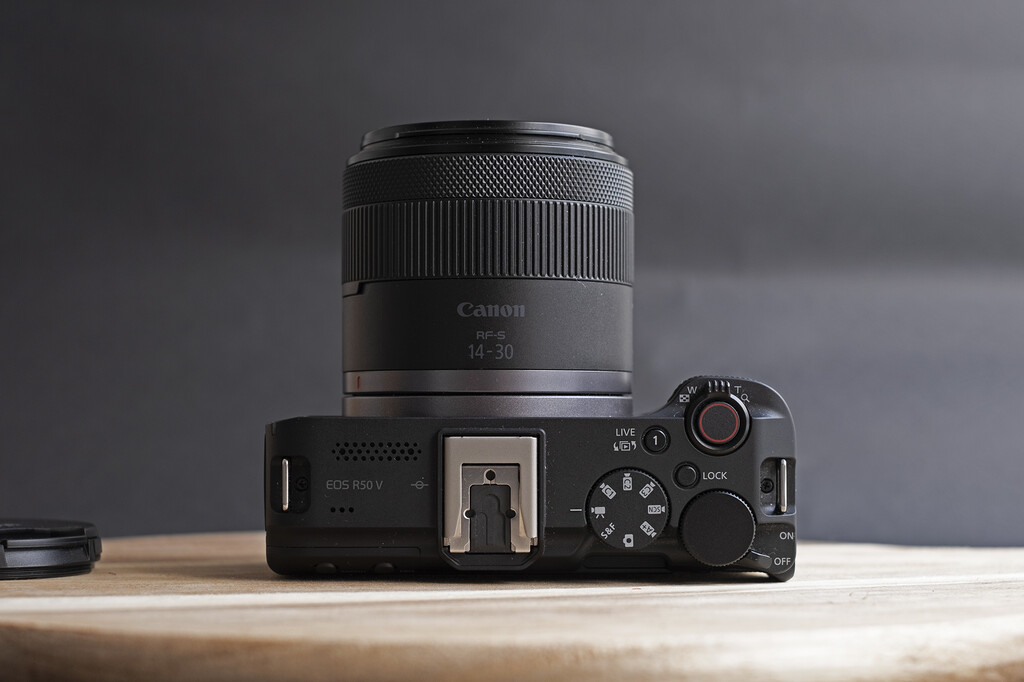
Canon positions this camera as an entry point for aspiring creators who want better image quality and creative control than a smartphone provides, without the complexity of professional cinema gear.
Key Specifications
The R50 V packs a 24.2MP APS-C CMOS sensor (22.3 x 14.9 mm) and Canon's Dual Pixel CMOS AF II system, which detects and tracks people (eyes, face, head, and body), animals, and vehicles. It offers a mechanical shutter speed range of 30-1/4000 sec and an electronic range of 30-1/8000 sec.
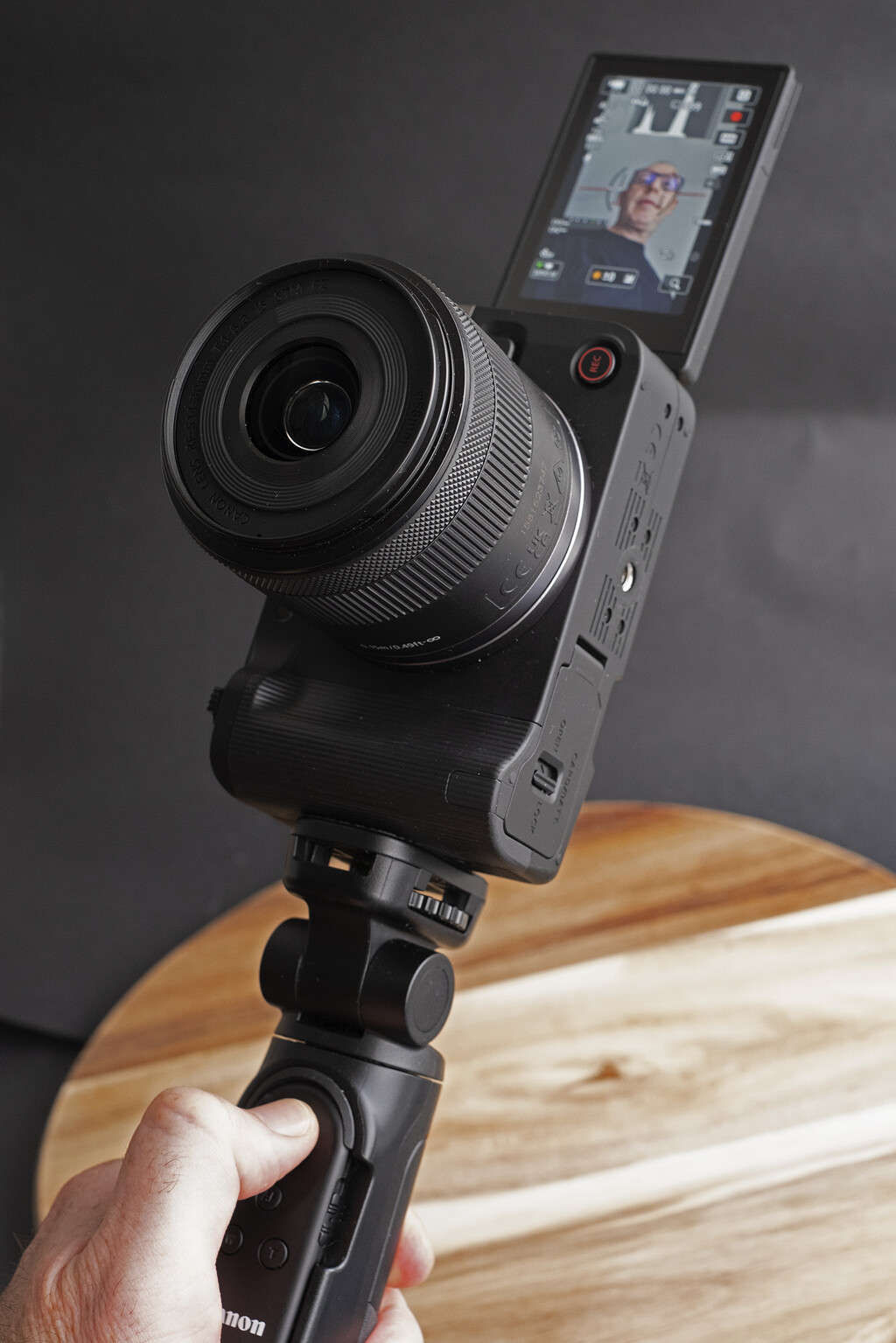
Video recording tops out at 4K 30p (oversampled from 6K without crop) and Full HD at 120p for slow motion. The 3.0-inch Clear View II touchscreen LCD provides intuitive control and monitoring.
Design and Ergonomics
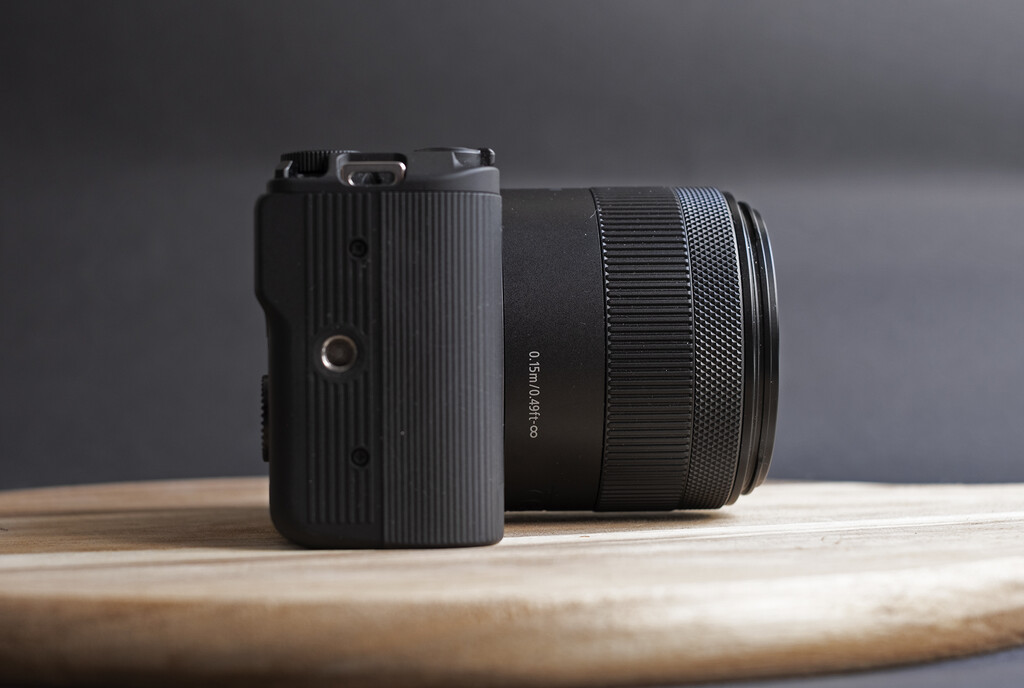
Physically, the EOS R50 V breaks away from the sober design of traditional photo cameras to prioritize social media use. Its body is compact and lightweight, built mostly from high-strength polycarbonate, making it comfortable for handheld recording sessions.
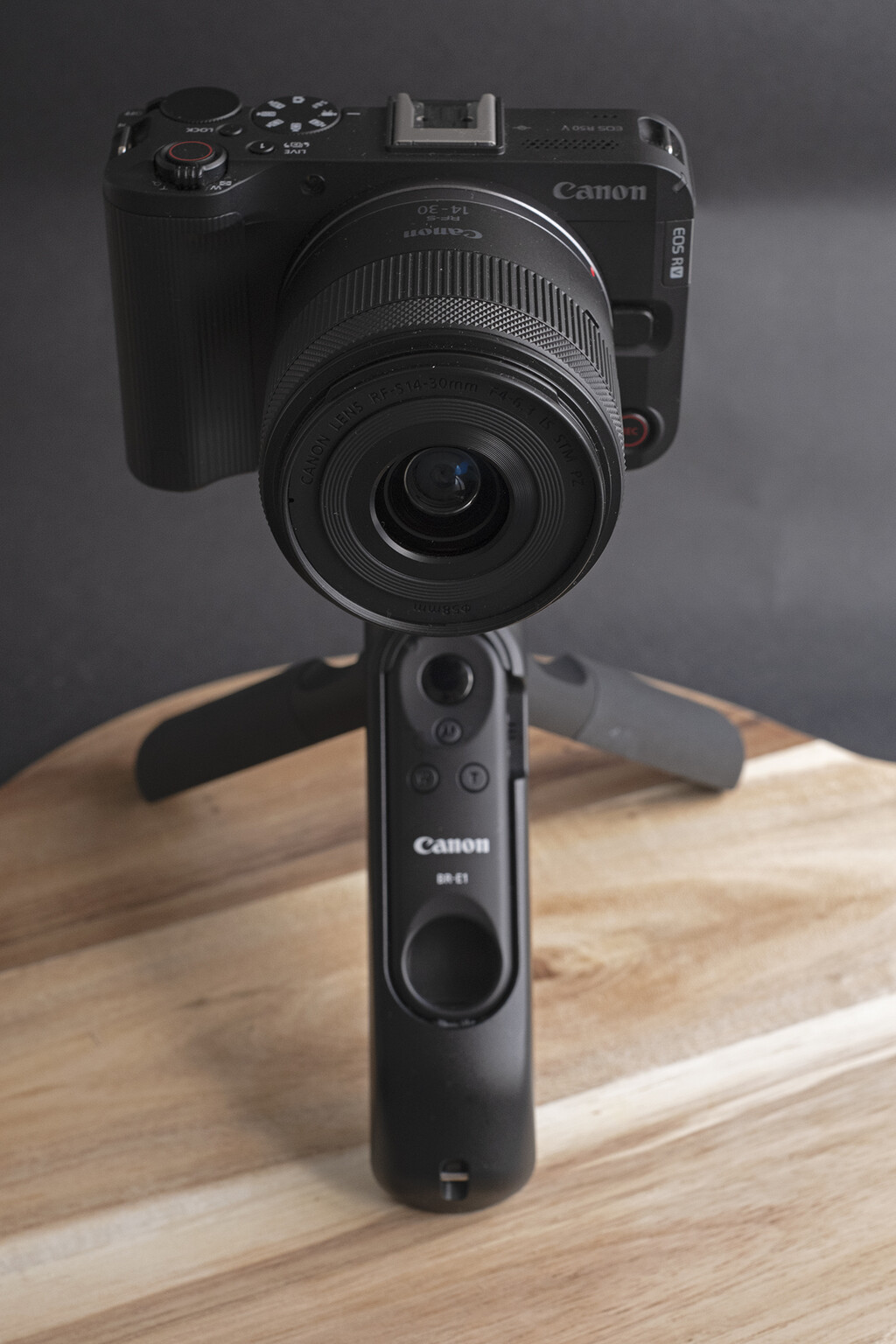
Two design decisions notably improve ergonomics for content creators accustomed to working on the go: a dedicated vertical tripod mount for easy switching between landscape and portrait orientations, and a front-facing record button for quick start/stop while vlogging. These thoughtful touches show Canon understands the workflow of modern creators.
Performance and Image Quality
With its 24.2MP APS-C sensor, the R50 V delivers excellent image quality for both photos and videos. The larger sensor compared to a smartphone allows for better low-light performance, more control over depth of field, and greater dynamic range.
Dual Pixel CMOS AF II is fast and reliable, locking onto subjects quickly and tracking them smoothly—a boon for vloggers who move around while filming. The 4K 30p footage is detailed thanks to 6K oversampling, and Full HD 120p enables smooth slow-motion sequences.
Comparison with Smartphones
While smartphones offer convenience, the R50 V provides superior image quality, interchangeable lenses, and manual controls that give creators more creative freedom. The ability to use RF lenses opens up possibilities for different looks, from wide-angle vlogging to tight portraits. Context on how this played out before sits in Canon EOS R50 V Review: A Vlogging Camera That Can Replace Your Phone.
However, the R50 V is larger and heavier than a phone, and it requires an understanding of camera settings. For those willing to learn, the payoff is significantly better production value. The background to this story is set out in 6 Best Lenses for Sony and Canon Mirrorless Cameras (Full Guide). A related thread runs through Trending: latest articles.
Who Should Buy the Canon EOS R50 V?
This camera is ideal for vloggers, YouTubers, and content creators who want to step up from smartphone footage without investing in high-end cinema equipment. It's also a great choice for travelers who need a compact, capable camera for both video and stills. Earlier coverage in Sony A7R VI Review: A 66.8MP Full-Frame Camera for Every Situation shows how the argument developed. A closer look at the same subject appears in DJI Osmo Pocket 3 Camera Drops to One of Its Best Prices for Vacations.
If you primarily shoot casual clips for social media and prefer the simplicity of a phone, the R50 V might be overkill. But for those serious about improving their content, it's a compelling option. Anyone following the wider picture can start with Best 360 Cameras to Capture Everything Around You. The same theme surfaces in Honor Robot Phone: The Wildest Camera Phone, which takes a different angle.
Pros and Cons
- Pros: Excellent image quality, fast autofocus, 4K oversampled video, compact and lightweight, creator-friendly design, affordable price.
- Cons: No in-body image stabilization, limited native RF-S lens selection, no headphone jack, smaller battery than higher-end models.
- Verdict: A strong entry-level vlogging camera that balances performance and price.
Canon EOS R50 V vs. Smartphone: Key Differences
| Feature | Canon EOS R50 V | Smartphone |
|---|---|---|
| Sensor size | APS-C (22.3 x 14.9 mm) | Typically 1/1.3" or smaller |
| Lens | Interchangeable RF mount | Fixed |
| Video resolution | 4K 30p (6K oversampled) | 4K 30p/60p (varies) |
| Autofocus | Dual Pixel CMOS AF II with subject detection | Phase detection (varies) |
| Low-light performance | Excellent due to larger sensor | Limited |
| Portability | Compact but larger than phone | Pocketable |
FAQ
Can the Canon EOS R50 V replace a smartphone for vlogging?
Yes, for many creators. The R50 V offers superior image quality, interchangeable lenses, and better low-light performance, but it's larger and requires learning camera settings. If you're willing to carry it and learn, it can absolutely replace your phone for vlogging.
Does the Canon EOS R50 V have image stabilization?
The camera does not have in-body image stabilization (IBIS). However, the kit lens (RF-S 14-30mm F4-6.3 IS STM PZ) includes optical stabilization, which helps when shooting handheld.
What is the video recording limit on the Canon EOS R50 V?
Canon specifies a recording limit of up to 30 minutes in 4K and Full HD, depending on settings and temperature. For longer recordings, you may need to restart.
Is the Canon EOS R50 V good for photography?
Absolutely. With its 24.2MP APS-C sensor and Dual Pixel AF, it performs well for stills, making it a versatile hybrid camera for both photo and video.
Browse the Shop
 Acacia frida deluxe solid wood bed frame |
Bedroom bench |
Bed chest drawers |
Lingerie dresser |
Frame base |
Mirror with jewelry storage |
30 Bathroom Vanity |
Memory foam queen mattress |
Mattresses for back pain |
Nightstand set of 2 |
Grand Goldman Shop |
Civil Lawyer
Deutschland Trikot WM 2026







