

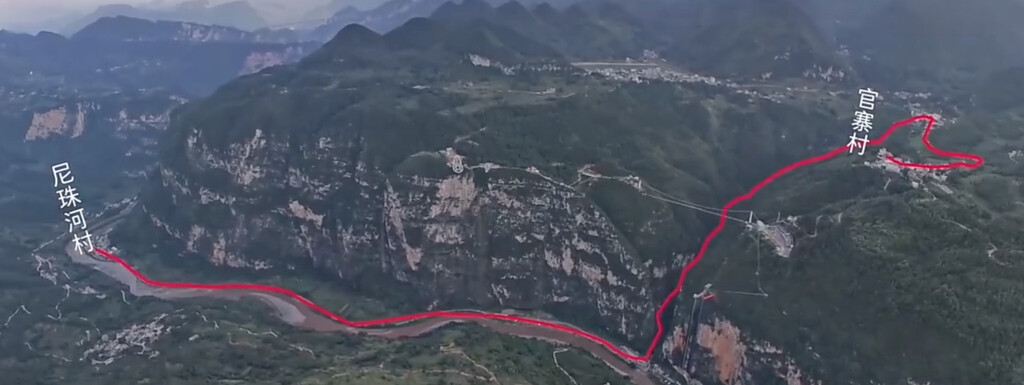
China has built a 288-meter vertical elevator—dubbed a "vertical school bus"—to help children in the remote Nizhuhe Grand Canyon reach school in just 30 minutes instead of a grueling three-hour trek. The Fúyáo elevator, which recently began operating in Yunnan province, is a striking example of infrastructure designed to solve a specific community problem rather than showcase national ambition.
When we think of China's major infrastructure, we often picture massive projects like the Three Gorges Dam or the Xiong'an New Area. But alongside these headline-grabbing works, there's another kind of engineering that's less about scale and more about impact: structures built to overcome geographical barriers for local communities.
Find Original Home Decor sparking conversation at Grand Goldman Shop.

What Is the Fúyáo Elevator?
The Fúyáo elevator is a 288-meter-tall vertical transport system in the Nizhuhe Grand Canyon, a mountainous region of Yunnan province in southwestern China. It joins another similar elevator inaugurated in 2022, and together with a cable car segment, they form a combined vertical connection.

This system has reduced what was once a school journey of more than three hours to roughly 30 minutes. Before the elevators, children from Nizhuhe village had to navigate steep, rugged terrain to get to class—a daily ordeal that could take hours depending on weather and trail conditions.
Why the Vertical School Bus Matters
The elevator isn't just a convenience; it's a lifeline for education access. In remote mountainous areas, long commutes can discourage attendance and limit opportunities. By cutting travel time drastically, the Fúyáo elevator makes school more accessible for children who otherwise might miss classes or drop out.
This project reflects a broader trend in China's infrastructure development: investing in smaller-scale, community-focused solutions that address specific geographic challenges. While not as glamorous as mega-projects, these initiatives can have a profound impact on daily life.
How the System Works
The vertical school bus combines two elevators—the new Fúyáo and the earlier one from 2022—with a cable car segment. This multi-modal system allows users to ascend and descend the canyon efficiently, bypassing treacherous paths.
The elevators are engineered to handle the steep gradient and provide safe, reliable transport for residents, including schoolchildren. The integration of cable car technology ensures seamless connectivity across different elevation points.
Key Takeaways
- The Fúyáo elevator is 288 meters tall and located in Yunnan's Nizhuhe Grand Canyon.
- It reduces a school commute from over three hours to about 30 minutes.
- The system combines two elevators and a cable car for a complete vertical connection.
- This is part of China's focus on community-centric infrastructure.
- Such projects improve access to education in remote areas.
Comparing Infrastructure Scales
To understand the significance of the Fúyáo elevator, it helps to compare it with other notable infrastructure projects. The table below contrasts the vertical school bus with some of China's larger undertakings. Context on how this played out before sits in China's 288-Meter Vertical School Bus Elevator Transforms Student Commute.
| Project | Scale/Height | Primary Purpose | Impact |
|---|---|---|---|
| Fúyáo Elevator | 288 meters | School commute | Reduces travel time from 3+ hours to 30 minutes |
| Three Gorges Dam | 181 meters (height) | Hydropower | Massive energy generation, flood control |
| Xiong'an New Area | Urban area | Economic development | New urban hub near Beijing |
While the dam and new area operate at national or regional scales, the elevator directly addresses a local mobility challenge. This diversity in infrastructure investment shows a comprehensive approach to development. The background to this story is set out in Trending: latest articles. A related thread runs through Egypt's Toshka Project: How Water Reached the Desert Too Soon.
What to Watch Next
The success of the Fúyáo elevator could inspire similar projects in other remote regions of China and beyond. As rural development continues, such targeted solutions may become more common. Earlier coverage in MSI Back to School Sale: Laptops from Budget to RTX 5090 Gaming shows how the argument developed. A closer look at the same subject appears in Mbappé Mao Zedong Meme Sparks China LaLiga Broadcast Ban.
Observers should watch for how this vertical transport model is replicated or adapted elsewhere, and whether it leads to improved educational outcomes in the region. The project also raises questions about maintenance and long-term sustainability of such specialized infrastructure. Anyone following the wider picture can start with China's Three Gorges Dam Ship Elevator: How the Yangtze Became Navigable. The same theme surfaces in China's AI Infrastructure Strategy Expands to Brazil with Alibaba Cloud, which takes a different angle.
FAQ
What is the Fúyáo elevator?
The Fúyáo elevator is a 288-meter-tall vertical transport system in China's Yunnan province. It was built to help children in the Nizhuhe Grand Canyon reach school more quickly.
How much time does the elevator save for students?
The elevator reduces a school commute that previously took more than three hours to approximately 30 minutes. This significant time savings makes education more accessible for local children.
Where is the Nizhuhe Grand Canyon located?
The Nizhuhe Grand Canyon is in Yunnan province, southwestern China. It is a mountainous area where geography has long isolated communities.
Does the elevator operate alone?
No, it works in conjunction with another elevator inaugurated in 2022 and a cable car segment. Together they form a combined vertical transportation system.
Browse the Shop
 Acacia frida deluxe solid wood bed frame |
Bedroom bench |
Bed chest drawers |
Lingerie dresser |
Frame base |
Mirror with jewelry storage |
30 Bathroom Vanity |
Memory foam queen mattress |
Mattresses for back pain |
Nightstand set of 2 |
Grand Goldman Shop |
Civil Lawyer
Deutschland Trikot WM 2026







