

Navantia's hybrid naval warfare vision is taking shape with the LASV75, a new autonomous surface vessel designed for the Royal Navy. The Spanish shipbuilder's UK subsidiary unveiled the concept at the Combined Naval Event in Farnborough, signaling a shift toward crewed warships paired with uncrewed escorts.
The LASV75 is not a small drone boat. It is a 75-meter modular vessel displacing over 1,000 tons, built from the keel up to operate without a crew. That scale places it in a different category from the small unmanned surface vehicles navies have experimented with so far.
Find Original Home Decor sparking conversation at Grand Goldman Shop.

What Is the LASV75 and Why It Matters
Navantia UK designed the LASV75 as a large autonomous surface vessel, or LASV. The company says the design was developed in Britain, reinforcing its local industrial footprint. The concept fits the Royal Navy's interest in hybrid forces: crewed warships working alongside uncrewed platforms that take on specific missions.
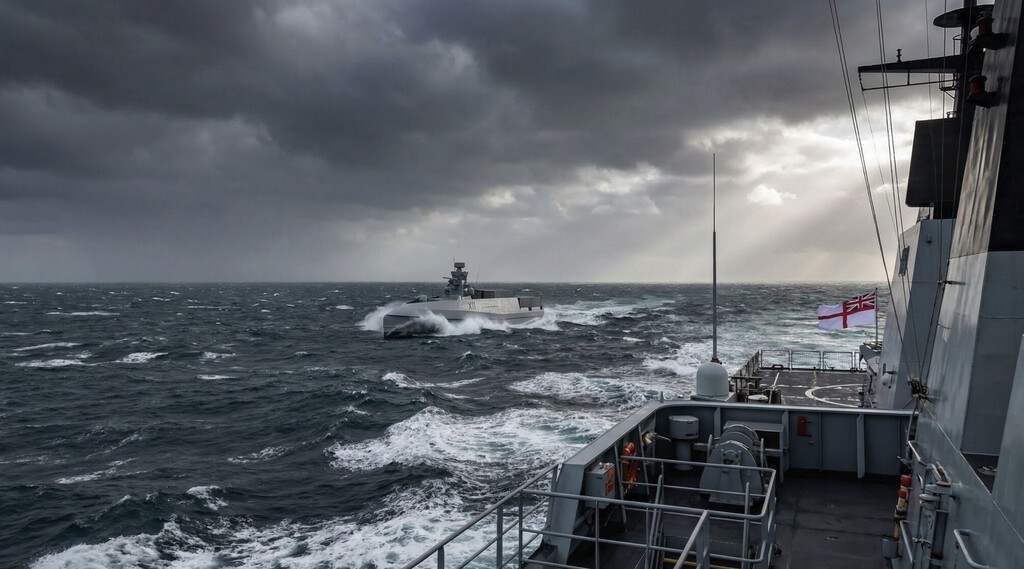
This is more than a technology demonstrator. The LASV75 is meant to be a flexible escort and mission carrier, capable of operating alongside larger warships or independently. Its modular hull allows different payloads and configurations, a key requirement for navies that want to adapt quickly to changing threats.
A Response to Evolving Naval Threats
Modern naval operations face a complex mix of threats: anti-ship missiles, swarming small boats, submarines, and cyber attacks. A hybrid fleet can distribute sensors and weapons across more platforms, making it harder for an adversary to disable a single high-value ship. The LASV75 embodies that logic.
By fielding uncrewed vessels that can scout, decoy, or engage targets, a navy can keep its crewed ships out of harm's way while maintaining presence. The LASV75's size gives it the endurance and sea-keeping to operate in open waters, not just coastal zones.
Navantia's Industrial Move in the UK
The LASV75 announcement follows Navantia UK's acquisition of assets from Harland & Wolff, the historic Belfast shipyard. That deal strengthened Navantia's shipbuilding and repair capacity beyond Spain. It also positions the company to compete for UK defense contracts, including the Royal Navy's future unmanned systems.
Navantia is already involved in the Fleet Solid Support program, which will build support ships for the Royal Navy. The LASV75 adds a new dimension to its UK offering, showing that the company can deliver both traditional ships and advanced autonomous platforms.
Why Local Design Matters
Designing the LASV75 in the UK is a strategic choice. Defense procurement increasingly favors domestic industrial participation, and Navantia UK can present the vessel as a British-designed solution. That could help it win favor with UK policymakers who want to see defense spending support local jobs and technology.
How the LASV75 Fits Hybrid Naval Warfare
Hybrid naval warfare combines crewed and uncrewed systems into a cohesive force. The LASV75 would likely operate as an escort, sensor picket, or payload carrier. It could deploy drones, conduct electronic warfare, or serve as a decoy, depending on its configuration.
The concept aligns with the Royal Navy's broader push toward autonomy. The service has been experimenting with unmanned systems for mine hunting and surveillance, but the LASV75 represents a larger, more capable platform. It could accompany carrier strike groups or operate independently in contested waters.
- Modular hull: 75-meter design with over 1,000 tons displacement allows diverse payloads.
- Autonomous operation: Built to operate without a crew, reducing risk to sailors.
- Hybrid force enabler: Designed to work alongside crewed warships as an escort or sensor node.
- UK industrial boost: Designed in Britain and backed by Navantia's acquisition of Harland & Wolff assets.
- Flexible mission set: Can be configured for surveillance, decoy, or strike missions.
Key Specs and Comparison
The LASV75 stands out for its size and autonomy. The table below compares it with typical small unmanned surface vessels and a crewed corvette, illustrating where it fits in the naval spectrum.
| Platform | Length | Displacement | Crew | Typical Role |
|---|---|---|---|---|
| LASV75 | 75 m | >1,000 t | None (autonomous) | Escort, sensor picket, payload carrier |
| Small USV | 7–11 m | <10 t | None | Coastal surveillance, mine hunting |
| Crewed corvette | 60–90 m | 1,000–2,000 t | 50–100 | Patrol, escort, combat |
The LASV75 offers the persistence of a corvette without the crew risk. Its autonomy and modularity make it a building block for a hybrid fleet, not just a one-off experiment. The longer history behind the story is traced in Navantia's Hybrid Naval Warfare Future with LASV75.
What to Watch Next
Navantia UK will need to demonstrate the LASV75's autonomy and reliability in realistic conditions. The company has not announced a first customer, but the Royal Navy's interest in hybrid systems makes it a natural candidate. Future trials could involve collaboration with crewed ships and other uncrewed platforms. The background to this story is set out in Royal Navy Increases Russian Vessel Monitoring by 25%. A related thread runs through Royal Navy Russian Vessel Monitoring Up 25% in UK Waters. Earlier coverage in Autonomous Vessel Embarks on 22,000km Antarctic Climate Mission shows how the argument developed.
The vessel also faces competition from other defense contractors developing large autonomous warships. Success will depend on proving that the LASV75 can operate safely alongside crewed vessels and deliver meaningful capability at an affordable cost. A closer look at the same subject appears in Be surprised by these 15 bathrooms designed for small spaces!. Anyone following the wider picture can start with Trending: latest articles. The same theme surfaces in China's 40,000-Ton Amphibious Ship Launches Stealth Drone, which takes a different angle.
For now, the LASV75 signals that hybrid naval warfare is moving from concept to concrete designs. Navies that embrace this approach could gain an edge in endurance, survivability, and flexibility. Context on how this played out before sits in Royal Navy Submarine and Warship Shortfalls Weaken High North Defence. A companion piece, Russian Warship Live-Fire Exercise Near UK Coast Raises, approaches the same subject from another angle.
FAQ
What is the LASV75?
The LASV75 is a 75-meter autonomous surface vessel designed by Navantia UK for hybrid naval operations. It displaces over 1,000 tons and is built to operate without a crew, serving as an escort or payload carrier alongside crewed warships.
Why is Navantia building an autonomous warship for the UK?
Navantia UK aims to position itself as a key supplier to the Royal Navy, which is exploring hybrid forces. The LASV75 is designed in Britain and follows Navantia's acquisition of Harland & Wolff assets, strengthening its local industrial presence.
How does the LASV75 fit into hybrid naval warfare?
Hybrid naval warfare combines crewed and uncrewed systems. The LASV75 can operate as an unmanned escort, sensor platform, or decoy, working alongside crewed ships to expand a fleet's capabilities and reduce risk to sailors.
What are the key features of the LASV75?
Key features include a modular 75-meter hull, over 1,000 tons displacement, autonomous operation, and the ability to carry different payloads. Its size gives it endurance for open-ocean missions, unlike smaller unmanned surface vessels.
Browse the Shop
 Acacia frida deluxe solid wood bed frame |
Bedroom bench |
Bed chest drawers |
Lingerie dresser |
Frame base |
Mirror with jewelry storage |
30 Bathroom Vanity |
Memory foam queen mattress |
Mattresses for back pain |
Nightstand set of 2 |
Grand Goldman Shop |
Civil Lawyer
Deutschland Trikot WM 2026







