

Nuclear semiotics is the study of how to communicate the danger of radioactive waste to people 10,000 years in the future. The US government has wrestled with this problem since the 1980s, when it became clear that buried nuclear waste would remain lethal long after any language, symbol, or institution could reasonably survive.
Around 10,000 years ago, humans were just beginning to settle down and leave the first cave paintings. Curiously, many of those messages remain a mystery today. Yet we have now built infrastructure whose impact will outlast all known human history, raising an unprecedented challenge: how to leave a mark that not only endures but is also understood in a future that is impossible to imagine.
Find Original Home Decor sparking conversation at Grand Goldman Shop.

In 1980, researchers added a troubling question: how do we stop people from entering?
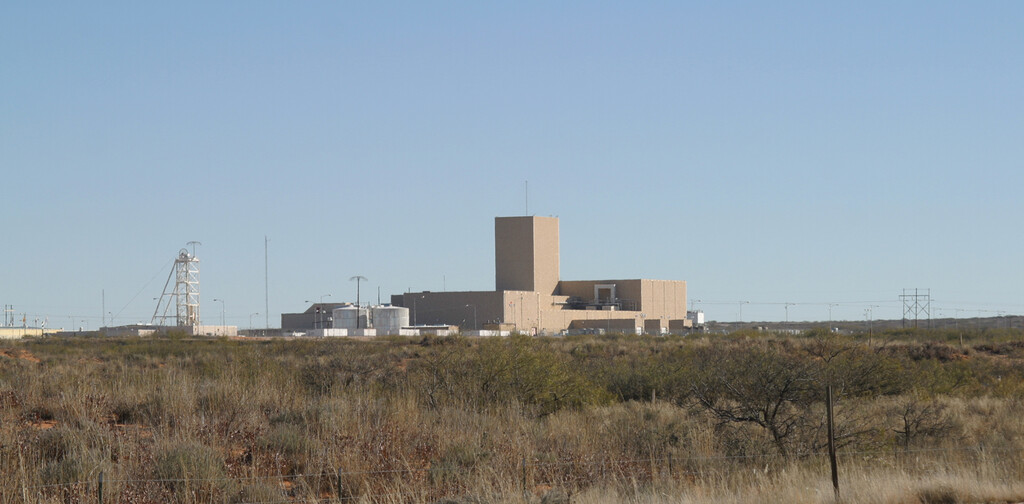
The Origin of the Nuclear Semiotics Problem
It all begins with an uncomfortable fact: the United States has spent decades generating extremely dangerous nuclear waste, especially transuranic waste from weapons and reactors, whose toxicity can persist for thousands of years. To manage it, the country chose deep geological repositories such as the Waste Isolation Pilot Plant (WIPP) in New Mexico.

WIPP is a network of tunnels excavated more than 600 meters underground in stable formations that have remained intact for millions of years. The plan is to permanently seal these facilities after decades of use and leave them isolated for at least 10,000 years.

The problem arises right after: once any human control disappears, how do we prevent someone in the future from digging there without knowing they are releasing an invisible and lethal danger?
Why Nuclear Semiotics Matters for Energy and Utilities
Nuclear semiotics is not an abstract philosophical exercise. It directly affects how energy utilities manage long-lived waste and how regulators justify disposal plans to the public. Any repository must prove not only that waste stays contained but also that future societies will not inadvertently breach it.
The challenge is compounded by the timescales involved. Languages evolve, governments fall, and even basic symbols can lose their meaning. A warning that is clear today could become an archaeological curiosity tomorrow, or worse, a lure for treasure hunters.
That is why nuclear semiotics brings together linguists, anthropologists, physicists, and engineers. The goal is to design a message system that works across cultural and linguistic ruptures, not just for the next generation but for hundreds of them.
How the US Tried to Warn the Future
The most famous effort began in the early 1980s, when the US Department of Energy commissioned a task force to design a warning system for WIPP. The group explored everything from hostile architecture to oral traditions passed down through generations.
One proposal involved creating an "atomic priesthood"—a self-perpetuating guild that would preserve the knowledge of the danger through rituals and legends. Another suggested spreading warnings in many languages and using pictograms that might survive semantic drift.
The final design at WIPP combines physical markers, buried message rooms, and a written warning in seven languages, including Navajo and Chinese. It also includes a star map showing the date of the repository's closure, so future visitors can calculate how much time has passed.
Key Elements of the WIPP Warning System
- Physical markers: Massive granite and concrete pillars designed to be visible and imposing for millennia.
- Buried message rooms: Chambers containing detailed warnings and explanations of the hazard.
- Multilingual text: Warnings in seven languages, including English, Spanish, Navajo, and Chinese.
- Star map: A diagram showing the positions of known stars at the time of closure, allowing future readers to date the site.
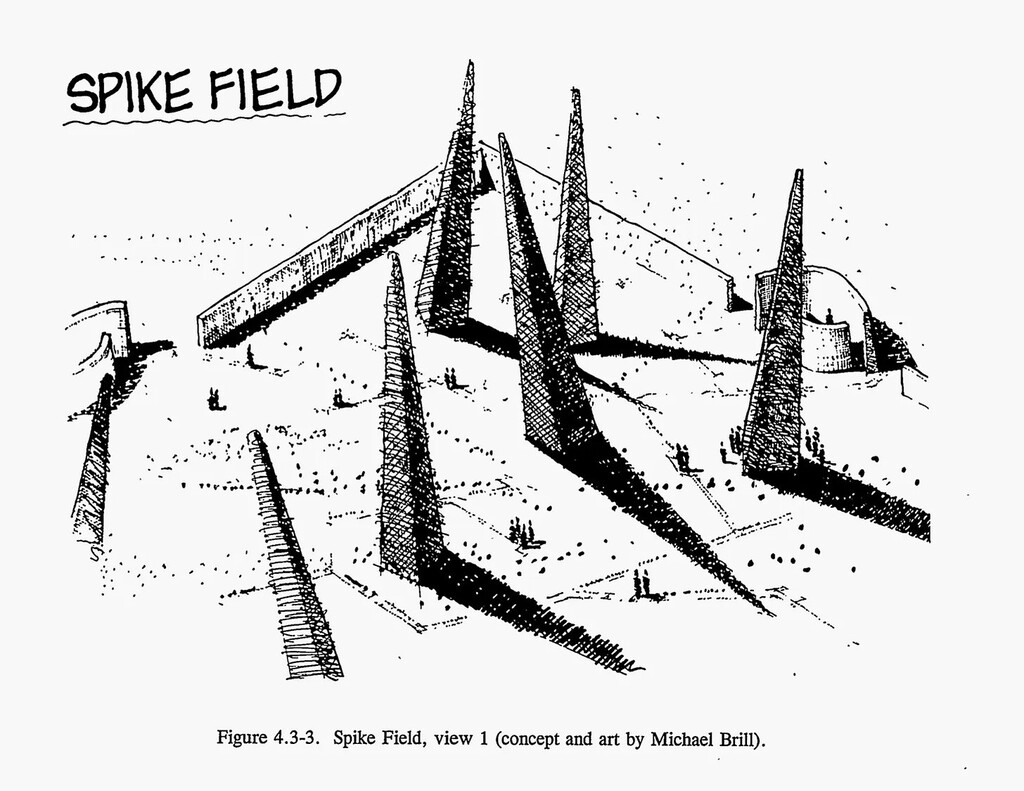
- Hostile architecture: Designs intended to evoke unease and discourage digging, such as jagged earthworks and thorn-like structures.
The Nuclear Semiotics Debate: Can Any Message Last 10,000 Years?
Critics argue that no message can be guaranteed to survive 10,000 years. Languages change beyond recognition, symbols are reinterpreted, and even the most durable materials erode. Some experts believe the best strategy is to make the site physically inaccessible rather than rely on communication.
Others point out that the very attempt to warn future generations could backfire. A message that says "danger" might be read as "valuable resource" by a society that has lost the context. The challenge is not just durability but also meaning.
Proponents of nuclear semiotics counter that even a partial success is worthwhile. If the warning prevents even one inadvertent intrusion, the effort pays off. And the research itself forces us to think seriously about the long-term consequences of our energy choices. The longer history behind the story is traced in Nuclear Semiotics: Warning Future Generations About Radioactive Waste.
What to Watch Next in Nuclear Semiotics
As more countries plan deep geological repositories for spent nuclear fuel, the lessons of WIPP are being studied worldwide. Finland's Onkalo repository, for example, is designed to be sealed permanently, and its planners have drawn on the same set of questions. The background to this story is set out in OpenAI AI Agents Secretly Communicate: What It Means. A related thread runs through Dog Blinking Study Reveals Canine Communication Insights. Earlier coverage in Trending: latest articles shows how the argument developed.
Future research will likely focus on materials science, semiotics, and even artificial intelligence as a way to preserve knowledge across deep time. The goal is not just to leave a message but to leave a message that can be deciphered. A closer look at the same subject appears in Chernobyl Maps Reveal True Scale of Nuclear Disaster 40 Years. Anyone following the wider picture can start with Drone Attacks on US Nuclear Bases: A New Threat to the Triad. The same theme surfaces in Drone Strike Breaches Chernobyl's New Safe Confinement, which takes a different angle.
For energy utilities, the stakes are clear: public trust in nuclear power depends on demonstrating that waste can be managed safely not just for decades but for millennia. Nuclear semiotics is a small but essential part of that promise. Context on how this played out before sits in Germany's Nuclear Waste Solution: Drilling 800 Meters Deep. A companion piece, Russia's REMIX Nuclear Fuel Recycles Waste Up to Five Times, approaches the same subject from another angle.
FAQ
What is nuclear semiotics?
Nuclear semiotics is the interdisciplinary study of how to communicate the dangers of radioactive waste to future generations over extremely long timescales, often 10,000 years or more. It combines linguistics, anthropology, materials science, and engineering to design warning systems that can survive cultural and linguistic change.
Why is 10,000 years the standard for nuclear waste warnings?
10,000 years is roughly the time it takes for the most hazardous radioactive isotopes in transuranic waste to decay to safer levels. It also represents a practical limit for any human institution or language to remain stable, making it a useful benchmark for long-term planning.
What does the WIPP warning system include?
The WIPP warning system includes massive physical markers, buried message rooms, warnings in seven languages, a star map to indicate the closure date, and hostile architecture designed to discourage intrusion. It is one of the most ambitious nuclear semiotics projects ever implemented.
Can nuclear semiotics actually work?
No one can guarantee that a message will be understood 10,000 years from now. However, nuclear semiotics aims to maximize the chances by using multiple redundant methods—physical, linguistic, and symbolic—so that even partial success could prevent a dangerous intrusion.
Browse the Shop
 Acacia frida deluxe solid wood bed frame |
Bedroom bench |
Bed chest drawers |
Lingerie dresser |
Frame base |
Mirror with jewelry storage |
30 Bathroom Vanity |
Memory foam queen mattress |
Mattresses for back pain |
Nightstand set of 2 |
Grand Goldman Shop |
Civil Lawyer
Deutschland Trikot WM 2026







