

China has just welcomed a new naval monster, the Sihang Yongsheng, a semi-submersible barge with a strange mission: to sink halfway before getting to work. Delivered on July 8, 2026, in Jiangmen, Guangdong province, this non-self-propelled vessel combines offshore transport and heavy lifting in a single platform. Its design allows it to submerge partially, enabling it to lift and transport massive loads that conventional crane ships cannot handle.
What Is the Sihang Yongsheng?
The Sihang Yongsheng is not a typical crane ship. Unlike vessels that rely on towering cranes to lift objects from the surface, this semi-submersible barge can flood its ballast tanks to sink to a predetermined depth. This allows floating cargo—such as other vessels, offshore platforms, or oversized modules—to be positioned over the deck and then lifted as the barge rises. The vessel was built by Jiangmen Hengtong Shipbuilding, according to Xinhua, and represents a significant step in China's offshore engineering capabilities.
Find Original Home Decor sparking conversation at Grand Goldman Shop.

This dual-function approach makes it a versatile tool for marine construction, salvage, and transport. The ability to submerge also provides stability during lifting operations, as the barge can lower itself to create a stable platform on the seabed or at a controlled depth.
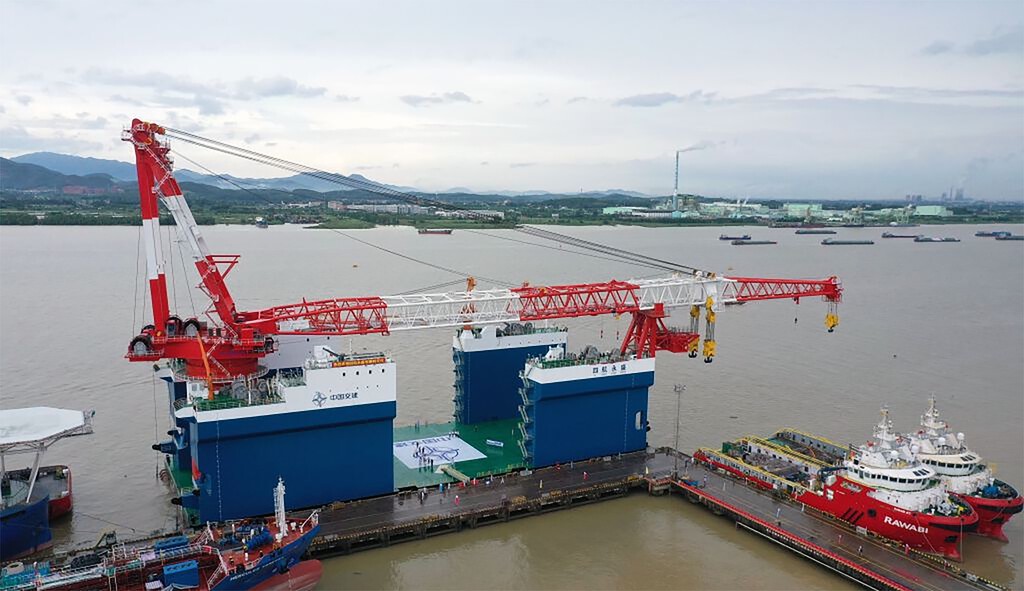
Why Sinking Is the Key to Its Mission
The core innovation of the Sihang Yongsheng lies in its semi-submersible design. By partially sinking, the barge can create a temporary dry dock or a stable base for lifting heavy structures. This method is particularly useful for installing offshore wind turbines, oil rigs, and other large marine infrastructure. Traditional crane vessels have limited lifting capacity and are often constrained by weather and sea conditions. The semi-submersible approach offers greater flexibility and can operate in deeper waters.
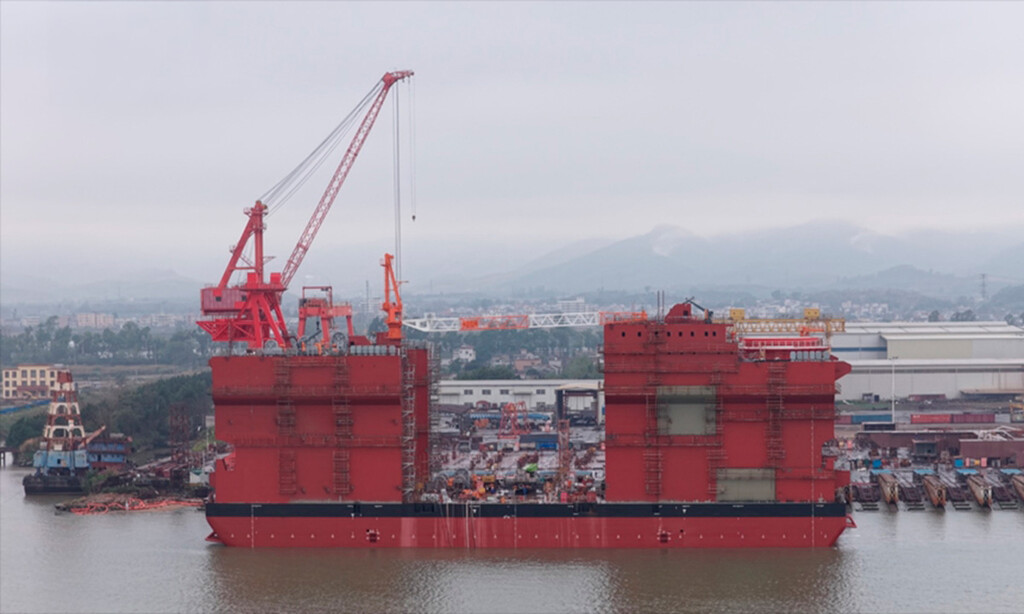
Moreover, the vessel's ability to transport heavy loads over long distances while submerged reduces the risks associated with conventional lifting. It also minimizes the need for multiple vessels, streamlining operations and cutting costs.
China's Growing Naval Engineering Ambitions
China has a track record of undertaking massive infrastructure projects, from the Three Gorges Dam to the Hong Kong-Zhuhai-Macao Bridge and the Qinghai-Tibet Railway. The Sihang Yongsheng fits into this narrative of ambitious construction and engineering. However, the focus here shifts from conquering land to mastering the sea. The vessel is a tool for extending China's reach in offshore energy, marine research, and strategic infrastructure development.
As global demand for offshore wind and deepwater oil and gas grows, such specialized vessels become critical. China's investment in this technology signals its intent to lead in marine engineering and to support its Belt and Road Initiative through maritime infrastructure.
Key Features and Capabilities
The Sihang Yongsheng boasts several notable features that set it apart from conventional barges. Here are the main takeaways:
- Semi-submersible design: Allows partial sinking for heavy lift and transport.
- Non-self-propelled: Requires tugboats for movement, focusing on specialized operations.
- Dual functionality: Combines offshore transport and heavy lifting in one vessel.
- Large deck area: Accommodates oversized cargo like ships and platforms.
- Built by Jiangmen Hengtong Shipbuilding: Delivered in July 2026 in Guangdong.
How It Compares to Other Heavy Lift Vessels
To understand the Sihang Yongsheng's place in the market, consider this comparison with typical heavy lift ships and crane vessels. The longer history behind the story is traced in China's Artificial Island Airport: Engineering and Beyond. More on the surrounding debate is collected in China Builds 14,000-Ton Crane: Two Units Work Together.
| Feature | Sihang Yongsheng | Conventional Crane Ship | Semi-Submersible Transport |
|---|---|---|---|
| Lifting Mechanism | Submerging and rising | Crane | Submerging |
| Self-Propelled | No | Yes | Often no |
| Max Lift Capacity | Very high (via buoyancy) | Limited by crane | High |
| Operational Depth | Deep | Moderate | Deep |
| Primary Use | Transport and lifting | Construction | Transport |
As the table shows, the Sihang Yongsheng bridges the gap between transport and lifting, offering capabilities that neither conventional crane ships nor pure semi-submersible transports can match alone. The background to this story is set out in Strait of Hormuz Ship Sinks as Iranian Attacks Surge. A related thread runs through Fulham First Win: Iwobi Sinks Hull to Lift Arbeloa Pressure. Earlier coverage in Science: latest articles shows how the argument developed.
What This Means for the Offshore Industry
The introduction of the Sihang Yongsheng could disrupt the offshore construction market. Its ability to handle massive loads without a crane reduces reliance on specialized crane vessels, which are in high demand and often booked years in advance. For China, it means greater self-sufficiency in installing offshore wind farms and oil platforms. A closer look at the same subject appears in China's New Tantalum Alloy Withstands 2,400°C Loads. Anyone following the wider picture can start with China's 110-Meter Qitai Radio Telescope Achieves Extreme Precision. The same theme surfaces in SpaceX Gigabay: 24 Work Zones, 400-Ton Cranes, 380 Feet Tall, which takes a different angle.
Additionally, the vessel could be used for salvage operations, such as recovering sunken ships or clearing debris. Its semi-submersible nature allows it to access shallow waters and provide a stable platform for divers and equipment. Context on how this played out before sits in China Builds Fake Ancient Towns to Attract Tourists. A companion piece, China's New Naval Monster: The Semi-Submersible Crane That Sinks to Work, approaches the same subject from another angle.
FAQ
What is the Sihang Yongsheng?
The Sihang Yongsheng is a semi-submersible barge delivered in July 2026 in Jiangmen, China. It is designed for offshore transport and heavy lifting, using a unique submerging technique to handle large loads.
Why does it sink halfway?
By partially sinking, the barge can position itself under floating cargo and then rise to lift it. This method provides greater stability and lifting capacity than traditional cranes.
Who built the Sihang Yongsheng?
The vessel was constructed by Jiangmen Hengtong Shipbuilding, according to Xinhua. It was delivered on July 8, 2026, in Guangdong province.
What are its main applications?
It is used for transporting and installing offshore platforms, wind turbines, and other large marine structures. It can also support salvage and research operations.







