

Loop engineering is quickly replacing prompt engineering as the must-have skill for advanced AI users, according to a growing chorus of developers and AI gurus. For the past three years, getting the most out of AI chatbots meant mastering the art of the prompt—crafting the perfect question to coax the best answer. But that approach is now becoming obsolete as a more powerful technique emerges: designing loops that automatically refine AI outputs until they meet quality standards.
What Is Loop Engineering and Why It Matters
Loop engineering is a new paradigm that assumes AI will hallucinate or make mistakes. Instead of relying on a single prompt, it implements a feedback system: one subagent generates a response, another audits it for flaws, and the system automatically reruns the process until the result meets the user's specified quality standards. This iterative approach turns AI from a one-shot tool into a self-correcting engine.
Find Original Home Decor sparking conversation at Grand Goldman Shop.

The idea has gone viral among developers, who see it as a way to squeeze maximum performance from chatbots. By embracing errors as inevitable, loop engineering builds resilience into the workflow, ensuring that final outputs are more reliable and accurate.
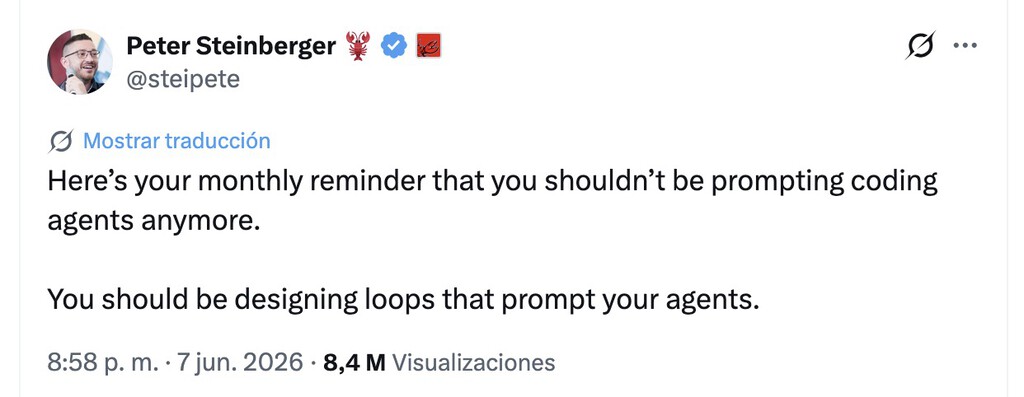
The Shift from Prompts to Loops
AI thought leaders are already championing the shift. Boris Cherny, creator of Claude Code, said in a recent talk that he no longer writes prompts in Claude Code—he writes loops. "Loops do the work. My job is to write loops," he explained. Peter Steinberger, creator of OpenClaw, echoed this on X: "You shouldn't write prompts for coding agents. You should design loops that create the prompts for your agents." Addy Osmani, a prominent engineering leader, has also weighed in, underscoring that the future belongs to those who can orchestrate feedback cycles rather than craft one-off instructions.

This shift reflects a broader maturation of AI usage. As models become more capable, the bottleneck moves from asking the right question to designing systems that can autonomously improve their answers.
How Loop Engineering Works in Practice
At its core, loop engineering involves setting up a cycle where multiple AI agents collaborate. One agent generates an initial response, another critiques it, and the system iterates until the output passes predefined checks. This can be implemented with simple scripts or more sophisticated orchestration tools. Context on how this played out before sits in Loop Engineering Overtakes Prompt Engineering as AI Trend.
For example, a developer might create a loop that: (1) generates code with one model, (2) runs tests with another, (3) if tests fail, feeds the errors back to the generator, and (4) repeats until all tests pass. This automation reduces manual intervention and ensures higher quality. The background to this story is set out in Climate Feedback Loops Could Worsen Global Warming by 30%. A related thread runs through Arctic Shipping & Cloud Formation: Climate Feedback Loop.
- Assumes imperfection: Loop engineering expects AI to make mistakes and builds correction mechanisms.
- Automates refinement: Feedback loops run automatically, saving time and effort.
- Improves reliability: Multiple audit steps catch errors that a single prompt might miss.
- Scales with complexity: Loops can handle intricate tasks by breaking them into iterative steps.
- Requires new skills: Developers must learn to design loops rather than craft prompts.
Comparing Prompt Engineering and Loop Engineering
The table below highlights the key differences between the two approaches.
| Aspect | Prompt Engineering | Loop Engineering |
|---|---|---|
| Core activity | Crafting the perfect question | Designing iterative feedback cycles |
| Error handling | Hopes for correct output | Assumes errors and corrects them |
| Automation level | Manual, one-shot | Automated, multi-step |
| Skill focus | Linguistic precision | System design and orchestration |
| Output quality | Variable | Consistently higher |
Who Is Affected and What to Watch Next
This trend affects anyone who uses AI for serious work—from developers and data scientists to content creators and business analysts. As loop engineering gains traction, expect to see new tools and frameworks that simplify the creation of feedback loops. Meanwhile, prompt engineering will not disappear entirely; it will become a subset of the broader loop engineering discipline. Earlier coverage in Ai Video: latest articles shows how the argument developed. A closer look at the same subject appears in AI Temperature and Response Length: Key Settings Explained.
What to watch: major AI platforms may soon offer built-in loop features, and job descriptions for AI-related roles could start listing loop engineering as a required skill. The message is clear: the future belongs to those who can write loops, not just prompts. Anyone following the wider picture can start with Anthropic's Claude Sonnet 5: Safer, Cheaper, and Deliberately Capped. The same theme surfaces in Recursive Self-Improvement: How Astra Helped Modify Another AI Model, which takes a different angle.
FAQ
What is loop engineering?Loop engineering is a technique where AI outputs are iteratively refined through a feedback loop. One subagent generates a response, another audits it, and the process repeats until the result meets quality standards. It assumes AI will make mistakes and builds correction into the workflow.
Why is loop engineering replacing prompt engineering?Prompt engineering relies on a single, carefully crafted question, but it often yields inconsistent results. Loop engineering automates refinement, leading to more reliable outputs. As AI models grow more complex, designing loops becomes more effective than tweaking prompts.
Who are the key proponents of loop engineering?Boris Cherny, creator of Claude Code, and Peter Steinberger, creator of OpenClaw, are vocal advocates. Cherny says he writes loops instead of prompts, and Steinberger advises designing loops that create prompts for agents. Addy Osmani has also endorsed the approach.
How can I start using loop engineering?Begin by setting up a simple feedback loop with two AI agents: one generates content, the other reviews it. Use scripts or orchestration tools to automate the cycle. Define clear quality criteria and let the loop run until the output passes. Start with small tasks and gradually increase complexity.
Browse the Shop
 Acacia frida deluxe solid wood bed frame |
Bedroom bench |
Bed chest drawers |
Lingerie dresser |
Frame base |
Mirror with jewelry storage |
30 Bathroom Vanity |
Memory foam queen mattress |
Mattresses for back pain |
Nightstand set of 2 |
Grand Goldman Shop |
Civil Lawyer
Deutschland Trikot WM 2026







