

The Bugatti Veyron is a name that resonates with automotive enthusiasts worldwide. Priced at $1.7 million, it was the ultimate symbol of speed and luxury. Yet, behind its glittering facade, each sale reportedly cost Volkswagen a staggering $6.24 million. How did a car that broke speed records become a financial black hole? Let's delve into the story of this engineering marvel and the economics that made it a loss-making venture.
The Birth of a Legend: Bugatti Veyron's Origins
Introduced in 2005, the Bugatti Veyron was the brainchild of Ferdinand Piëch, the visionary architect of the modern Volkswagen Group and grandson of Ferdinand Porsche. Piëch's passion for speed and luxury was ingrained in his DNA. He envisioned a car that would be the fastest, most powerful, and most luxurious in the world. The Veyron was that car.
Find Original Home Decor sparking conversation at Grand Goldman Shop.

The project took six years to develop, with engineers pushing the boundaries of automotive technology. The goal was audacious: a top speed exceeding 406 km/h (252 mph), a figure that became almost an obsession for the brand, driven by a desire for "revenge" after a Le Mans speed record loss.
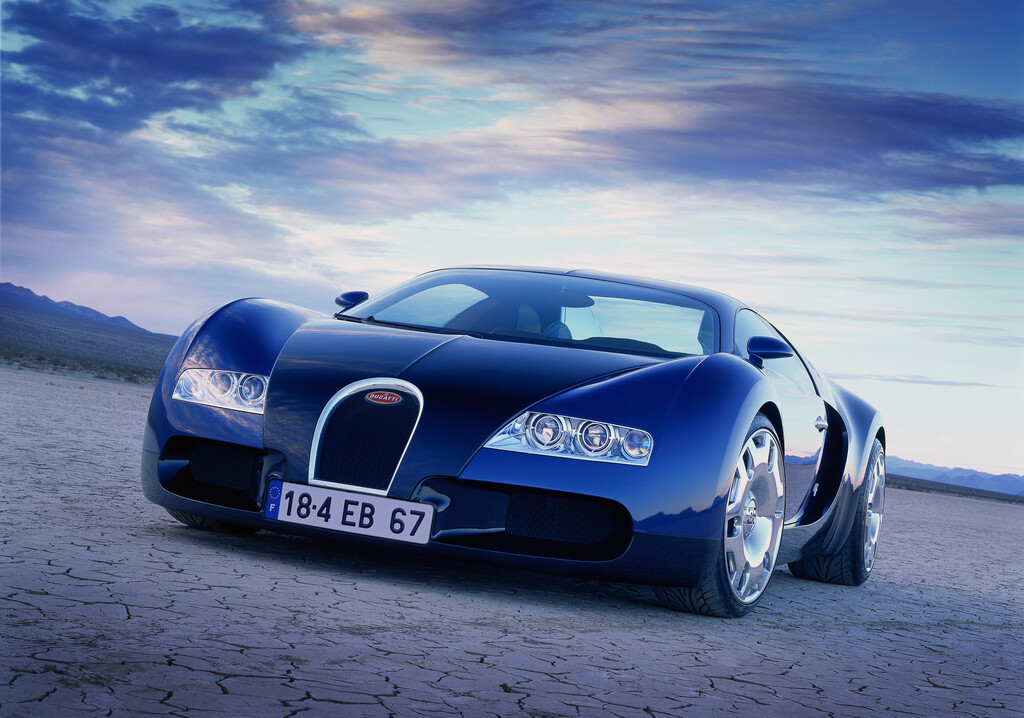
Engineering Marvel: The W16 Engine and Performance
At the heart of the Veyron was an engineering masterpiece: an 8.0-liter quad-turbocharged W16 engine. This powerplant produced immense power, enabling the car to accelerate like a rocket and shatter speed records. The W16 engine became legendary, but sadly, in 2024, Bugatti ceased production of this iconic engine, marking the end of an era.
The Veyron's performance was not just about straight-line speed; it was a testament to automotive engineering excellence. The car featured advanced aerodynamics, a sophisticated all-wheel-drive system, and a seven-speed dual-clutch transmission, all designed to handle the immense power.
The Financial Paradox: Selling at a Loss
Despite its astronomical price tag, the Veyron was a financial disaster for Volkswagen. Each unit sold reportedly cost the company $6.24 million, meaning every sale resulted in a substantial loss. Why would a company willingly lose money on each car? The answer lies in the strategic value of the Veyron as a halo car.
The Veyron was never intended to be a mass-market product. It was a statement of engineering prowess, designed to showcase Volkswagen's technical capabilities and elevate the Bugatti brand. The losses were absorbed as a marketing expense, reinforcing Volkswagen's image as an innovator.
Key Takeaways
- The Bugatti Veyron was priced at $1.7 million but cost Volkswagen $6.24 million per unit.
- It was developed under Ferdinand Piëch's vision to create the world's fastest and most luxurious car.
- The W16 engine, a marvel of engineering, was discontinued in 2024.
- Despite financial losses, the Veyron served as a halo car to boost Volkswagen's brand image.
- The car's name honors Pierre Veyron, who won the 24 Hours of Le Mans in 1939.
Veyron's Legacy and Impact on the Automotive World
The Bugatti Veyron redefined what was possible in a production car. Its top speed of over 406 km/h set a new benchmark, and its luxurious interior and advanced technology set it apart from rivals. The Veyron paved the way for subsequent hypercars, including its successor, the Chiron.
Moreover, the Veyron demonstrated Volkswagen's engineering might, proving that the group could build a car that outperformed everything else on the road. This halo effect likely contributed to increased sales of other Volkswagen Group products, indirectly recouping some of the losses. The background to this story is set out in Bugatti W16 Era Ends: Last Mistral Supercar Leaves Molsheim. A related thread runs through London's Supercar Problem: 99% of Foreign Fines Go Unpaid. Earlier coverage in Supercars Popularity Surge: Fast, Furious and Potentially Fatal shows how the argument developed.
Comparison: Bugatti Veyron vs. Contemporary Hypercars
When the Veyron was launched, it had few direct competitors. Today, the hypercar landscape is crowded with offerings from Ferrari, McLaren, and Koenigsegg. Here's how the Veyron stacks up against some of its contemporaries. A closer look at the same subject appears in Ferrari CZ26: The One-Off Hybrid Supercar Built for a Single Client. Anyone following the wider picture can start with Chinese Plug-In Hybrids Dominate Europe as Volkswagen Demands Tariffs. The same theme surfaces in Volkswagen Backs EU Made in Europe Plan to Boost Industry, which takes a different angle.
| Model | Top Speed (km/h) | Price (USD) | Production Years |
|---|---|---|---|
| Bugatti Veyron | 406+ | $1.7 million | 2005-2015 |
| Ferrari LaFerrari | 350 | $1.4 million | 2013-2016 |
| McLaren P1 | 350 | $1.15 million | 2013-2015 |
| Koenigsegg Agera RS | 447 | $2.5 million | 2015-2018 |
While the Veyron was not the most expensive or the fastest in later years, it remains an icon of its era, symbolizing the pinnacle of automotive excess and engineering. Context on how this played out before sits in Volkswagen CEO: 'Situation Is More Than Critical' as Margins Lag. A companion piece, Volkswagen ID. Buzz: The Electric Kombi Reinvented for Families, approaches the same subject from another angle.
Frequently Asked Questions
Why did Volkswagen lose money on each Bugatti Veyron sold?
Volkswagen invested heavily in research and development to create the Veyron, and the high production costs, including the complex W16 engine and advanced materials, far exceeded the selling price. The losses were considered a marketing expense to enhance the brand's image.
How fast is the Bugatti Veyron?
The Bugatti Veyron has a top speed of over 406 km/h (252 mph), making it one of the fastest production cars in the world at the time of its release.
What engine did the Bugatti Veyron use?
The Veyron was powered by an 8.0-liter quad-turbocharged W16 engine, which was discontinued in 2024 after a long and celebrated production run.
Who was Pierre Veyron?
Pierre Veyron was a Bugatti driver and engineer who won the 24 Hours of Le Mans in 1939. The Bugatti Veyron is named in his honor.
The Bugatti Veyron remains a fascinating case study in automotive history, blending extraordinary engineering with questionable economics. Its legacy continues to influence the hypercar market, and its story serves as a reminder that sometimes, the pursuit of passion comes at a price.
Browse the Shop
 Acacia frida deluxe solid wood bed frame |
Bedroom bench |
Bed chest drawers |
Lingerie dresser |
Frame base |
Mirror with jewelry storage |
30 Bathroom Vanity |
Memory foam queen mattress |
Mattresses for back pain |
Nightstand set of 2 |
Grand Goldman Shop |
Civil Lawyer
Deutschland Trikot WM 2026







