

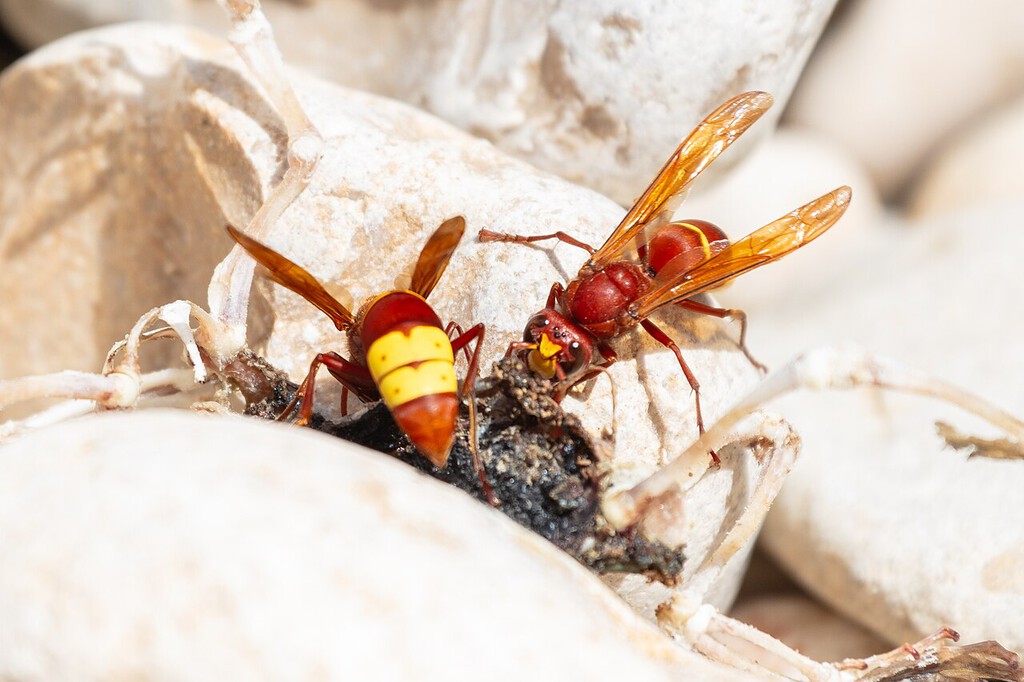
The oriental hornet (Vespa orientalis) is the latest invasive wasp to establish itself in Andalusia, Spain, and it is already threatening honeybee populations across the region. This reddish insect with a distinctive yellow face has colonized all eight provinces of the autonomous community in less than six years since its first detection in Algeciras in 2018. Now, researchers are racing to understand how far it can spread and what that means for agriculture and biodiversity.
What Is the Oriental Hornet and Why Is It a Problem?
The oriental hornet is a species native to southern Asia, the Middle East, and North Africa. Over the past few decades, it has been steadily colonizing southern Europe. Unlike some invasive species that require specific conditions to thrive, this hornet is highly adaptable and competitive. According to Jairo Robla, a researcher at the Doñana Biological Station (EBD-CSIC), "they are resistant and very competitive species, capable of dealing with everything."
Find Original Home Decor sparking conversation at Grand Goldman Shop.

Its diet is a major concern. The hornet preys heavily on honeybees to feed its larvae, putting additional pressure on already stressed pollinator populations. Beekeepers in affected areas report losses, and the ecological impact could ripple through ecosystems that depend on pollination services.
How Fast Has the Oriental Hornet Spread in Andalusia?
The first sighting of the oriental hornet in Spain was in 2018 in Algeciras, in the province of Cádiz. Since then, it has become established in urban and agricultural areas throughout Andalusia. The provinces of Cádiz, Málaga, Sevilla, and Córdoba are the most affected, but the hornet has been recorded in all eight provinces.
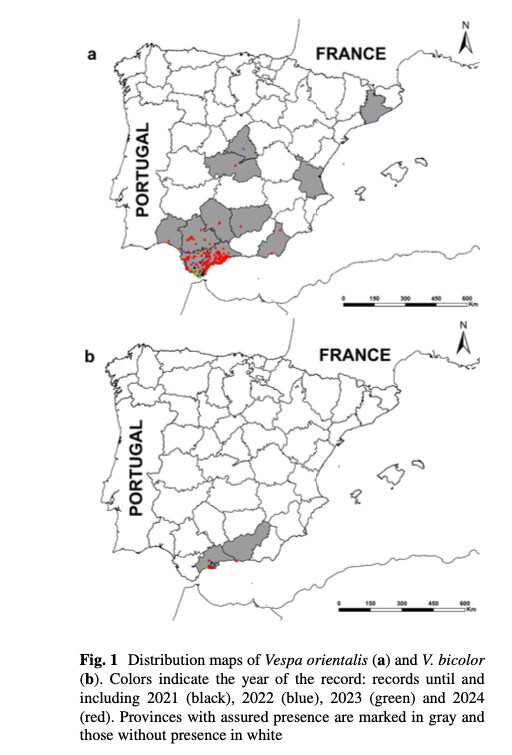
The Andalusian government (Junta de Andalucía) estimates that records of the species grew by 30% between 2023 and 2024. A separate analysis using data from 2024 counted 695 sightings of the species across Spain. The hornet has also been spotted in the Valencia region and the central plateau, indicating that its expansion is not limited to southern Spain.
Why Is This Invasive Wasp So Successful?
The oriental hornet possesses several traits that make it a formidable invader. It is a generalist feeder, meaning it can exploit a wide range of food sources. It also builds nests in various locations, including underground and in cavities, which helps it adapt to different environments. Its resistance to temperature fluctuations allows it to survive in diverse climates.
Moreover, the hornet is a strong flier and can disperse over considerable distances. Human activities, such as transport of goods and soil, may inadvertently aid its spread. Once established, colonies can grow rapidly, producing new queens that disperse to found new nests.
What Are the Main Threats Posed by the Oriental Hornet?
- Honeybee predation: The hornet hunts bees to feed its larvae, weakening colonies and reducing honey production.
- Ecological disruption: As a generalist predator, it can affect other insect populations and compete with native species.
- Agricultural impact: Beekeepers face economic losses, and pollination services may decline, affecting fruit and crop yields.
- Public health concern: Like other hornets, it can sting humans, causing allergic reactions in sensitive individuals.
- Rapid expansion: Its ability to colonize new areas quickly makes containment challenging.
How Does the Oriental Hornet Compare to Other Invasive Wasps in Spain?
Andalusia is now home to three invasive hornet species: the Asian hornet (Vespa velutina), the bicolor hornet (Vespa bicolor), and the oriental hornet (Vespa orientalis). Each poses different challenges. The table below summarizes key characteristics.
| Species | Origin | First Detection in Spain | Main Prey | Current Distribution in Andalusia |
|---|---|---|---|---|
| Oriental hornet (Vespa orientalis) | Southern Asia, Middle East, North Africa | 2018 (Algeciras) | Honeybees, other insects | All eight provinces; most affected: Cádiz, Málaga, Sevilla, Córdoba |
| Asian hornet (Vespa velutina) | Southeast Asia | 2010 (Basque Country) | Honeybees, other insects | Expanding; present in northern and western Spain |
| Bicolor hornet (Vespa bicolor) | Mediterranean region | 2013 (Málaga) | Honeybees, other insects | Established in southern Spain |
What Is Being Done to Monitor and Control the Oriental Hornet?
Researchers and authorities are stepping up monitoring efforts. The CSIC and other scientific institutions are tracking the hornet's spread through citizen science and field surveys. Beekeepers are being advised to adopt protective measures, such as reducing hive entrances and installing traps. However, large-scale control is difficult because the hornet often nests in hard-to-reach places.
Public awareness campaigns are also important. Residents are encouraged to report sightings to local authorities. Early detection can help slow the spread and protect vulnerable areas. Nevertheless, experts caution that eradication may no longer be feasible in Andalusia, and the focus is shifting toward management and mitigation. The background to this story is set out in Asian Seaweed Invasion in Andalusia Now Deemed Irreversible. A related thread runs through Invasive Species in Spain: Why the Guadalquivir Is a Hotspot. Earlier coverage in Oriental Hornet: How to Identify & Eliminate It Safely shows how the argument developed.
What Does the Future Hold for Andalusia's Bees and Agriculture?
The oriental hornet is likely here to stay. Its rapid colonization of Andalusia and its appearance in other parts of Spain suggest that it will continue to expand. The key question is how far it can go and what impact it will have on already declining bee populations. Beekeepers and farmers will need to adapt to this new reality. A closer look at the same subject appears in Invasive Species Cost Australia $24.5B: How to Respond. Anyone following the wider picture can start with Wasp & Hornet Infestation: Expert Control Guide for Safety. The same theme surfaces in Wasp & Hornet Nest Removal: Safe & Effective Control Guide, which takes a different angle.
Ongoing research aims to understand the hornet's ecology and develop better control methods. International cooperation will also be crucial, as the species is spreading across the Mediterranean. For now, the priority is to monitor the situation, support beekeepers, and raise public awareness about this new invasive threat. Context on how this played out before sits in Cloud One & Nubes: Ultimate Wasp & Hornet Control for Pros. A companion piece, Andalusia's Sugar Beet: From 50,000 Hectares to Zero, approaches the same subject from another angle.
FAQ
What is the oriental hornet and where does it come from?
The oriental hornet (Vespa orientalis) is a species native to southern Asia, the Middle East, and North Africa. It has been spreading into southern Europe in recent decades and was first detected in Spain in 2018 in Algeciras.
How fast has the oriental hornet spread in Andalusia?
Since its first detection in 2018, the oriental hornet has colonized all eight provinces of Andalusia in less than six years. The Junta de Andalucía reports a 30% increase in records between 2023 and 2024, and it has also been sighted in Valencia and central Spain.
Why is the oriental hornet a threat to bees?
The hornet preys heavily on honeybees to feed its larvae. This adds pressure on already stressed bee populations, which are vital for pollination and agriculture. Beekeepers in affected areas have reported losses.
What can be done to control the oriental hornet?
Control efforts include monitoring, public reporting of sightings, and protective measures for hives. However, eradication is likely no longer feasible, so management and mitigation strategies are being prioritized.
Browse the Shop
 Acacia frida deluxe solid wood bed frame |
Bedroom bench |
Bed chest drawers |
Lingerie dresser |
Frame base |
Mirror with jewelry storage |
30 Bathroom Vanity |
Memory foam queen mattress |
Mattresses for back pain |
Nightstand set of 2 |
Grand Goldman Shop |
Civil Lawyer
Deutschland Trikot WM 2026







