

A half-ton metal ring fell from the sky in Kenya in late 2024, and more than a year later, its exact origin remains a mystery. The incident has turned the abstract problem of space debris into a tangible reality for residents of Mukuku village.
On December 30, 2024, a large metallic object crashed into a rural area of Mukuku, Kenya. The ring, measuring about 2.5 meters in diameter and weighing an estimated 500 kilograms, landed without warning. Local authorities quickly cordoned off the area, and an interagency team led by the Kenya Space Agency (KSA) recovered the debris for analysis.
Find Original Home Decor sparking conversation at Grand Goldman Shop.

What Happened in Mukuku?
The object struck the ground with significant force, leaving a visible impact. According to the KSA, preliminary assessments suggested the piece was a separation ring from a launch vehicle. However, the agency did not immediately identify which mission or country it belonged to.
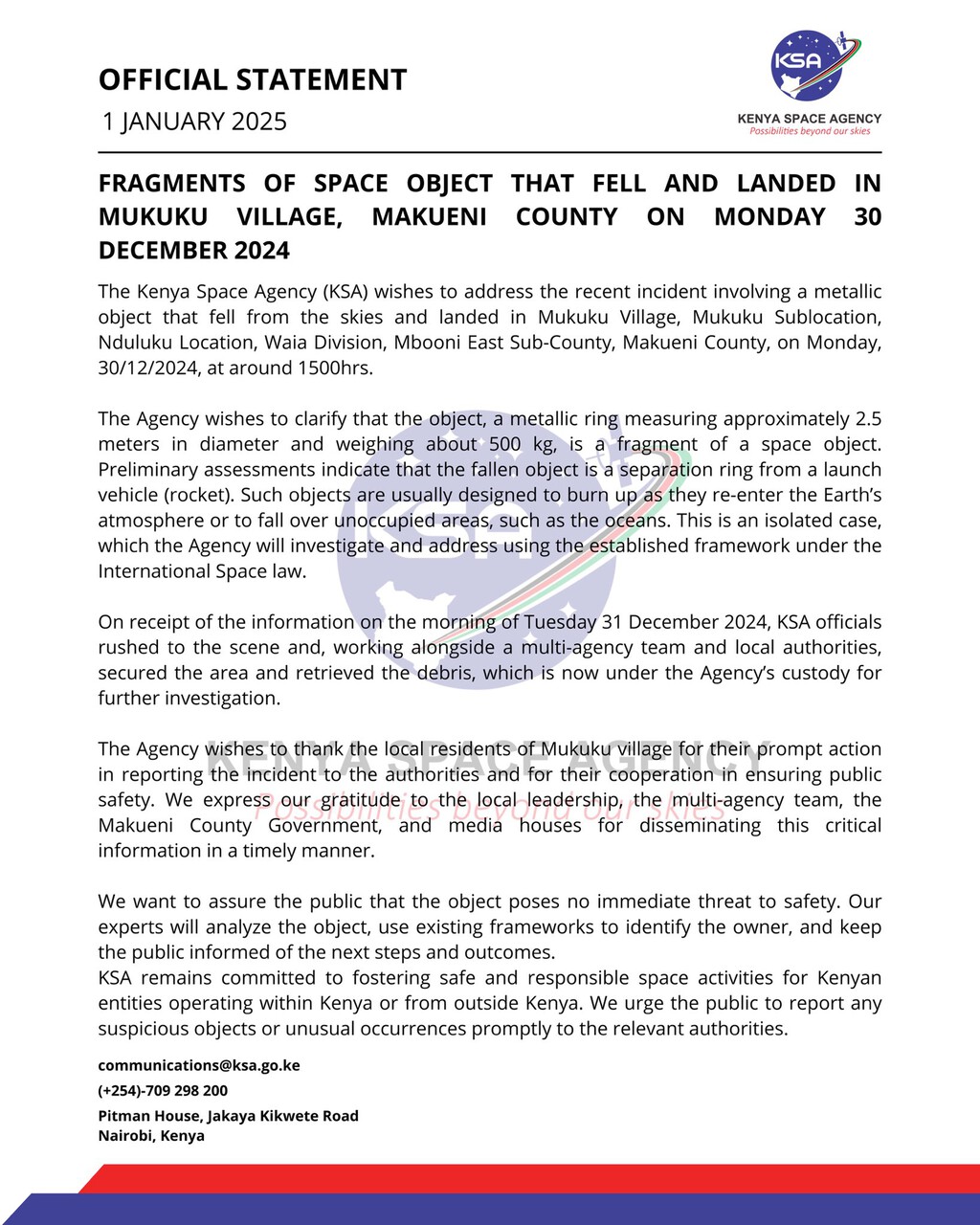
Just 48 hours after recovery, the KSA issued a statement on January 1, 2025, confirming that the object was a fragment of a space object. The ring is a component used to connect stages of a rocket, and its reentry into the atmosphere is not uncommon. Yet, the fact that it survived reentry and landed intact is notable.
Why Is This Incident Significant?
Space debris is a growing concern as more satellites and rockets are launched. Most debris burns up upon reentry, but larger components can reach the ground. This incident highlights the potential risks to people and property.
While no injuries were reported, the event underscores the need for better tracking and regulation of space debris. It also raises questions about accountability: who is responsible when debris from a foreign launch lands in another country?
What Do We Know About the Object?
The ring is made of metal and appears to be part of a spacecraft's separation system. Such rings are designed to hold stages together during launch and are typically jettisoned once their purpose is served. They can remain in orbit for years before reentering.
Experts have not yet determined the specific launch vehicle or mission. The KSA has not released further details, and international space agencies have not claimed responsibility. The investigation is ongoing.
What Are the Implications for Space Safety?
This event is a wake-up call for the space industry. As launches increase, so does the risk of debris falling in populated areas. Currently, there are no international laws that hold launching countries liable for damages caused by their debris.
Some experts advocate for stricter regulations and better technology to ensure debris burns up completely or is guided to safe reentry zones. Others call for increased transparency and data sharing among spacefaring nations. The background to this story is set out in Red Bull Can Dimensions: Exact Heights and Diameters Explained. A related thread runs through Pringles Can Dimensions: The Exact Diameter Most People Get Wrong. Earlier coverage in 2.75in to mm: The Exact Conversion and 8 Everyday Examples (Guide) shows how the argument developed.
What to Watch Next
The KSA is expected to release more findings from its analysis. Meanwhile, the incident may prompt Kenya and other countries to push for stronger international guidelines on space debris. A closer look at the same subject appears in Australia's Six Mystery Spheres Identified as Space Debris. Anyone following the wider picture can start with China Space Debris: 3 of 4 Worst Events This Century. The same theme surfaces in SpaceX Rocket Crashes into Moon: What It Means for Space Debris, which takes a different angle.
For now, the half-ton ring serves as a reminder that what goes up must come down—and sometimes, it lands in unexpected places. Context on how this played out before sits in NASA's Swift Observatory to Make Uncontrolled Reentry After 20 Years. A companion piece, NASA Swift Telescope Risks Reentry: Rescue Mission Planned, approaches the same subject from another angle.
- Date: December 30, 2024
- Location: Mukuku, Kenya
- Object: Metal ring, ~2.5m diameter, ~500kg
- Origin: Suspected separation ring from a launch vehicle
- Investigation: Led by Kenya Space Agency, ongoing
| Attribute | Details |
|---|---|
| Date of impact | December 30, 2024 |
| Location | Mukuku, Kenya |
| Diameter | ~2.5 meters |
| Weight | ~500 kilograms |
| Material | Metal (likely alloy) |
| Responsible agency | Kenya Space Agency (KSA) |
FAQ
What was the metal ring that fell in Kenya?
The metal ring was a large, circular object about 2.5 meters in diameter and weighing around 500 kilograms. It is believed to be a separation ring from a launch vehicle, which is used to connect rocket stages.
Did anyone get hurt when the ring fell?
No injuries were reported. The object landed in a rural area, and authorities quickly secured the site.
Why is space debris a problem?
Space debris poses risks to satellites and spacecraft, and larger pieces can survive reentry and reach the ground, potentially causing damage or injury. There are also no clear international laws to hold launching countries accountable.
What is being done to address space debris?
International guidelines exist, but enforcement is limited. Some experts call for stricter regulations, improved tracking, and technologies to ensure debris burns up safely or is deorbited responsibly.
Browse the Shop
 Acacia frida deluxe solid wood bed frame |
Bedroom bench |
Bed chest drawers |
Lingerie dresser |
Frame base |
Mirror with jewelry storage |
30 Bathroom Vanity |
Memory foam queen mattress |
Mattresses for back pain |
Nightstand set of 2 |
Grand Goldman Shop |
Civil Lawyer
Deutschland Trikot WM 2026







