

How long is a day on each planet in our solar system? The answer varies dramatically, from just a few hours on Jupiter to hundreds of days on Venus. Understanding these rotation periods reveals fascinating insights into planetary science and the diverse nature of our cosmic neighborhood.
On Earth, a day lasts approximately 24 hours—23 hours and 56 minutes, to be precise. This duration is the average time our planet takes to complete one rotation on its axis. However, this seemingly simple concept becomes surprisingly complex when we look at other planets.
Find Original Home Decor sparking conversation at Grand Goldman Shop.

What Determines the Length of a Day on a Planet?
A planet's day length is influenced by several factors, including its radius, orbit, and interactions with other celestial bodies. Gravitational forces, particularly from moons and nearby planets, can gradually alter rotation speeds over time.
For example, Earth's day has lengthened historically due to the Moon's gravitational pull, which creates tidal friction. This slowing effect means that millions of years ago, a day on Earth was significantly shorter than it is today.
The concept of a "day" itself can be defined in two ways: a solar day (the time it takes for the Sun to return to the same position in the sky) and a sidereal day (the time it takes for the planet to complete one full rotation relative to distant stars). The difference between these two is usually small but can be significant on some planets.
Day Lengths Across the Solar System
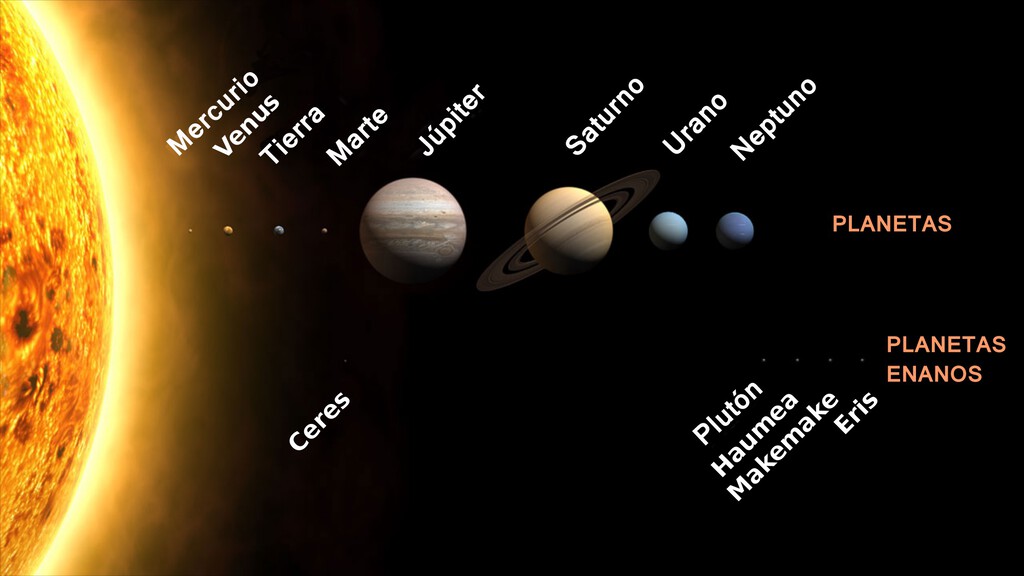
Here's a breakdown of how long a day lasts on each planet, based on sidereal rotation periods:
- Mercury: 58.6 Earth days—a day on Mercury is longer than its year (88 Earth days).
- Venus: 243 Earth days—Venus rotates so slowly that it takes longer to spin once than to orbit the Sun.
- Earth: 23 hours 56 minutes—our familiar 24-hour day.
- Mars: 24 hours 37 minutes—remarkably similar to Earth's day.
- Jupiter: 9 hours 56 minutes—the shortest day of any planet, despite being the largest.
- Saturn: 10 hours 42 minutes—another gas giant with a fast rotation.
- Uranus: 17 hours 14 minutes—rotates on its side, likely due to a ancient collision.
- Neptune: 16 hours 6 minutes—similar to Uranus despite being much farther from the Sun.
These figures highlight the immense diversity in planetary rotation rates. Gas giants tend to have shorter days because they are less dense and can spin faster without breaking apart. Rocky planets like Venus, on the other hand, rotate very slowly, possibly due to gravitational interactions with the Sun.
Why Some Planets Have Extremely Long or Short Days
Venus is an extreme case: its rotation is so slow that it actually rotates in the opposite direction to most other planets—a phenomenon known as retrograde rotation. This means that on Venus, the Sun rises in the west and sets in the east, and a solar day lasts about 116.75 Earth days.
Jupiter's rapid rotation is due to its composition: being mostly hydrogen and helium, it has a lower density and can spin quickly without flying apart. This fast rotation also causes Jupiter to bulge at the equator, making it visibly oblate.
Mercury's slow rotation is likely due to tidal forces from the Sun, which have slowed its spin over billions of years. Its 3:2 spin-orbit resonance means it rotates three times for every two orbits around the Sun.
How Scientists Measure a Planet's Day
Measuring rotation periods is not trivial. For rocky planets, scientists can track surface features as they move across the disk. For gas giants, which lack solid surfaces, they use magnetic fields or tracking cloud patterns.
Spacecraft missions have provided precise data: for instance, the Cassini mission measured Saturn's rotation by tracking radio emissions from its interior. Similarly, the Juno mission is refining our understanding of Jupiter's rotation.
These measurements are crucial for understanding planetary interiors, atmospheric dynamics, and even the potential for habitability.
Comparison Table: Day Lengths and Key Characteristics
| Planet | Day Length (Earth days) | Rotation Type | Notable Fact |
|---|---|---|---|
| Mercury | 58.6 | Prograde | Day longer than year |
| Venus | 243 | Retrograde | Rotates backwards |
| Earth | 0.997 | Prograde | 24-hour day |
| Mars | 1.026 | Prograde | Similar to Earth |
| Jupiter | 0.414 | Prograde | Fastest rotation |
| Saturn | 0.446 | Prograde | Fast rotation |
| Uranus | 0.718 | Prograde | Rotates on its side |
| Neptune | 0.671 | Prograde | Similar to Uranus |
What This Means for Space Exploration
Understanding day lengths is critical for future missions. For example, a day on Mars is only about 40 minutes longer than on Earth, which is relatively convenient for human operations. However, a day on Venus is longer than its year, making it an extremely hostile environment for any potential exploration. The background to this story is set out in Calculate Your Birthday on Every Planet in the Solar System. A related thread runs through How 190 Years of Dam Building Shifted Earth's Axis and Day Length. Earlier coverage in Pluto's Demotion: Why It's Actually Good News for the Solar System shows how the argument developed.
These rotation periods also affect atmospheric circulation, temperature distribution, and even the potential for life. On tidally locked exoplanets, one side always faces the star, leading to permanent day and night sides. A closer look at the same subject appears in New Dwarf Planet Candidate 2026 ED138 Discovered in Solar System. Anyone following the wider picture can start with Sun's Death Will Be Worse Than Expected for Solar System. The same theme surfaces in Asteroid Ryugu Dust Reveals Solar System's Magnetic Memory, which takes a different angle.
As we continue to explore our solar system and beyond, these fundamental planetary characteristics will guide our understanding of how worlds work. Context on how this played out before sits in Understanding Postpartum Psychosis: Key Facts and Support. A companion piece, Water-Powered Spacecraft: Argo Space's Solar System Ambitions, approaches the same subject from another angle.
FAQ
Why is a day on Venus longer than its year?
Venus rotates extremely slowly, taking 243 Earth days to complete one rotation, while its orbit around the Sun takes 225 Earth days. This slow rotation is likely due to gravitational interactions with the Sun and possibly a past collision.
Which planet has the shortest day?
Jupiter has the shortest day, lasting just under 10 hours. Despite being the largest planet, its low density allows it to spin rapidly without breaking apart.
How do scientists measure a planet's rotation period?
Scientists use various methods: tracking surface features on rocky planets, monitoring radio emissions from gas giants' interiors, and observing cloud patterns. Spacecraft missions like Cassini and Juno have provided precise data.
Does the Moon affect Earth's day length?
Yes, the Moon's gravitational pull creates tidal friction that gradually slows Earth's rotation. Over millions of years, this has lengthened our day from about 6 hours in the distant past to 24 hours today.
Browse the Shop
 Acacia frida deluxe solid wood bed frame |
Bedroom bench |
Bed chest drawers |
Lingerie dresser |
Frame base |
Mirror with jewelry storage |
30 Bathroom Vanity |
Memory foam queen mattress |
Mattresses for back pain |
Nightstand set of 2 |
Grand Goldman Shop |
Civil Lawyer
Deutschland Trikot WM 2026







