

Juan Vicente Vegazo Montes de Oca, a landowner from Ubrique in Cádiz, Spain, became an unlikely pioneer of archaeology when his intuition led him to purchase a hill in 1793 and subsequently discover an entire Roman city beneath it. His story is a testament to the power of curiosity and determination.
Vegazo's tale is not just a local legend; it is a historical account of how one man's hunch unearthed a significant archaeological site that is now recognized as a Bien de Interés Cultural (Asset of Cultural Interest) in Spain.
Find Original Home Decor sparking conversation at Grand Goldman Shop.

Who Was Juan Vicente Vegazo?
Juan Vicente Vegazo Montes de Oca was a wealthy landowner, or hacendado, from the town of Ubrique in the province of Cádiz, Andalusia. He lived in the late 18th century, a time when archaeology was still in its infancy and the systematic study of ancient civilizations was just beginning to capture the European imagination.
Vegazo was not an archaeologist by training, but he was a man of his time: curious, observant, and perhaps a bit daring. His story is preserved in a manuscript that was later copied by a botanist, which provides key details about his motivations and methods.
The Hill of Salto de la Mora
According to the chronicle, Vegazo purchased a hill known as the Salto de la Mora. This was not a purchase for agricultural purposes, nor was it an investment for speculation or inheritance. Instead, Vegazo acted on a hunch: he suspected that beneath the stones of the hill lay something far more significant than mere rocks.
The exact date of the purchase is somewhat debated. The botanist who copied Vegazo's manuscript fixes the date at 1792, while other guides place it in 1793. Regardless, the motivation was clear: Vegazo was curious about the vestiges that were already visible in the area of Benafís el Alto.
The Excavation: A Vineyard as a Cover
Vegazo's approach to excavation was ingenious. He planted fruit trees and, in 1793, a vineyard on the hill. But his purpose was not merely agricultural; each hole and each trench he dug served as a way to advance his discoveries. If nothing was found, he would still have the grapes.
This method allowed him to systematically probe the ground without raising suspicion or facing opposition. It was a clever way to combine his agricultural interests with his archaeological curiosity.
From 1793 to 1798, Vegazo excavated the site. His efforts paid off: he uncovered an entire Roman city, which we now know as Ocuri. The city had been hidden for centuries, and Vegazo's persistence brought it back to light.
Parallels with Pompeii
Vegazo was inspired by the excavations at Pompeii, which were causing a sensation in Europe at the time. According to a tourist guide, he wanted to check if there were remains of a city and sought parallels with Pompeii. This shows that Vegazo was aware of the latest developments in archaeology and was driven by a desire to uncover similar wonders.
His intuition was not unfounded. The site of Ocuri turned out to be a significant Roman settlement, with structures and artifacts that have provided valuable insights into the Roman presence in the region.
The Discovery of Ocuri
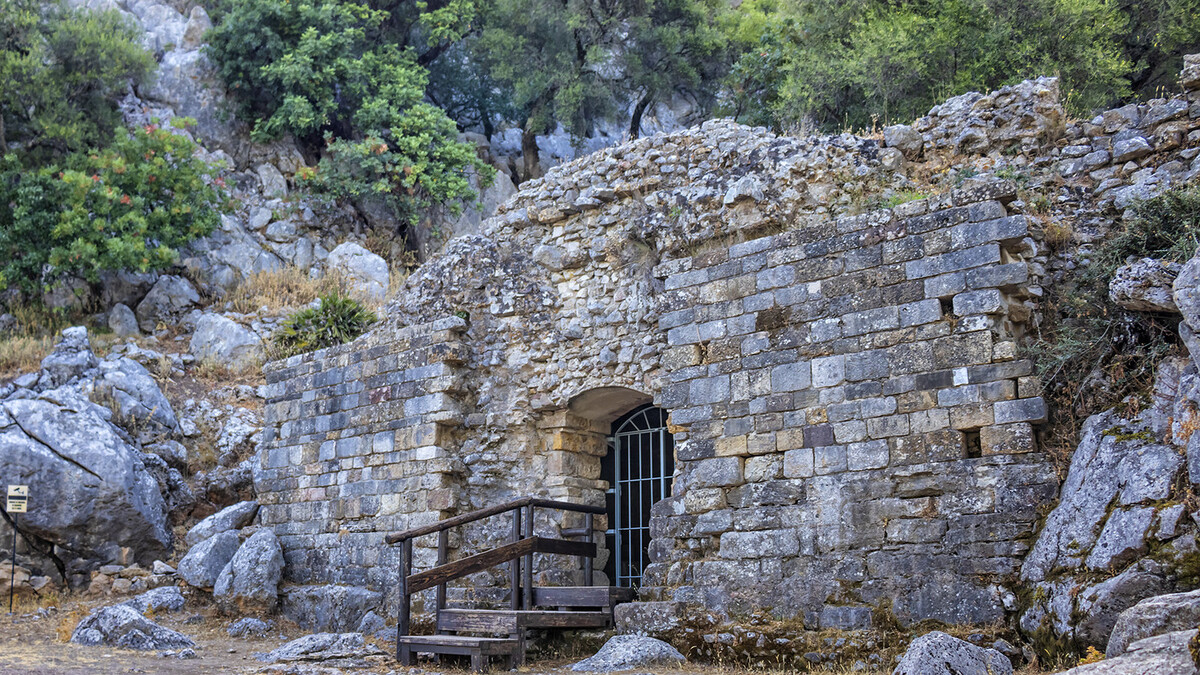
The city that Vegazo discovered is known as Ocuri. It is located on the hill of Salto de la Mora, near Ubrique. The site includes various Roman structures, such as walls, a forum, and possibly a temple. It is a testament to the Romanization of the Iberian Peninsula.
Today, Ocuri is a Bien de Interés Cultural, a designation that recognizes its historical and archaeological importance. It is a popular destination for tourists and scholars alike.
What Makes Ocuri Special?
Ocuri is special not only for its Roman ruins but also for the story of its discovery. Vegazo's intuition and determination led to the unearthing of a city that might otherwise have remained hidden. His story is a reminder that sometimes, following a hunch can lead to extraordinary discoveries.
Moreover, the site provides evidence of the Roman presence in the mountainous region of Cádiz, which was previously less well-documented. It helps historians understand the extent of Roman influence in southern Spain.
Vegazo's Legacy
Juan Vicente Vegazo is remembered as a pioneer of archaeology in Spain. His methods were unconventional, but his results were undeniable. He demonstrated that archaeology is not just for academics; it can be pursued by anyone with curiosity and determination. Context on how this played out before sits in Sahara's 55-Meter 'Antenna' Tomb Finally Dated to 2467–2150 BC.
His story has been cited by Turismo de Andalucía, which defines him as a true pioneer. It is a story that continues to inspire those interested in history and archaeology. The background to this story is set out in Trending: latest articles. A related thread runs through Isak Seals Liverpool Win to End Brighton's Premier League Streak.
Key Takeaways
- Juan Vicente Vegazo was a landowner from Ubrique who discovered a Roman city in 1793.
- He bought the hill of Salto de la Mora based on intuition, not for agriculture or speculation.
- He used a vineyard as a cover for his excavations, which lasted from 1793 to 1798.
- The city he discovered is known as Ocuri, now a Bien de Interés Cultural.
- Vegazo was inspired by the excavations at Pompeii and sought similar discoveries.
Comparison with Other Archaeological Discoveries
Vegazo's discovery is often compared to other famous archaeological finds, such as Pompeii and Herculaneum. However, unlike those sites, which were buried by volcanic ash, Ocuri was hidden by time and vegetation. Earlier coverage in Ali G Stooge Claims He Was In On The Joke All Along shows how the argument developed. A closer look at the same subject appears in Carrick on Brink as Manchester United Humiliated by Bournemouth.
The table below compares key aspects of Vegazo's discovery with other notable archaeological sites. Anyone following the wider picture can start with Newcastle's Second-Half Surge Piles Pressure on Lacklustre Crystal. The same theme surfaces in Juan Vicente Vegazo: The Pioneer Who Discovered a Roman City, which takes a different angle.
| Site | Discoverer | Year | Method |
|---|---|---|---|
| Ocuri | Juan Vicente Vegazo | 1793 | Intuition and vineyard excavation |
| Pompeii | Domenico Fontana | 1599 | Accidental discovery during canal digging |
| Herculaneum | Mazzocchi | 1709 | Accidental discovery during well digging |
FAQ
Who was Juan Vicente Vegazo?
Juan Vicente Vegazo Montes de Oca was a landowner from Ubrique, Cádiz, who discovered a Roman city in 1793. He was a pioneer of archaeology in Spain, known for his intuition and determination.
What city did Vegazo discover?
Vegazo discovered the Roman city of Ocuri, located on the hill of Salto de la Mora near Ubrique. The site is now a Bien de Interés Cultural.
Why did Vegazo buy the hill?
Vegazo bought the hill because he suspected that there were Roman remains beneath it. He was inspired by the excavations at Pompeii and wanted to see if similar discoveries could be made in Spain.
How did Vegazo conduct his excavations?
Vegazo used a vineyard as a cover for his excavations. He planted fruit trees and vines, and each hole he dug served as a way to probe the ground for artifacts.
Browse the Shop
 Acacia frida deluxe solid wood bed frame |
Bedroom bench |
Bed chest drawers |
Lingerie dresser |
Frame base |
Mirror with jewelry storage |
30 Bathroom Vanity |
Memory foam queen mattress |
Mattresses for back pain |
Nightstand set of 2 |
Grand Goldman Shop |
Civil Lawyer
Deutschland Trikot WM 2026







