

Leonardo da Vinci, the ultimate Renaissance man, left behind a treasure trove of notebooks that reveal his deep commitment to experience as the ultimate teacher. His famous phrase, "experience never deceives," encapsulates a philosophy that underpins modern science. But what did he mean, and why does it matter today?
When Leonardo wrote to Ludovico Sforza in 1482 seeking employment, he presented himself primarily as a military engineer, mentioning his artistic skills only at the end. This letter, as noted in historical analyses, shows that Leonardo saw himself as a man of science, not just a painter. His notebooks further confirm this self-image.
Find Original Home Decor sparking conversation at Grand Goldman Shop.

The Letter to Sforza: A Window into Leonardo's Mind
Leonardo's letter to Sforza is a masterclass in self-promotion. He lists his engineering abilities—designing bridges, cannons, and armored vehicles—before briefly noting his talents as an architect, sculptor, and painter. This ordering was strategic: Sforza was a warlord, not an art patron.
Yet the letter also reveals Leonardo's true passion: mechanical and scientific innovation. He wanted to be valued for his practical genius, not just his brushwork. This aligns with his later notebooks, where he systematically recorded experiments and observations.
Experience as the Foundation of Knowledge
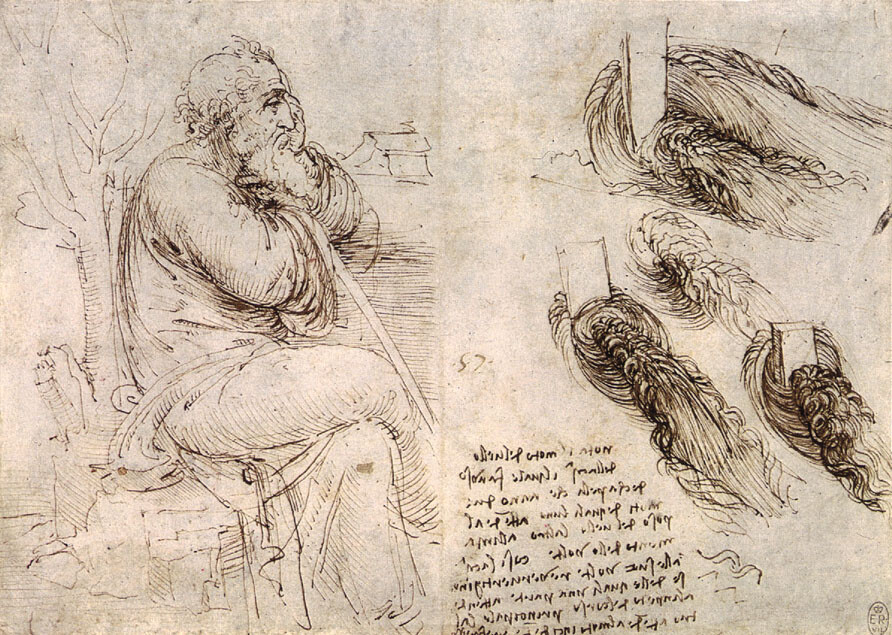
Leonardo's notebooks are filled with empirical observations, from anatomy to physics. He believed that true knowledge comes from direct experience, not from received wisdom. This idea was radical in an era when authority and tradition held sway.
For Leonardo, experience never deceives because it is the raw data of reality. Our interpretations may err, but the experience itself is infallible. This principle guided his investigations into everything from the flight of birds to the flow of water.
Key Takeaways from Leonardo's Approach
- Observation over speculation: Leonardo prioritized direct observation and experimentation.
- Interdisciplinary thinking: He connected art, science, and engineering seamlessly.
- Practical application: His studies often aimed at solving real-world problems.
- Documentation: He meticulously recorded his findings, creating a legacy of knowledge.
- Skepticism of authority: He questioned accepted truths and sought evidence.
Leonardo's Scientific Legacy
Leonardo's approach foreshadowed the scientific method. He conducted controlled experiments, such as testing the strength of wires and beams, and recorded the results. His anatomical drawings, based on dissections, were far ahead of his time. The longer history behind the story is traced in Leonardo da Vinci: Why Experience Never Deceives, According to His Notes.
Some historians even call him "the first scientist" for his empirical mindset. While he lacked formal training, his curiosity and method paved the way for future thinkers like Galileo and Newton. The background to this story is set out in Leonardo da Vinci's Hidden Map Reveals Secret Tunnels of Sforza Castle. A related thread runs through John Tilbury At Home Review: An Eclectic Treasure Trove. Earlier coverage in John Tilbury At Home Album Review: An Eclectic Treasure Trove shows how the argument developed.
| Aspect | Leonardo's Approach | Modern Science |
|---|---|---|
| Observation | Direct, detailed | Systematic, instrumented |
| Experimentation | Hands-on, practical | Controlled, replicable |
| Documentation | Notebooks with sketches | Peer-reviewed papers |
| Theory | Integrated with practice | Hypothesis-driven |
Why Leonardo's Philosophy Resonates Today
In an age of misinformation and echo chambers, Leonardo's emphasis on experience is a timely reminder. He urges us to ground our beliefs in evidence and to stay curious. A closer look at the same subject appears in John Tilbury At Home Album Review: A Treasure Trove of. Anyone following the wider picture can start with Xiaomi Skynomad: Redefining the Modern Car Experience. The same theme surfaces in Trending: latest articles, which takes a different angle.
His interdisciplinary spirit also inspires innovators to break silos. Whether in art or AI, the lesson is clear: experience, carefully observed, never deceives. Context on how this played out before sits in Doomsday Prediction 2026: Why the World Didn't End Today. A companion piece, Renaissance Portal Hidden in Spanish Home Wins Owner €1 Million, approaches the same subject from another angle.
FAQ
What did Leonardo da Vinci mean by "experience never deceives"?
How did Leonardo's letter to Sforza reflect his scientific mindset?
Why is Leonardo considered a precursor of modern science?
Browse the Shop
 Acacia frida deluxe solid wood bed frame |
Bedroom bench |
Bed chest drawers |
Lingerie dresser |
Frame base |
Mirror with jewelry storage |
30 Bathroom Vanity |
Memory foam queen mattress |
Mattresses for back pain |
Nightstand set of 2 |
Grand Goldman Shop |
Civil Lawyer
Deutschland Trikot WM 2026







