

The Roman Elda step mystery in Spain has finally been solved, revealing that a seemingly ordinary staircase was actually a recycled mythological sculpture. This discovery sheds light on the ancient practice of spolia—the reuse of architectural elements—and highlights the economic realities of past societies.
What Happened at El Monastil?
In the year 2000, archaeologists excavating a late Roman wall at the El Monastil site in Elda, Alicante, unearthed a three-step staircase. It appeared to be a routine structural find. However, torrential rains the following year caused the collapse of the stone blocks, exposing something unusual.
Find Original Home Decor sparking conversation at Grand Goldman Shop.

Upon inspecting the damage, the team led by archaeologist Antonio M. Poveda discovered that one of the steps was not a simple block but a sculpted piece. After decades in storage, researchers have now identified it as a mythological creature, likely part of a larger monument.
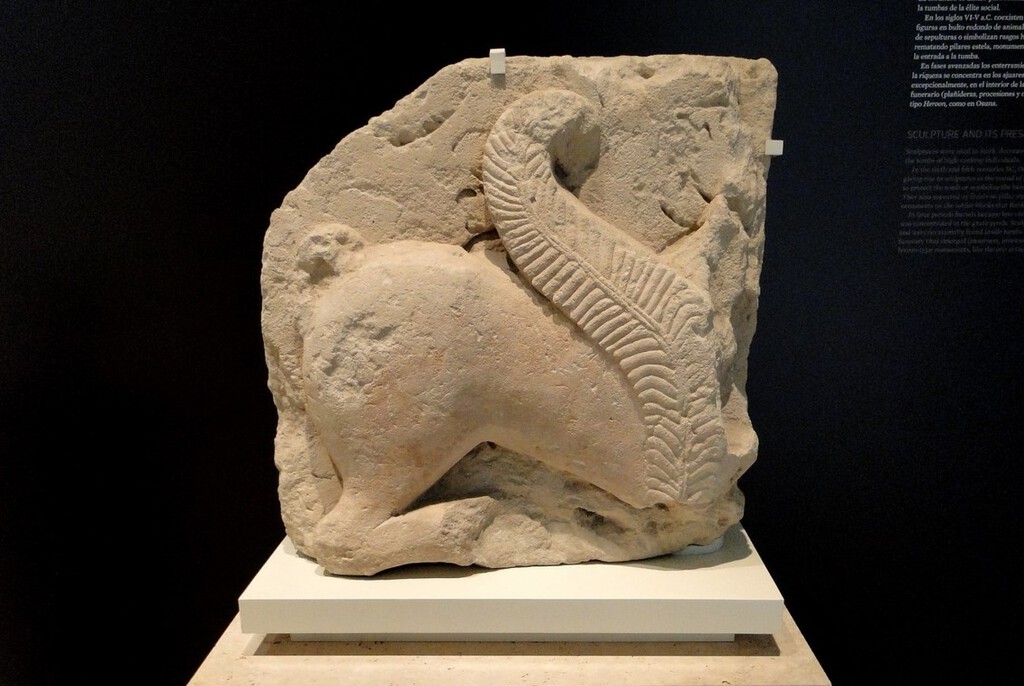
Why Spolia Matters in Archaeology
Spolia, or architectural cannibalism, was common in antiquity and the Middle Ages. It involved repurposing stone from older structures for new building projects. This was not driven by environmental concerns or aesthetics but by pure economic survival.
If quality squared stone was available, builders would use it regardless of its original context—whether from a temple to Jupiter, a statue of a disgraced emperor, or, as in this case, a mythological creature. This practice complicates archaeological interpretation, as reused elements can obscure original contexts.
The Significance of the Elda Discovery
The identification of the Elda step as a spolium is significant because it demonstrates the extent of recycling in Roman Spain. It also provides a rare glimpse into the artistic and architectural choices of the period.
The piece had been camouflaged under a false identity for too long, and its reclassification adds to our understanding of El Monastil's history. The site, which was inhabited from the Iberian period through the Roman era, continues to yield insights into daily life and construction techniques. The background to this story is set out in Trending: latest articles. A related thread runs through Medieval Helmets Found by Fishermen in Spain: 43 Discovered.
Key Takeaways
- Spolia refers to the reuse of architectural elements in new constructions, often for economic reasons.
- The Roman Elda step was initially thought to be a simple block but is actually a mythological sculpture.
- Rainfall in 2001 exposed the true nature of the piece after the collapse of stone blocks.
- The discovery highlights the importance of revisiting old finds with new perspectives.
- El Monastil remains a key site for understanding Roman influence in southeastern Spain.
Comparison of Original and Reused Contexts
| Aspect | Original Context | Reused Context (Spolia) |
|---|---|---|
| Function | Decorative sculpture | Step in a staircase |
| Material | High-quality stone | Same stone, repurposed |
| Meaning | Mythological representation | Utilitarian structural element |
| Period | Possibly early Roman | Late Roman |
What to Watch Next
Researchers plan to continue studying the sculpture to determine its exact origins and the mythological figure it represents. Further analysis of the spolia at El Monastil may reveal more about the site's transition from Iberian to Roman occupation. Earlier coverage in 2,000-Year-Old Roman Lead Ingot Reveals Hidden Workshop in Germany shows how the argument developed. A closer look at the same subject appears in Roman Influence in Britain Began Before the 43 AD Conquest.
The case also underscores the value of re-examining stored artifacts. Many museums and storage facilities hold pieces whose true nature has yet to be recognized, and advances in technology and expertise can unlock their secrets. Anyone following the wider picture can start with Spain's Solar Panel Waste Challenge: Recycling Aging Panels. The same theme surfaces in Data Center Water Use: Nixval CEO on the Real Impact of AI, which takes a different angle.
FAQ
What is spolia in archaeology?
What is spolia in archaeology?
Spolia is the practice of reusing architectural elements from older structures in new constructions. It was common in ancient and medieval times, often driven by economic factors rather than aesthetic or environmental concerns.
Where is El Monastil located?
Where is El Monastil located?
El Monastil is an archaeological site in Elda, Alicante, Spain. It contains remains from the Iberian and Roman periods, including a late Roman wall where the spolia step was found.
Why was the Elda step mistaken for a regular block?
Why was the Elda step mistaken for a regular block?
The step was part of a staircase and its sculpted features were not immediately visible, likely due to wear and its position. It was only after the collapse of the blocks that its true nature was exposed.
What mythological creature is depicted on the step?
What mythological creature is depicted on the step?
The exact creature has not been specified in the source, but it is described as a mythological figure. Further study may reveal its identity.
Browse the Shop
 Acacia frida deluxe solid wood bed frame |
Bedroom bench |
Bed chest drawers |
Lingerie dresser |
Frame base |
Mirror with jewelry storage |
30 Bathroom Vanity |
Memory foam queen mattress |
Mattresses for back pain |
Nightstand set of 2 |
Grand Goldman Shop |
Civil Lawyer
Deutschland Trikot WM 2026







