

The 2026 Nobel Prize in Physics has been awarded to Francis Halzen for transforming the Antarctic ice sheet into a massive detector of ghost particles known as neutrinos. His visionary work turned a remote, frozen landscape into a cutting-edge observatory that peers into the most violent events in the cosmos.
Neutrinos are subatomic particles with no electric charge and nearly negligible mass. They interact only through the weak nuclear force, allowing them to travel across the universe almost unimpeded. This very property makes them invaluable messengers, carrying information from distant cosmic accelerators directly to Earth.
Find Original, High-end Home Decor that spark conversation at Grand Goldman Shop.
Why Neutrinos Are the Ultimate Cosmic Messengers
When high-energy protons are accelerated in astrophysical events such as supernovae or active galactic nuclei, they produce neutrinos alongside gamma rays. Unlike protons, neutrinos are not deflected by magnetic fields, so they point back to their source. Unlike gamma rays, they are not absorbed by intervening matter or radiation, so they preserve their energy and direction over billions of light-years.
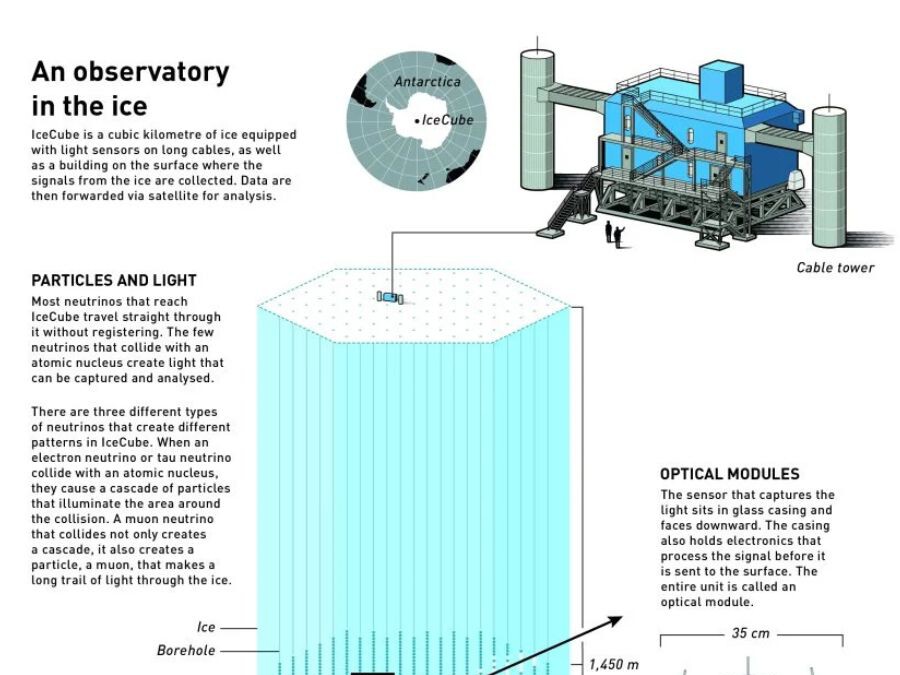
Detecting these elusive particles, however, is extraordinarily difficult. Their weak interactions mean that only rarely does a neutrino collide with an atom, producing a tiny flash of light. To catch enough of these flashes, you need an enormous detector—ideally, one made of a transparent medium like ice.
How Antarctic Ice Became a Particle Detector
Francis Halzen's idea was to embed thousands of optical sensors deep in the Antarctic ice at the South Pole. The resulting project, known as IceCube Neutrino Observatory, uses a cubic kilometer of ice as its detection volume. When a neutrino interacts with an ice molecule, it creates a particle shower that emits Cherenkov radiation, which the sensors record.
Construction began in 2004 and was completed in 2010, turning the ice into the world's largest neutrino detector. Since then, IceCube has detected high-energy neutrinos from outside our solar system, opening an entirely new window on the universe.
Key Takeaways from Halzen's Nobel-Winning Work
- Neutrinos are neutral, nearly massless particles that travel through matter and space almost without interacting.
- They can escape from dense environments where photons are trapped, providing a direct view of cosmic accelerators.
- IceCube uses a cubic kilometer of Antarctic ice instrumented with over 5,000 optical sensors to detect neutrino interactions.
- The observatory has identified astrophysical neutrinos, linking them to blazars and other energetic sources.
- Halzen's leadership demonstrated that large-scale natural environments can be repurposed as precision physics instruments.
What IceCube Has Revealed So Far
IceCube's most famous result came in 2017, when it detected a high-energy neutrino from a blazar called TXS 0506+056. This was the first time a neutrino source had been identified, marking the birth of neutrino astronomy. Subsequent analyses have found evidence for other neutrino emitters, though the full picture remains under construction.
The detector has also probed fundamental physics, setting limits on neutrino properties and searching for dark matter. Its success has spurred plans for an even larger detector, IceCube-Gen2, which would expand the instrumented volume by a factor of eight. Context on how this played out before sits in Nobel Physics 2026: Antarctic Ice Detector Catches Ghost Particles. A companion piece, Francis Halzen Wins 2026 Nobel Prize in Physics for Neutrino Work, approaches the same subject from another angle.
Comparing Neutrino Detection Techniques
Several approaches exist for catching neutrinos, each suited to different energy ranges and environments. The table below compares the main methods. The background to this story is set out in Nobel Prize in Physics 2026 Goes to Francis Halzen for Neutrino Work. A related thread runs through Science: latest articles.
| Technique | Medium | Energy Range | Example |
|---|---|---|---|
| Cherenkov detection | Ice or water | GeV to PeV | IceCube, Super-Kamiokande |
| Radio detection | Ice | EeV and above | ANITA, RNO-G |
| Scintillation | Liquid scintillator | MeV | Borexino, KamLAND |
| Acoustic detection | Water or ice | EeV | ANTARES, Baikal-GVD |
Why This Nobel Prize Matters for Physics
Awarding the Nobel to Halzen recognizes not only a technical achievement but a conceptual leap. By turning a hostile, remote environment into a precision instrument, he demonstrated that big science can be done with ingenuity and international collaboration. The prize also highlights the growing field of multi-messenger astronomy, where neutrinos, cosmic rays, and gravitational waves combine to tell a richer story. Earlier coverage in Nobel Prize in Chemistry 2026: Kagan and Soai Win for Asymmetric Synthesis shows how the argument developed. A closer look at the same subject appears in Nobel Prize in Chemistry Awarded for Mirror-Image Molecules.
For the public, the award underscores how fundamental research expands our understanding of the universe. It also inspires future generations to think creatively about using natural resources for scientific discovery. Anyone following the wider picture can start with Mars Ice Dust Miscalculation: What It Means for Habitability. The same theme surfaces in 2026 Nobel Peace Prize Winner Announcement Live, which takes a different angle.
FAQ
What exactly are neutrinos?
Neutrinos are elementary particles with no electric charge and extremely small mass. They interact only via the weak force and gravity, making them capable of passing through matter and space almost without being stopped.
Why build a detector in Antarctic ice?
Ice is transparent to the blue light produced when neutrinos interact, and the Antarctic ice sheet provides a huge, stable, and radio-quiet medium. This allows sensors to be spaced kilometers apart while still detecting the faint flashes from neutrino collisions.
What is IceCube and how does it work?
IceCube is a neutrino observatory consisting of over 5,000 optical sensors buried deep in the ice at the South Pole. When a neutrino interacts, it produces a shower of particles that emit Cherenkov light, which the sensors capture and scientists analyze to reconstruct the neutrino's direction and energy.
What does this Nobel Prize mean for the future of astronomy?
The prize validates neutrino astronomy as a powerful tool for studying the universe. It is expected to accelerate plans for larger detectors like IceCube-Gen2 and encourage more multi-messenger observations combining neutrinos with light and gravitational waves.
Browse the Shop
 Acacia frida deluxe solid wood bed frame |
Bedroom bench |
Bed chest drawers |
Lingerie dresser |
Frame base |
Mirror with jewelry storage |
30 Bathroom Vanity |
Memory foam queen mattress |
Mattresses for back pain |
Nightstand set of 2 |
Grand Goldman Shop |
Civil Lawyer
Deutschland Trikot WM 2026










