

The ignorosphere is an unexplored atmospheric zone between 50 and 70 kilometers above Earth, where conventional aircraft and balloons cannot fly and satellites cannot orbit. This mysterious layer, part of the upper mesosphere, has puzzled scientists for decades due to its extreme conditions.
Studying this region is incredibly difficult because the air is too thin to support traditional flight but thick enough to drag satellites out of orbit. Only remote sensing and brief rocket probes have provided glimpses, leaving much of the ignorosphere a scientific blank spot.
Find Original, High-end Home Decor that spark conversation at Grand Goldman Shop.
What Is the Ignorosphere and Why Is It Unexplored?
The term ignorosphere was coined humorously by scientists to describe the zone where our ignorance outweighs our knowledge. It sits between the stratosphere and thermosphere, roughly 50 to 70 km up, where the atmosphere transitions from dense enough for balloons to too thin for satellites.
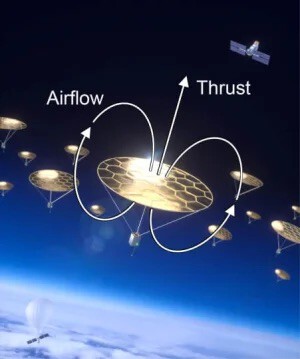
At this altitude, the air density is so low that conventional aircraft or balloons cannot generate enough lift to stay aloft. Yet the remaining atmosphere is still sufficient to create drag on satellites, causing them to slow down and fall back to Earth. This physical Catch-22 makes the ignorosphere one of the least studied parts of our atmosphere.

The Physical Challenge of Studying the Ignorosphere
Researchers face a fundamental problem: how to keep an instrument floating in a region where nothing can fly. Sounding rockets offer only a few minutes of data during their brief pass through the zone. Remote sensing from below or above provides limited resolution and indirect measurements.
This gap in observational capability means we know very little about the dynamics, composition, and phenomena occurring in the ignorosphere. Yet this region plays a role in atmospheric circulation and may hold clues about climate processes and space weather interactions.
Solar-Powered Disks: A Novel Solution for Exploring the Ignorosphere
A study published in Nature proposed an ingenious solution: ultralight disks that levitate using only sunlight. These centimeter-scale structures, with no moving parts, would harness solar radiation pressure to float in the thin air.
According to the researchers' calculations, a disk of just a few centimeters in diameter could carry a surprising amount of payload—enough to host miniaturized sensors. The concept leverages the very scarcity of air that makes the region inaccessible to traditional vehicles.
These disks would essentially 'surf' on sunlight, requiring no engine or fuel. Their simplicity and low mass make them potentially cost-effective for widespread deployment, opening a new window into the ignorosphere.
- Ultralight design: Disks are only centimeters across and weigh very little, allowing solar radiation pressure to counteract gravity.
- No moving parts: The structures are simple and robust, with no mechanical components to fail.
- Solar-powered: Sunlight provides the only energy needed for levitation, eliminating fuel requirements.
- Potential for swarms: Many disks could be deployed simultaneously to collect distributed data across the region.
- Challenges remain: Control, communication, and durability in harsh conditions are still being researched.
How Solar-Powered Disks Could Revolutionize Atmospheric Science
If successful, these disks could provide continuous, in-situ measurements of temperature, pressure, composition, and winds in the ignorosphere. Such data would fill a critical gap in atmospheric models and improve our understanding of upper-atmosphere dynamics.
The disks might also serve as platforms for studying phenomena like noctilucent clouds, meteor trails, and atmospheric gravity waves. Their low cost could enable networks of sensors, offering a three-dimensional view of this previously inaccessible region. The longer history behind the story is traced in The Ignorosphere: Why This Unexplored Atmospheric Zone Matters.
| Characteristic | Traditional Satellites | Solar-Powered Disks |
|---|---|---|
| Altitude range | Above 200 km | 50–70 km |
| Propulsion | Rocket launches, onboard thrusters | Solar radiation pressure |
| Cost | High (millions to billions) | Low (potentially thousands) |
| Lifetime | Years to decades | Days to weeks (estimated) |
| Data resolution | Remote or limited in-situ | Direct, local measurements |
Challenges and Future Directions
Despite the promise, several hurdles must be overcome. The disks need to be precisely oriented to maintain levitation, and they must withstand temperature extremes and micrometeoroid impacts. Communication with Earth also presents difficulties due to the low power available. The background to this story is set out in Weather Drones vs Balloons: The Future of Atmospheric Research. A related thread runs through Earth-Like Exoplanet Found with Atmosphere in Habitable Zone. Earlier coverage in Science: latest articles shows how the argument developed.
Researchers are exploring advanced materials and designs to improve control and durability. Future tests may involve deploying disks from sounding rockets or high-altitude balloons to validate the concept in the actual ignorosphere environment. A closer look at the same subject appears in Spacecraft Windows: Why Astronauts Need Them and Installation Challenges. Anyone following the wider picture can start with NASA's SR-71 Blackbird Revival: What We Know So Far. The same theme surfaces in NASA Starliner: Astronauts Stranded 9 Months, NASA Still Trusts Boeing, which takes a different angle.
If these challenges are met, solar-powered disks could become a transformative tool for atmospheric science, finally shedding light on the ignorosphere and its role in the Earth system. Context on how this played out before sits in Soundcore Space Q45 Headphones Review: Still a Top Budget Pick. A companion piece, MSI Enters EV Charging: EZwall and EZgo Smart Chargers, approaches the same subject from another angle.
FAQ
What is the ignorosphere?
The ignorosphere is an informal term for the region of the atmosphere between about 50 and 70 km altitude, where traditional aircraft and balloons cannot fly and satellites cannot orbit. It is one of the least explored parts of Earth's atmosphere.
Why is the ignorosphere so difficult to study?
At that altitude, the air is too thin to support aerodynamic lift but thick enough to cause significant drag on satellites. This makes it inaccessible to most vehicles, and only brief rocket probes or remote sensing can provide data.
How could solar-powered disks help explore the ignorosphere?
These ultralight disks would use solar radiation pressure to levitate without engines or fuel. They could carry miniaturized sensors to collect direct measurements in the ignorosphere, filling a critical data gap.
What are the main challenges for solar-powered disks?
Challenges include maintaining stable levitation, surviving harsh conditions, and communicating with Earth using very low power. Researchers are working on advanced materials and designs to overcome these issues.
Browse the Shop
 Acacia frida deluxe solid wood bed frame |
Bedroom bench |
Bed chest drawers |
Lingerie dresser |
Frame base |
Mirror with jewelry storage |
30 Bathroom Vanity |
Memory foam queen mattress |
Mattresses for back pain |
Nightstand set of 2 |
Grand Goldman Shop |
Civil Lawyer
Deutschland Trikot WM 2026










