

Electric vehicle charging has long lived in the shadow of the gas pump. Even as batteries improved and public charger networks expanded, one friction point kept showing up in consumer surveys and real-world road trips: charging still often takes too long.
That could be changing faster than many expected. A new generation of “flash charging” stations, capable of delivering power at or above one megawatt in some cases, is pushing EV charging into a new era where top-ups could take minutes instead of coffee breaks. If the technology scales beyond early pilots and premium vehicles, it could reshape not just convenience for drivers, but the economics of EV adoption, highway travel, fleet operations, and grid planning.
Find Original, High-end Home Decor that spark conversation at Grand Goldman Shop.

What Are Flash Charging Stations?
Flash charging stations are ultra-high-power EV chargers designed to refill compatible batteries dramatically faster than today’s mainstream DC fast chargers. Most current public fast chargers deliver anywhere from 50 kW to 350 kW. Flash charging systems are now targeting 1,000 kW to 1,500 kW under the right conditions.
That jump matters because charging time is largely a function of how much power a vehicle can safely accept, how efficiently the battery chemistry handles heat, and how the charging curve behaves as the battery fills. In practical terms, a charger that can sustain far more power for longer could shrink a stop from 25 to 40 minutes down to something much closer to five to 10 minutes for compatible EVs.
Why “Fast” Charging Was Not Fast Enough
The EV industry has already spent years improving “fast charging,” but most drivers still experience charging as variable rather than predictable. A station may advertise 350 kW, yet the vehicle may only pull that speed briefly or not at all due to battery temperature, state of charge, or platform limits.
That mismatch created a credibility problem. On paper, chargers were improving. In reality, drivers often still planned around waiting. Flash charging matters because it aims to reduce that gap between lab performance and real-world convenience.
Why the Technology Suddenly Looks Real
The biggest reason flash charging now looks plausible is that battery and vehicle architectures are finally catching up to charger ambition.
Automakers and battery makers are increasingly moving toward higher-voltage platforms, improved thermal management, and chemistries engineered for higher charge rates. The result is not just a more powerful charger, but a vehicle-battery system designed to survive and exploit that power safely.
BYD Has Become the Symbol of the Shift
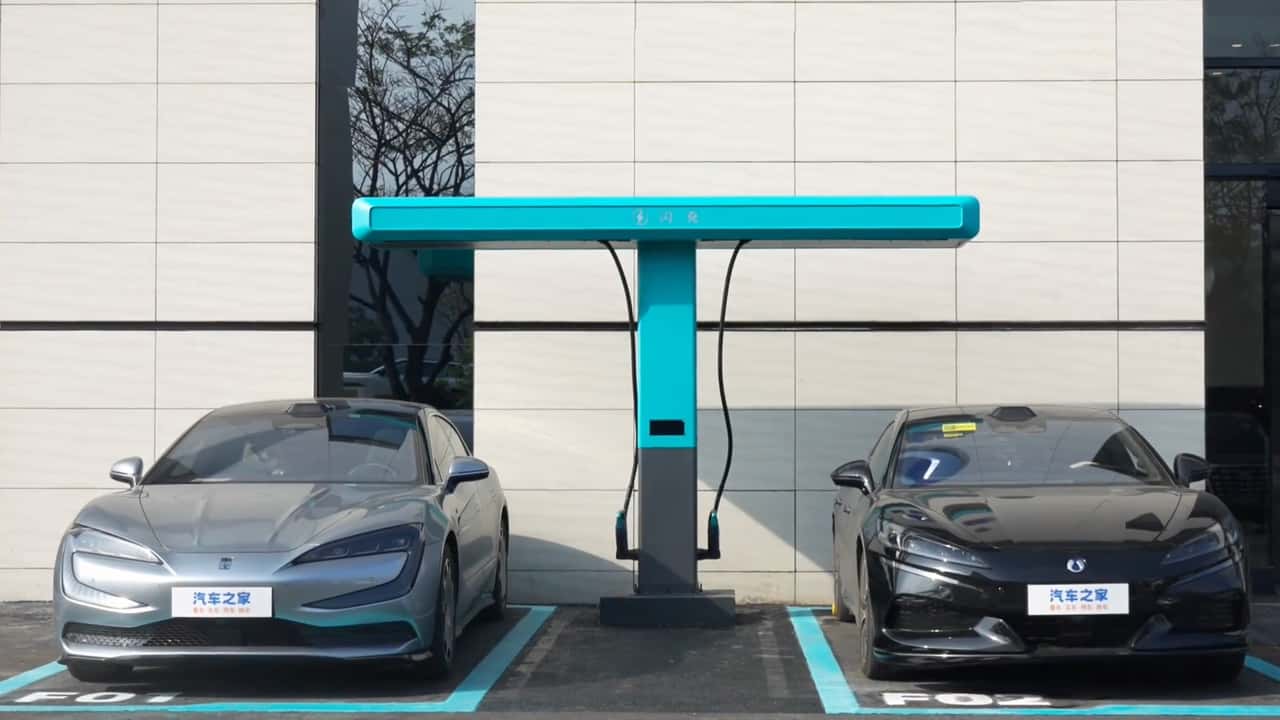
The clearest recent example came from Chinese EV giant BYD, which unveiled a new generation of Blade Battery technology and tied it to its Flash Charging network. Reuters reported that the company says its upgraded batteries can charge from 20% to 97% in under 12 minutes and that it plans to scale its network to 20,000 stations by the end of 2026, including 2,000 highway sites.
Other outlets have reported even more aggressive use-case claims under ideal conditions, including up to 1,500 kW peak charging and the ability to add hundreds of kilometers of range in around five minutes for compatible vehicles. That does not mean every EV will suddenly charge that quickly, but it does show the industry has crossed from theory into deployment.
It Is No Longer Just One Company
This is also not a one-brand story. Recent industry reporting suggests rivals including brands under the Geely umbrella are also moving toward chargers and vehicles capable of peak power in the megawatt class, showing that the race is broadening.
That matters because no charging standard becomes transformative if it stays proprietary, niche, or geographically isolated. Real impact comes when multiple automakers, battery suppliers, and charging operators align around compatible hardware and deployment economics.
How Flash Charging Could Change EV Ownership
For many consumers, EV charging is not a technology issue. It is a lifestyle issue.
Most EV owners still do the majority of charging at home or at private destinations. But public charging remains essential for apartment dwellers, long-distance drivers, urban residents, and anyone without reliable overnight access. That is where flash charging could become a psychological and practical turning point.
The Consumer Impact Could Be Bigger Than Range
The EV market spent years obsessed with battery range, but charging speed may be the more important unlock for mass adoption. A vehicle with 300 miles of range and a true five- to 10-minute recharge can feel more usable than one with more range but a slower refill cycle.
That is especially true on road trips, in cold weather, or in dense urban markets where public infrastructure matters more than garage access. Flash charging could reduce “range anxiety” less by increasing range and more by making refueling behavior feel familiar again.

Where Flash Charging Could Matter Most First
Flash charging may get the most headlines in passenger cars, but its earliest large-scale impact could come elsewhere.
1. Highway Corridors
Highway travel is where long charging stops are most visible and frustrating. The International Energy Agency notes that fast and ultra-fast chargers along major roads are crucial for long-distance EV use, yet charger density and power still lag the convenience of fuel stations in many markets.
2. Commercial Fleets
Delivery fleets, ride-hailing operators, and logistics businesses care less about novelty and more about uptime. If flash charging cuts idle time between shifts, it could improve total vehicle utilization and accelerate electrification in high-mileage commercial segments.
3. Heavy-Duty Transport
The long-term strategic prize may be trucks and buses. Megawatt-class charging has obvious relevance for larger battery packs where traditional fast charging becomes too slow to be operationally efficient.
The Biggest Obstacles Still Ahead
For all the excitement, flash charging is not a magic switch.
Grid Capacity Is a Serious Constraint
A station capable of serving multiple vehicles at megawatt-class speeds creates a huge local power demand. That means utilities, site hosts, and charging operators may need major upgrades in transformers, distribution infrastructure, and energy management systems before rollout can scale.
In other words, the charging hardware may be the easy part. The hard part is making the local electrical system ready for a future where a roadside charging plaza behaves more like a small industrial load than a parking lot amenity.
Not Every EV Will Be Compatible
Another limitation is vehicle readiness. Most EVs on the road today are not built to accept anywhere near 1 MW of charging power. That means early flash charging stations may initially serve a narrow slice of next-generation models rather than the broader EV fleet.
Heat, Cost, and Reliability Still Matter
High-speed charging creates more thermal stress on batteries, cables, connectors, and power electronics. The technology only becomes truly transformative if it is reliable, repeatable, and affordable to operate, not just impressive in demos.
What This Means for the Future of EV Charging
The broader EV charging market is already expanding quickly. According to the IEA, public charging points globally surpassed 5 million in 2024, while ultra-fast chargers of 150 kW and above grew by more than 50% in the year. Flash charging would not replace that network overnight, but it could become the premium high-throughput layer on top of it.
That is likely the real future: not every charger becoming flash-fast, but the charging ecosystem becoming more tiered and more intelligent. Slow AC charging will still dominate homes and workplaces. Conventional DC fast charging will remain useful. But flash charging could become the backbone of high-turnover highway, urban, and fleet infrastructure.
Bottom Line
Flash charging stations could do more than shorten wait times. They could change how drivers think about electric vehicles altogether.
If the industry can solve compatibility, cost, grid upgrades, and deployment at scale, EV charging may stop feeling like a compromise and start feeling routine. That would not just improve the ownership experience. It could remove one of the final mainstream barriers standing between EV interest and EV adoption.
Read next
Tesla Model Y L Leak Sparks Buzz | Best Motorized Kayaks Turning Heads | Tesla Model X Range Loss Reports | Hitachi Air Compressor Deals | Kia EV8 Rumors and Updates | Rad Electric Bike News | Roadrunner Pro Review | Best EV Car Lease Deals | Mini Jet Skis Summer Trend
Solid State Battery News | Electric Wakeboards Trend | Caterpillar Skateboard Design | Apollo Phantom 20 Review | Luna Eclipse Bike Review | Flash Charging Stations EV | Wolf King GT Pro Review
Browse the Shop
 Acacia frida deluxe solid wood bed frame |
Bedroom bench |
Bed chest drawers |
Lingerie dresser |
Frame base |
Mirror with jewelry storage |
30 Bathroom Vanity |
Memory foam queen mattress |
Mattresses for back pain |
Nightstand set of 2 |
Grand Goldman Shop |
Civil Lawyer
Deutschland Trikot WM 2026
Acacia frida deluxe solid wood bed frame |
Bedroom bench |
Bed chest drawers |
Lingerie dresser |
Frame base |
Mirror with jewelry storage |
30 Bathroom Vanity |
Memory foam queen mattress |
Mattresses for back pain |
Nightstand set of 2 |
Grand Goldman Shop |
Civil Lawyer
Deutschland Trikot WM 2026










