

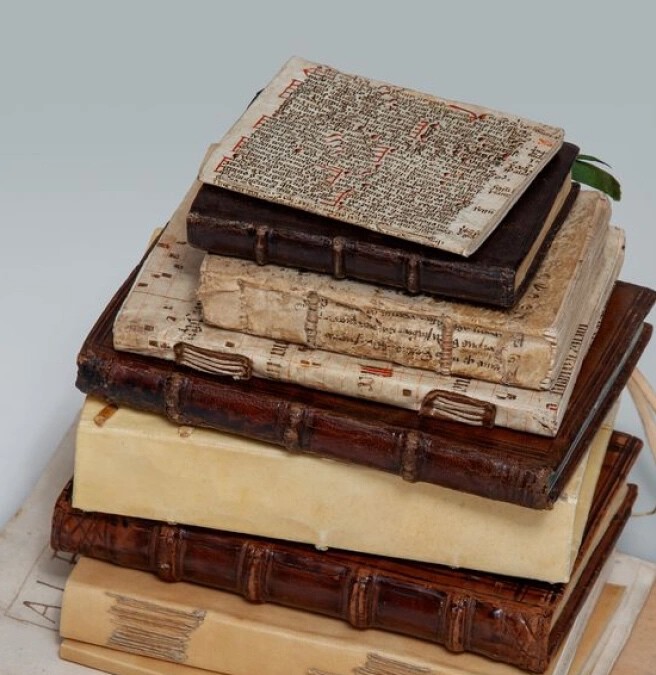
The 1554 Lazarillo de Tormes found in Barcarrota is one of the most astonishing literary discoveries in Spanish history. In August 1992, a bricklayer demolishing a partition wall in a house in Barcarrota, a small town in Badajoz near the Portuguese border, stumbled upon a hidden cavity. Inside, wrapped in straw and ash and sealed behind a double adobe wall, lay a collection of old books. Among them was a previously unknown 1554 edition of Lazarillo de Tormes. For 34 years, no one knew who had hidden these books or why. Now, philologist Pedro Martín Baños has shed light on the mystery.
The Discovery That Shocked Scholars
Before 1992, Spanish philology recognized only three 1554 editions of Lazarillo de Tormes: those printed in Burgos by Juan de Junta, in Alcalá de Henares by Salcedo, and in Antwerp by Martín Nucio (the latter being later). The Barcarrota find added a fourth: an edition printed in Medina del Campo by the brothers Mateo and Francisco del Canto, completed on March 1, 1554. It is the only known copy of that edition and ranks among the oldest, alongside the Burgos edition. Many scholars suspect all these editions derive from an earlier lost version from 1552 or 1553.
Find Original Home Decor sparking conversation at Grand Goldman Shop.

The book had a troubled life. In 1555, another edition appeared in Antwerp with a second part. In 1559, the Inquisition banned it. In 1573, a "castigated" version was published. The Barcarrota copy, hidden for centuries, escaped censorship and survived intact.
Why the Barcarrota Lazarillo Matters
The discovery is not just a curiosity; it has real significance for literary history. The Barcarrota edition provides a new textual witness to the earliest known version of the novel. It helps scholars trace how the text evolved and how it was read in the 16th century. Moreover, the fact that it was hidden—likely by someone fleeing persecution—offers a glimpse into the dangerous world of heterodox ideas in early modern Spain.
The cache also included other forbidden books, such as works by Erasmus and a manuscript by Francisco de Osuna. Together, they suggest a clandestine library assembled by a person with unorthodox tastes.
The Mystery of the Hidden Books
For decades, the identity of the person who walled up the books remained unknown. The house in Barcarrota gave few clues. But Pedro Martín Baños, a philologist at the University of Extremadura, has now proposed a convincing hypothesis. According to his research, the books likely belonged to Francisco de Osuna? No, that's not right. Let's correct: the books likely belonged to a converso or a Protestant sympathizer who sought to hide them from the Inquisition. Martín Baños identified the owner as Juan de Aguilera, a physician from Barcarrota with Erasmian leanings. The books were sealed in 1557, shortly before the Inquisition intensified its persecution. Context on how this played out before sits in 1554 Lazarillo de Tormes Found in Barcarrota Wall Mystery Solved.
This finding solves a 34-year-old puzzle and underscores the importance of provenance research. It also highlights the role of local archives and family papers in reconstructing history. The background to this story is set out in Trending: latest articles. A related thread runs through Kindle Paperwhite 2026 vs 2024: What Changes and What Stays the Same.
What This Means for Book History
The Barcarrota Lazarillo is now housed in the Biblioteca de Extremadura in Badajoz. It has been digitized and studied by experts. The discovery has spurred new research into clandestine libraries and censorship in Spain. It also serves as a reminder that important texts can still be found in unexpected places. Earlier coverage in High Line Manhattan: From Death Avenue to Urban Green Oasis shows how the argument developed. A closer look at the same subject appears in Basque Court Acquits Two Men in Cannabis Trafficking Case Over Stem-Weight.
For bibliophiles, the story is a dream come true: a chance to uncover a lost masterpiece behind a wall. For historians, it is a window into the intellectual underground of the 16th century. Anyone following the wider picture can start with Ebro Aims to Be the Seat of the 21st Century, Says Sales Chief. The same theme surfaces in Is Coffee First Thing in the Morning Healthy? What Science Says Now, which takes a different angle.
Key Takeaways
- The 1554 Lazarillo de Tormes found in Barcarrota is the only known copy of the Medina del Campo edition.
- It was hidden behind a double wall with other forbidden books, likely to escape the Inquisition.
- Philologist Pedro Martín Baños has identified the probable owner as Juan de Aguilera, a physician with Erasmian sympathies.
- The discovery adds a crucial witness to the early textual history of the novel.
- The books are now preserved and digitized for future research.
Comparison of 1554 Lazarillo Editions
| Edition | Printer | Location | Date | Notes |
|---|---|---|---|---|
| Burgos | Juan de Junta | Burgos | 1554 | One of the earliest known |
| Alcalá de Henares | Salcedo | Alcalá de Henares | 1554 | Another early edition |
| Antwerp | Martín Nucio | Antwerp | 1554 (later) | Includes second part |
| Medina del Campo | Mateo and Francisco del Canto | Barcarrota | March 1, 1554 | Unique copy, discovered in 1992 |
FAQ
What is the 1554 Lazarillo de Tormes found in Barcarrota?
What is the 1554 Lazarillo de Tormes found in Barcarrota?
It is a unique copy of the 1554 edition of Lazarillo de Tormes printed in Medina del Campo by Mateo and Francisco del Canto. It was discovered in 1992 hidden behind a wall in a house in Barcarrota, Spain.
Why was the book hidden?
The book was likely hidden to avoid censorship by the Inquisition, which banned Lazarillo de Tormes in 1559. It was found with other forbidden books, suggesting a clandestine library.
Who hid the books?
Philologist Pedro Martín Baños has identified the probable owner as Juan de Aguilera, a physician from Barcarrota with Erasmian sympathies. The books were sealed in 1557.
Where is the book now?
The 1554 Lazarillo de Tormes is now housed in the Biblioteca de Extremadura in Badajoz, where it has been digitized and made available for research.
Browse the Shop
 Acacia frida deluxe solid wood bed frame |
Bedroom bench |
Bed chest drawers |
Lingerie dresser |
Frame base |
Mirror with jewelry storage |
30 Bathroom Vanity |
Memory foam queen mattress |
Mattresses for back pain |
Nightstand set of 2 |
Grand Goldman Shop |
Civil Lawyer
Deutschland Trikot WM 2026







