

The Atlas world model from Fei-Fei Li's World Labs is being pitched as the moment AI stops reading the internet and starts understanding physical space. On the surface, the announcement looks like just another flashy video generator. Look closer, and the ambition is far bigger.
Generative video models have already shown they can fake almost any scene with startling realism. Atlas is not trying to win that contest. It is trying to build a shared spatial context that lets a machine reason about what should be visible from a given position in a 3D world.
Find Original Home Decor sparking conversation at Grand Goldman Shop.

What Exactly Is the Atlas World Model?
World Labs describes Atlas as a multimodal model trained from scratch to work with text, images, camera positions, depth maps, and video sequences. All of those inputs are fused into a single spatial context the model can reason over.
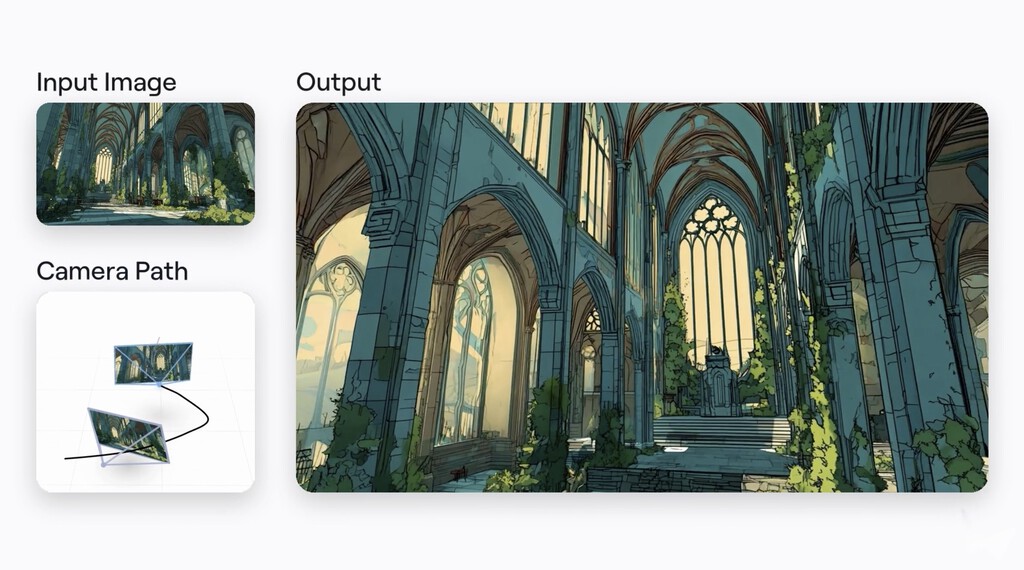
From that context, Atlas generates new observations that stay coherent with the 3D space it perceives. The technical label is a multimodal autoregressive diffusion transformer, but the key shift is what gets predicted. Instead of guessing the next word, Atlas predicts what should be seen next from a specific spot in space.

That distinction matters. A language model learns the patterns of written language. A world model learns the patterns of physical reality, including how objects sit in space and how a scene changes as a viewpoint moves.
Why the Physical World Needs Its Own Language Model
The core argument behind Atlas is captured in a blunt idea: there is no language out there in the physical world. Large language models conquered the internet because text is abundant, structured, and cheap to scrape. The physical world offers none of that convenience.
Robots cannot learn to navigate a kitchen by reading descriptions of kitchens. They need a model that understands how space is arranged, what occludes what, and how a scene shifts when a camera or a body moves through it.
This is why world models are being framed as the next major frontier for AI. Language models gave machines a grasp of human knowledge. World models are meant to give them a grasp of physical reality, which is the missing piece for robotics that behaves less like a scripted demo and more like the machines in films.
How Atlas Reconstructs Space From Limited Data
What makes the Atlas proposal genuinely striking is how it rebuilds a world from limited information. The model combines several input types into one coherent spatial representation, then generates views that remain consistent with that representation.
This is harder than it sounds. A depth map gives partial geometry, a camera position gives a viewpoint, and an image gives appearance. Atlas has to reconcile all of them into a single context that holds together as the viewpoint changes.
That ability to infer a full 3D scene from sparse cues is the real technical achievement. It is also what separates a world model from a video generator that only needs to look convincing for a few seconds.
Key Takeaways From the Atlas Announcement
- Different goal: Atlas predicts spatial observations, not the next text token.
- Multimodal by design: it is trained from scratch on text, images, camera positions, depth maps, and video.
- Built for coherence: generated views must stay consistent with the 3D space the model perceives.
- Robotics is the prize: world models are positioned as the foundation physical AI has been missing.
- Credibility matters: the project is backed by Fei-Fei Li, widely called the godmother of AI.
Atlas vs. Conventional Generative Video Models
The comparison that matters most is between Atlas and the video generators already flooding the market. Both produce visuals, but they are solving different problems, and the difference shows up in what each one is optimized to do.
| Feature | Atlas World Model | Typical Video Generator |
|---|---|---|
| Primary output | Spatially coherent observations | Convincing video frames |
| Core prediction | What is visible from a position in 3D space | Plausible next frames |
| Inputs | Text, images, camera positions, depth maps, video | Mostly text and images |
| Training approach | Trained from scratch as a multimodal model | Often optimized for visual realism |
| Main application | Robotics and physical AI | Content creation and marketing |
That table explains why the Atlas announcement is not really a competitor to the video tools people already use. It is aimed at a different audience, one that cares about geometry and consistency rather than spectacle.
Who Is Behind Atlas and Why It Matters
World Labs is the company behind Atlas, and its founder is Fei-Fei Li, often described as the godmother of AI. Her track record in computer vision gives the project a level of credibility that a random startup announcement would not carry. Context on how this played out before sits in Atlas World Model: Fei-Fei Li's AI Takes On the Physical World.
That background matters for how the claims should be read. Li has spent years working on the gap between what machines see and what they understand, and Atlas is a direct attempt to close it. The pedigree does not guarantee success, but it raises the odds that this is a serious research direction rather than a marketing stunt. The background to this story is set out in AMD Buys World Labs for $8.2B to Challenge Nvidia in AI. A related thread runs through Chinese AI Firms Now Race Toward Colossal Models After Small-Model Lead.
What to Watch Next for World Models
The obvious next question is whether Atlas can move from demonstrations to dependable systems. Coherent generated views are impressive, but robotics demands reliability under messy real-world conditions, and that is a much higher bar. Earlier coverage in Ai Video: latest articles shows how the argument developed. A closer look at the same subject appears in Google and Meta's Cheap AI Models Now Rival OpenAI and Anthropic.
The other thing to watch is how the world model approach spreads. If spatial reasoning becomes the foundation for physical AI, expect more labs to pivot toward models that predict space rather than text. The race is no longer only about who has the best language model. Anyone following the wider picture can start with Segway's Navimow H5 Pro Robot Mower Adds a Robotic Arm for Perfect Edges. The same theme surfaces in Alibaba's Joe Tsai: Open Source AI Is Europe's Only Tech Sovereignty Path, which takes a different angle.
FAQ
What is the Atlas world model?Atlas is a multimodal model from World Labs, the company founded by Fei-Fei Li. It is trained from scratch on text, images, camera positions, depth maps, and video to build a shared spatial context and predict what should be seen from a given position in 3D space.
Atlas is a multimodal model from World Labs, the company founded by Fei-Fei Li. It is trained from scratch on text, images, camera positions, depth maps, and video to build a shared spatial context and predict what should be seen from a given position in 3D space.
How is Atlas different from a video generator?A typical video generator is optimized to produce convincing footage. Atlas is optimized for spatial coherence, meaning its outputs must stay consistent with the 3D space the model perceives. That makes it a tool for reasoning about physical scenes rather than a content creation engine.
A typical video generator is optimized to produce convincing footage. Atlas is optimized for spatial coherence, meaning its outputs must stay consistent with the 3D space the model perceives. That makes it a tool for reasoning about physical scenes rather than a content creation engine.
Why do world models matter for robotics?Robots cannot learn physical tasks from text alone because there is no language in the physical world. World models give machines a way to understand spatial layout, occlusion, and how scenes change as a viewpoint moves, which is essential for navigating and acting in real environments.
Robots cannot learn physical tasks from text alone because there is no language in the physical world. World models give machines a way to understand spatial layout, occlusion, and how scenes change as a viewpoint moves, which is essential for navigating and acting in real environments.
Who is Fei-Fei Li?Fei-Fei Li is a computer vision researcher widely described as the godmother of AI. She founded World Labs, the company behind Atlas, and her background in vision research lends credibility to the project's ambitious claims about spatial intelligence.
Fei-Fei Li is a computer vision researcher widely described as the godmother of AI. She founded World Labs, the company behind Atlas, and her background in vision research lends credibility to the project's ambitious claims about spatial intelligence.
Browse the Shop
 Acacia frida deluxe solid wood bed frame |
Bedroom bench |
Bed chest drawers |
Lingerie dresser |
Frame base |
Mirror with jewelry storage |
30 Bathroom Vanity |
Memory foam queen mattress |
Mattresses for back pain |
Nightstand set of 2 |
Grand Goldman Shop |
Civil Lawyer
Deutschland Trikot WM 2026







