

Saturn's perfect hexagon at its north pole is one of the most puzzling features in the solar system. This massive geometric shape, spanning 30,000 kilometers in diameter, has defied easy explanation since its discovery. Despite decades of observation, scientists are still working to understand what creates and sustains this bizarre structure.
The hexagon is so large that two Earths could fit inside it. Its perfect six-sided shape is unlike anything else found in nature on such a scale, making it a subject of intense study and speculation.
Find Original Home Decor sparking conversation at Grand Goldman Shop.

What Is Saturn's Hexagon and When Was It Discovered?
The hexagon is a persistent cloud pattern located at Saturn's north pole. It was first observed in 1981 when NASA's Voyager 2 spacecraft flew past the planet. Since then, it has been continuously monitored by subsequent missions, including Cassini, which provided detailed images and data.
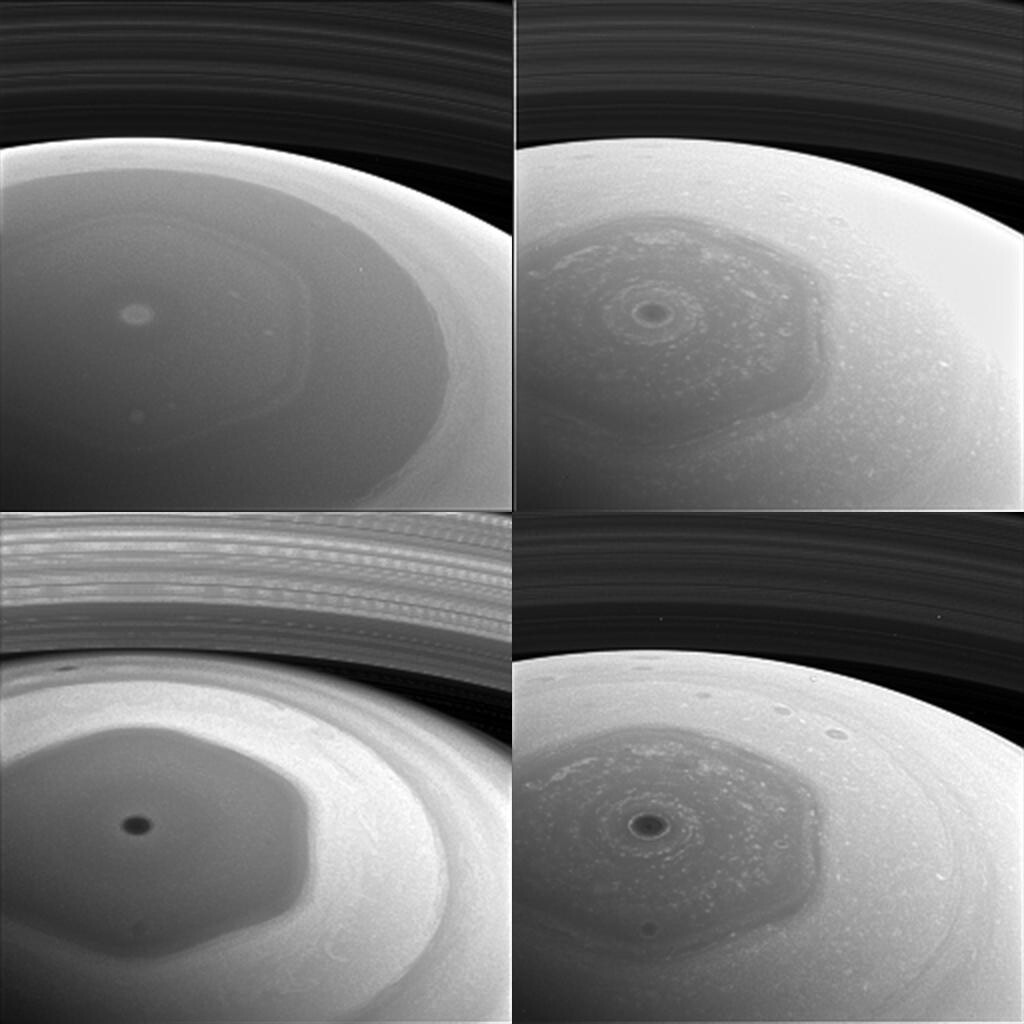
Unlike transient storms, the hexagon has remained stable for decades. Its longevity suggests a deep-rooted mechanism that maintains its shape despite the turbulent atmosphere of Saturn.
Why Is the Hexagon So Mysterious?
While nature can produce geometric shapes, a stable six-sided polygon of this size is extremely rare. Most atmospheric phenomena on gas giants are circular or chaotic, not neatly polygonal. The hexagon's sharp corners and straight edges challenge our understanding of fluid dynamics on planetary scales.
Moreover, the hexagon is not a solid structure but a pattern in the clouds. It sits atop a high-speed jet stream that circles the pole, and the interaction between the jet and the surrounding atmosphere likely plays a key role in shaping it.
The Latest Scientific Hypothesis: Deep Convection
In a recent study published in the Proceedings of the National Academy of Sciences, researchers from Harvard's Department of Earth and Planetary Sciences proposed a new explanation. They suggest that the hexagon is not merely a surface phenomenon but is generated by deep convective processes within Saturn's interior.
According to this hypothesis, turbulence in the deep atmosphere creates vortices that push and bend a high-speed air current surrounding the north pole. This bending results in the six-sided shape. The model is the most solid yet, but it is not definitive.
- The hexagon is a stable cloud pattern at Saturn's north pole, first seen in 1981.
- It spans 30,000 km, large enough to contain two Earths.
- The leading hypothesis involves deep convection and vortices interacting with a polar jet stream.
- Despite decades of study, no conclusive explanation exists.
- Future missions could provide crucial data to solve the mystery.
How Does the Hexagon Compare to Other Planetary Features?
Saturn's hexagon is unique in its geometric regularity. Other gas giants, like Jupiter, have polar cyclones but not polygonal patterns. Earth's polar vortices are circular, and even Mars's polar caps lack such distinct shapes. The hexagon stands out as an anomaly. The background to this story is set out in Science: latest articles. A related thread runs through James Webb Solves Long-Standing Saturn Rotation Mystery. Earlier coverage in BepiColombo Spacecraft Arrives at Mercury for Historic Orbital Mission shows how the argument developed.
| Feature | Planet | Shape | Size | Discovery Year |
|---|---|---|---|---|
| North Pole Hexagon | Saturn | Hexagonal | ~30,000 km | 1981 |
| Great Red Spot | Jupiter | Oval | ~16,000 km | 1665 |
| Polar Vortex | Earth | Circular | Variable | 1950s |
| Polar Cyclones | Jupiter | Circular | ~4,000 km | 2016 |
What's Next for Hexagon Research?
Future missions to Saturn, such as proposed orbiters or flybys, could carry instruments capable of probing deeper into the atmosphere. Understanding the hexagon requires measuring wind speeds, temperature gradients, and composition at high resolution. A closer look at the same subject appears in Venera Probes: How the USSR Conquered Venus Against All Odds. Anyone following the wider picture can start with Rivas Plans to Bury 2.5 Kilometers of Metro Line 9B. The same theme surfaces in Soundcore Headphones: My Secret to Focus During Valencia Fallas, which takes a different angle.
Until then, scientists will continue to refine models and analyze existing data. The hexagon remains a testament to the complexity of planetary atmospheres and the mysteries that still await discovery. Context on how this played out before sits in Saturn's South Pole Reveals a Rare Decagonal Cloud Pattern. A companion piece, Saturn's Perfect Hexagon: Why Scientists Still Can't Explain, approaches the same subject from another angle.
FAQ
What is Saturn's hexagon?
Saturn's hexagon is a massive six-sided cloud pattern at the planet's north pole, spanning about 30,000 kilometers. It was first observed by Voyager 2 in 1981 and has persisted for decades.
Why is the hexagon so puzzling?
Its perfect geometric shape and stability are unusual for atmospheric phenomena. Most gas giant features are circular or irregular, and the hexagon's sharp corners defy simple fluid dynamics explanations.
What is the leading theory for the hexagon's formation?
The leading hypothesis suggests that deep convection in Saturn's interior creates vortices that interact with a high-speed polar jet stream, bending it into a hexagonal shape. This model was published in PNAS by Harvard researchers.
Will we ever understand the hexagon?
With future missions and improved models, scientists hope to unravel the mystery. However, it may take years of dedicated study to fully explain this unique phenomenon.
Browse the Shop
 Acacia frida deluxe solid wood bed frame |
Bedroom bench |
Bed chest drawers |
Lingerie dresser |
Frame base |
Mirror with jewelry storage |
30 Bathroom Vanity |
Memory foam queen mattress |
Mattresses for back pain |
Nightstand set of 2 |
Grand Goldman Shop |
Civil Lawyer
Deutschland Trikot WM 2026







