

Having a chalet with a private pool is the dream of many. The idea of having aprivate enclosurein your home where you can hang out and cool off on the hottest days without having to share space with your neighbors, it is undoubtedly a very attractive idea.
However, as with these types of amenities, swimming pools entail a series of dangers.
Find Bleeding Edge Supplements at Scandalous Prices on iHerb.

Living in this type of houses, whether semi-detached or independent homes,makes you more vulnerable to the possibility of theft. After all, it is always easier to access low-rise homes than high-rise homes.
But, when it comes to swimming pools, this is not the only danger. Yeahyou have children or elderly people in your care, you must install a device that protects them from suffering an accident.
What to take into account when choosing an alarm for your pool
If you are one of the lucky ones who has a private pool at home, you will have thought more than once about the need to protect the area by installing an alarm.
Keep in mind that the dangers of having a pool are not limited to the possible entry of intruders into your home, but also toprevent an accident from happening, especially if there are children in the home.
To choose the best alarm, there are a series of factors that you must take into account, since devices aimed at these areas work as a complement, not as a sole protection.
Location
First of all, you must assess the space in which the pool is located. Is there afence that surrounds it? Is it covered by atarp or some security element? These first two questions are important to assess what type of alarm is best to install.
Also assess whether from one or more windows of your house you havegood visibility to see what is happening in the pool.
Distance
La distanceEven your house is also very important, since you will have to evaluate your reaction time in case, for example, a child falls inside. On the other hand, you also have to know how much time you have in case you detect the presence of an intruder.
Pets
Don't forget yourpets, if you have. The presence of an animal can cause the alarm to go off by mistake.
Consider choosing a compatible device if you have a dog, cat or other pet that usually roams freely around the area where the pool is installed.
Types of alarms for swimming pools
Once the previous questions have been assessed, we will tell you what types of pool alarms are on the market and which is the best option depending on your circumstances. A priori, there are four types of alarms in this area:
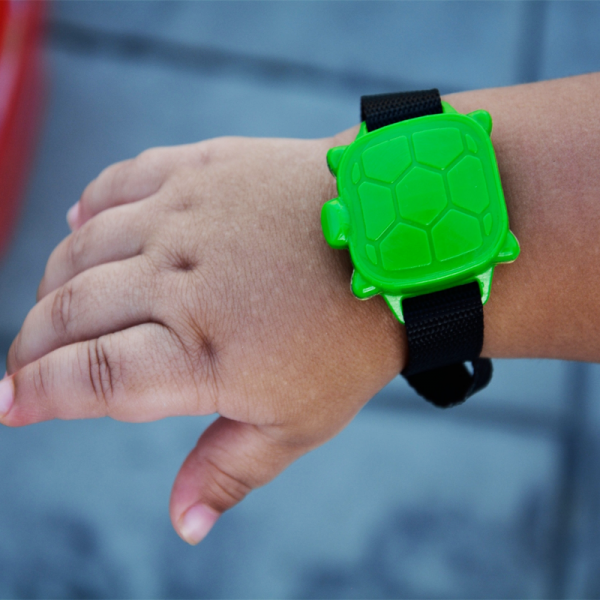
Bracelet alarms
These devices are aimed exclusively at protection of children or vulnerable people . They consist of a bracelet linked to a receiver that receives the signal in case it is submerged.
Thus, you will hear a beep if the person carrying it falls into the pool. If the distance from your house is very short and allows you to get there very quickly, this may be enough.
If, on the other hand, your home and the pool are separated by a greater distance, you will have to complement this type of alarm with other devices.
Above ground alarm
These create a infrared or laser line surrounding the pool and gives the warning if it breaks. As a disadvantage, a strong gust of wind can disturb them and cause the alarm to go off by mistake.
If you have pets, you can measure their height and place the line above them, although there is also the sentinel alarm option for this. It is a type of floor alarm that combines motion detectors and heat sensors.
floating alarm
The floating alarms They are placed inside the pool itself. They react to the movement of water, so if someone falls in, the waves they cause would trigger the receiver's warning.
Submerged alarm
It works in a similar way to the previous one, with the difference that it is placed on the edge of the pool with an arm submerged inside that measures the movement of water .
The last two options are more compatible with the presence of pets, since unless the animal also fell into the water, it would not set off the alarm with its presence in the enclosure.
However, all of the devices mentioned are especially designed to notify us if there is an accident and someone falls into the pool. But what happens if an intruder enters my property?
Protection against theft
As we explained at the beginning, houses with a private pool have the disadvantage of havingeasier access for thieves. Although the main concern if you have children and a pool is to prevent them from falling in, protection against theft should not be overlooked.
For this, the best option is usually a perimeter type alarm. These alarms have three protection zones:enclosure boundary, intermediate zone and pool boundary. Depending on how big the space is, you may want to install all three protections or just one or two of them.
Placing at least devices on both limits will provide you with adouble protection. Your house will be protected since, if an intruder tries to access the interior, the sensors that protect the outer limit will give the warning immediately.
Additionally, if someone approaches the edge of the pool, the sensors protecting this boundary will also trip. Without a doubt, the ideal and most protective option is to install a perimeter alarm combined with one of the options in the previous section.
Likewise, if you connect the exterior perimeter alarm with a ARC, you will ensure that you havethe authorities at your home quickly, to arrest anyone who has tried to enter without permission.
In conclusion, when choosing the best alarm for your pool, think first in your needs . If you do not have children or elderly people in your care, you will need a device that protects your enclosure from intruders.
If you have them, you will have to opt for one of the first options mentioned, also considering the presence of animals that could set off a false alarm.
Browse the Shop
 Acacia frida deluxe solid wood bed frame |
Bedroom bench |
Bed chest drawers |
Lingerie dresser |
Frame base |
Mirror with jewelry storage |
30 Bathroom Vanity |
Memory foam queen mattress |
Mattresses for back pain |
Nightstand set of 2 |
Grand Goldman Shop |
Civil Lawyer
Deutschland Trikot WM 2026
Acacia frida deluxe solid wood bed frame |
Bedroom bench |
Bed chest drawers |
Lingerie dresser |
Frame base |
Mirror with jewelry storage |
30 Bathroom Vanity |
Memory foam queen mattress |
Mattresses for back pain |
Nightstand set of 2 |
Grand Goldman Shop |
Civil Lawyer
Deutschland Trikot WM 2026










