

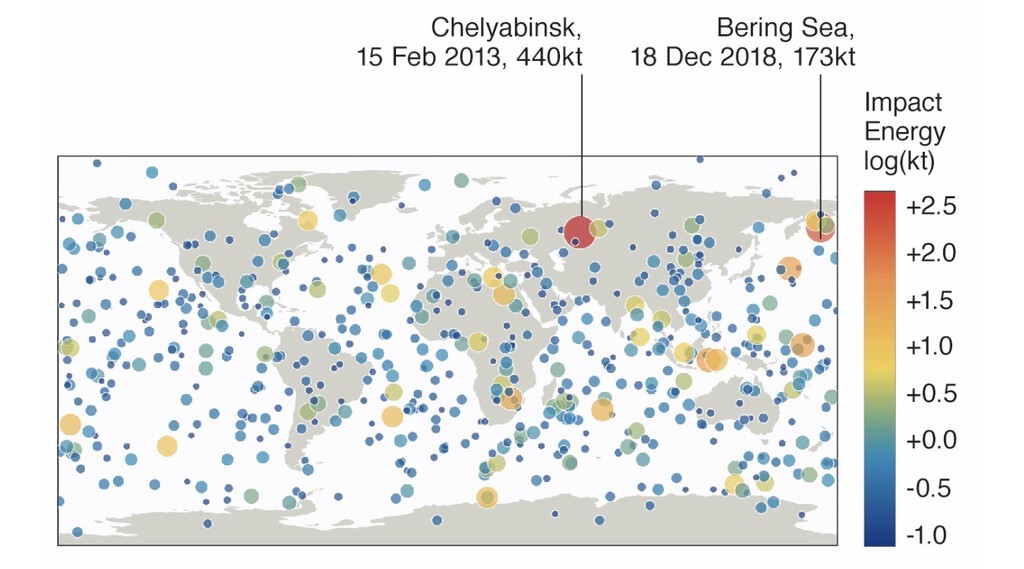
The Bering Sea asteroid explosion of December 18, 2018, was the largest asteroid airburst in 30 years, releasing energy equivalent to 173 kilotons of TNT. The event occurred over the Pacific Ocean off the coast of Russia's Kamchatka Peninsula, far from populated areas, and was initially detected by US Air Force satellites and infrasound stations designed to monitor nuclear tests.
What Happened in the Bering Sea?
On that day, a small asteroid only a few meters in diameter entered Earth's atmosphere at a speed of about 32 km/s. At that velocity, even a modest-sized object can explode with the force of multiple atomic bombs. The resulting airburst created a bright orange flare visible from space, captured in a high-resolution satellite image over the vast ocean and white clouds.
Find Original Home Decor sparking conversation at Grand Goldman Shop.

The explosion was initially spotted by US military satellites and confirmed by infrasound stations that pick up low-frequency sound waves from large detonations. However, the Center for Near Earth Object Studies (CNEOS), which tracks potentially hazardous objects, took months to officially record the event. This delay highlights the challenges of detecting and cataloging asteroid impacts, especially those occurring in remote regions.
Why Did It Take Months to Confirm?
According to BBC reporting at the time, the asteroid was only several meters across. At such a high velocity, it was more than enough to explode with the force of several nuclear bombs and be seen from space. Yet the remote location meant no witnesses could see and report it. The lack of human observation and the need for detailed analysis contributed to the delay in registration.
CNEOS relies on data from various sources, including satellites and ground-based observatories, to identify and track near-Earth objects. The Bering Sea event was a reminder that even significant airbursts can go unnoticed without dedicated monitoring systems. The infrasound network, originally built to detect nuclear explosions, played a crucial role in confirming the event.
How Does This Compare to Other Asteroid Events?
The Bering Sea explosion was the second-largest asteroid airburst in the last 30 years, surpassed only by the 2013 Chelyabinsk meteor over Russia, which injured over 1,000 people due to glass shattered by the shockwave. The Chelyabinsk event was caused by an object about 20 meters in diameter, while the Bering Sea asteroid was smaller but still packed a powerful punch.
These events underscore the importance of planetary defense. While the Bering Sea impact occurred over water, a similar explosion over a populated area could cause significant damage. The 173-kiloton yield is roughly 10 times the energy of the atomic bomb dropped on Hiroshima, illustrating the potential threat of even small asteroids.
| Event | Date | Location | Energy (kilotons) | Diameter (approx.) |
|---|---|---|---|---|
| Chelyabinsk meteor | Feb 15, 2013 | Russia | 500 | 20 m |
| Bering Sea airburst | Dec 18, 2018 | Bering Sea | 173 | Several meters |
| Hiroshima bomb | Aug 6, 1945 | Japan | 15 | N/A |
What Are the Key Takeaways?
- The Bering Sea asteroid explosion was the largest airburst in 30 years, with an energy yield of 173 kilotons.
- It was detected by military satellites and infrasound stations but took months to be officially recorded by CNEOS.
- The asteroid was only a few meters in diameter but traveled at 32 km/s, creating a powerful explosion.
- Remote location and lack of witnesses contributed to the delay in confirmation.
- Such events highlight the need for continued investment in planetary defense and detection systems.
Why Does This Matter for Planetary Defense?
The Bering Sea event serves as a wake-up call. It demonstrates that even small asteroids can produce significant explosions, and that our detection systems, while improving, still have gaps. The fact that it took months to confirm the event suggests that we need better real-time monitoring and reporting mechanisms.
NASA and other space agencies are actively working on planetary defense missions, such as the Double Asteroid Redirection Test (DART), which aims to demonstrate the ability to deflect an asteroid. Meanwhile, surveys like the Catalina Sky Survey and Pan-STARRS continue to discover and track near-Earth objects. Each new detection adds to our understanding of the asteroid population and helps refine impact risk assessments. The background to this story is set out in Teen Survives Days on Overturned Boat in Bering Sea. A related thread runs through Follow the World Cup to the rhythm of the Hublot Big Bang Referee 2018 Fifa World Cup Russia. Earlier coverage in Science: latest articles shows how the argument developed.
What to Watch Next in Asteroid Detection?
Improved sensor networks and data-sharing agreements between military and scientific organizations will be crucial. The infrasound network, which proved its worth in detecting the Bering Sea event, could be expanded. Additionally, space-based telescopes like the James Webb Space Telescope, though not designed for asteroid hunting, may contribute to characterizing near-Earth objects. A closer look at the same subject appears in China Challenges US Leadership in Asteroid Defense. Anyone following the wider picture can start with Apophis Asteroid 2029 Flyby: Earth's Space Junk Risk Explained. The same theme surfaces in James Webb Analyzes 3I/ATLAS and Finds Rare Interstellar Gases, which takes a different angle.
Public awareness also plays a role. Events like the Bering Sea explosion, even when they occur over remote areas, capture attention and highlight the importance of funding for planetary defense. As we continue to discover more asteroids, the goal is to ensure that any potential threat is identified well in advance. Context on how this played out before sits in Alaska's Unalaska Port Faces Trump Policies and High Diesel Costs. A companion piece, Bering Sea Asteroid Explosion: Largest in 30 Years Explained, approaches the same subject from another angle.
FAQ
What was the Bering Sea asteroid explosion?
The Bering Sea asteroid explosion was a large airburst that occurred on December 18, 2018, when a small asteroid entered Earth's atmosphere and exploded over the Bering Sea. It released energy equivalent to 173 kilotons of TNT, making it the largest such event in 30 years.
How big was the asteroid?
The asteroid was only a few meters in diameter, but because it was traveling at about 32 km/s, it exploded with the force of several atomic bombs. Its small size made it difficult to detect before impact.
Why did it take months to confirm the explosion?
The explosion occurred in a remote area with no witnesses, and the data from satellites and infrasound stations required analysis. CNEOS, which tracks near-Earth objects, officially recorded the event months later after reviewing the evidence.
How does this compare to the Chelyabinsk meteor?
The Chelyabinsk meteor in 2013 was larger and caused significant damage and injuries when it exploded over a populated area. The Bering Sea event was smaller in energy but still the most powerful since Chelyabinsk, highlighting the variability of asteroid impacts.
Browse the Shop
 Acacia frida deluxe solid wood bed frame |
Bedroom bench |
Bed chest drawers |
Lingerie dresser |
Frame base |
Mirror with jewelry storage |
30 Bathroom Vanity |
Memory foam queen mattress |
Mattresses for back pain |
Nightstand set of 2 |
Grand Goldman Shop |
Civil Lawyer
Deutschland Trikot WM 2026







