

The European Space Agency (ESA) and the Chinese Academy of Sciences (CAS) have partnered for the SMILE mission, an ambitious project to study how Earth protects itself from solar radiation. This collaboration marks a significant shift in Europe's space strategy, moving away from its traditional secondary role behind NASA.
SMILE, which stands for Solar wind Magnetosphere Ionosphere Link Explorer, was scheduled to launch on April 9 but has been postponed due to a technical issue. The delay is a minor setback for a mission that underscores Europe's intent to join forces with China, now considered NASA's direct competitor in many space endeavors.
Find Original Home Decor sparking conversation at Grand Goldman Shop.

Why the SMILE Mission Matters
The SMILE mission carries four instruments designed to analyze the interaction between solar winds and Earth's magnetosphere—the magnetic field that acts as our planet's shield. Understanding this interaction is crucial because many of the mechanisms Earth uses to protect itself from solar radiation remain partly mysterious.
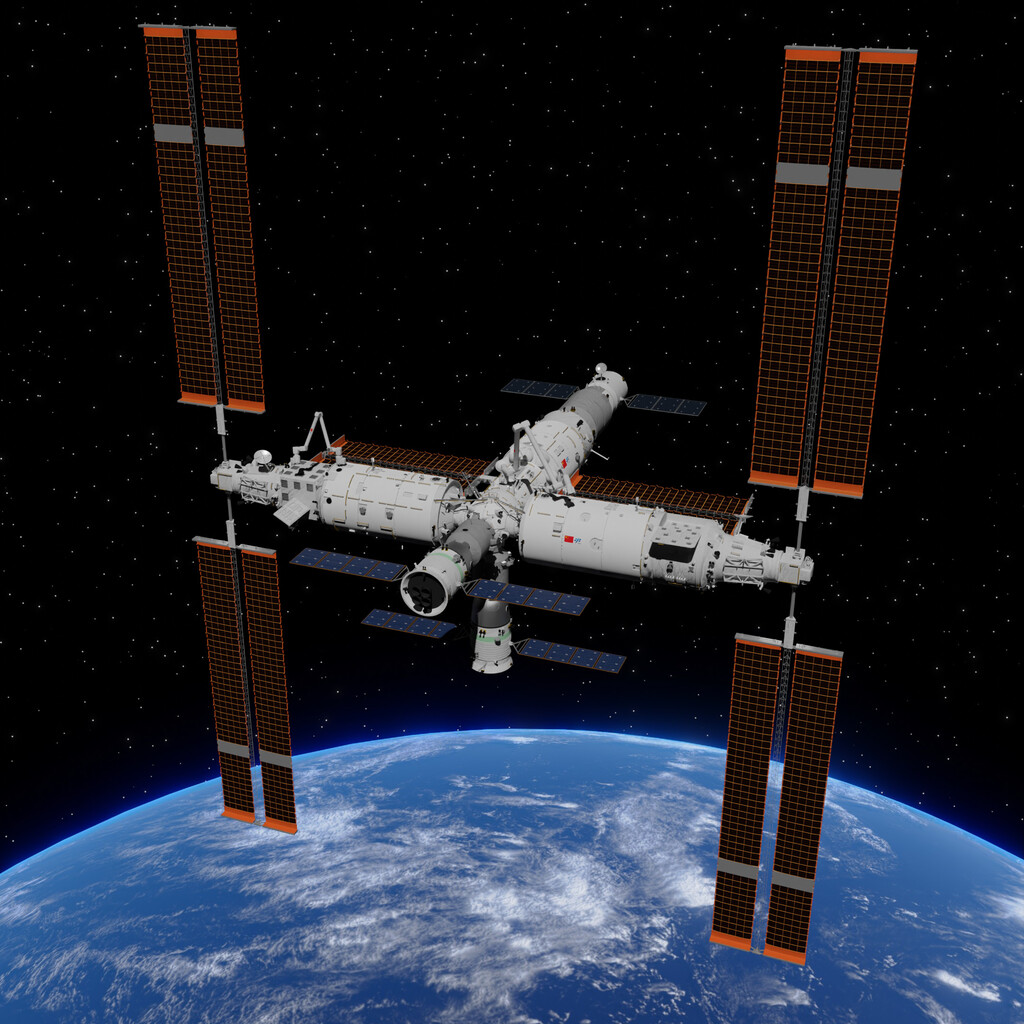
Moreover, data from SMILE could help predict solar storms with greater accuracy. Currently, scientists can forecast with high probability whether a solar storm will occur, but the exact timing and intensity are far from certain. Better predictions could protect satellites, power grids, and astronauts from harmful space weather.
Europe's Changing Role in Space
Europe has long been a junior partner to NASA, contributing instruments and expertise but rarely leading major missions. The SMILE collaboration with China signals a desire to assert more independence and influence in space exploration. Given the scientific uncertainties facing the United States, this partnership could be a smart move for Europe.
China has rapidly advanced its space program, including lunar exploration, a space station, and Mars missions. By teaming up with China, ESA gains access to additional resources and expertise while diversifying its partnerships beyond traditional allies.
Key Takeaways from the SMILE Mission
- International collaboration: ESA and CAS are jointly developing and operating the SMILE spacecraft.
- Scientific goal: SMILE will study the solar wind's interaction with Earth's magnetosphere to improve space weather forecasting.
- Launch delay: A technical issue has postponed the launch, but the mission remains on track.
- Strategic shift: Europe is seeking greater autonomy and new partnerships in space exploration.
- Global impact: Better solar storm predictions can protect critical infrastructure and human spaceflight.
How SMILE Works
The SMILE spacecraft will carry four instruments: a soft X-ray imager, an ultraviolet imager, a light ion analyzer, and a magnetometer. Together, these instruments will provide a comprehensive view of the Sun-Earth connection.
Unlike previous missions that focused on either the solar wind or the magnetosphere, SMILE will observe both simultaneously. This holistic approach is expected to reveal new insights into how solar storms develop and propagate toward Earth.
| Instrument | Function |
|---|---|
| Soft X-ray Imager | Images the magnetosheath and cusps to track solar wind entry |
| Ultraviolet Imager | Monitors the auroral oval and global distribution of auroras |
| Light Ion Analyzer | Measures ion composition and dynamics in the magnetosphere |
| Magnetometer | Measures magnetic field variations around the spacecraft |
What This Means for the Future of Space Exploration
The SMILE mission represents a broader trend of shifting alliances in space. As China's capabilities grow, more countries may seek partnerships with Beijing, challenging the United States' longstanding dominance. The background to this story is set out in SMILE Mission: ESA and China Join Forces to Study Solar Wind Impact. A related thread runs through SMILE Mission Launch: When We'll See Its First Data. Earlier coverage in SMILE Mission: Europe and China's Joint Solar Wind Explorer shows how the argument developed.
For Europe, working with China offers a way to advance its scientific goals while reducing reliance on NASA. However, such collaborations also raise concerns about technology transfer and geopolitical tensions. A closer look at the same subject appears in Best UK Universities for Earth & Marine Sciences: League Table. Anyone following the wider picture can start with Trump’s Assault on Science Harms America and Itself. The same theme surfaces in Science: latest articles, which takes a different angle.
Ultimately, the success of SMILE could pave the way for more joint missions between ESA and China, further reshaping the global space landscape. Context on how this played out before sits in China's Taiji Gravitational Wave Detector Nears Launch. A companion piece, Longest Solar Burst Ever Detected Lasted 19 Days, approaches the same subject from another angle.
FAQ
What is the SMILE mission?
SMILE (Solar wind Magnetosphere Ionosphere Link Explorer) is a joint mission between ESA and the Chinese Academy of Sciences to study the interaction between solar wind and Earth's magnetosphere. It aims to improve our understanding of space weather and solar storms.
Why was the SMILE launch postponed?
The launch was postponed due to a technical issue, according to the European Space Agency. A new launch date has not yet been announced, but the mission is still planned to proceed.
How does SMILE improve solar storm prediction?
SMILE's instruments will observe the solar wind and magnetosphere simultaneously, providing data that can help scientists better understand how solar storms form and evolve. This could lead to more accurate forecasts of their timing and intensity.
What does this mean for Europe's space program?
The SMILE collaboration with China signals Europe's intention to play a more independent and influential role in space exploration. It diversifies Europe's partnerships and reduces reliance on NASA, potentially leading to more joint missions with China in the future.
Browse the Shop
 Acacia frida deluxe solid wood bed frame |
Bedroom bench |
Bed chest drawers |
Lingerie dresser |
Frame base |
Mirror with jewelry storage |
30 Bathroom Vanity |
Memory foam queen mattress |
Mattresses for back pain |
Nightstand set of 2 |
Grand Goldman Shop |
Civil Lawyer
Deutschland Trikot WM 2026







