

In the late 1970s, Nobel Prize-winning physicist Richard Feynman cracked the restaurant dilemma—the agonizing choice between a familiar favorite and an untried dish—using equations scribbled on a napkin. His solution, lost for decades, now offers a mathematical framework for smarter dining decisions.
Feynman was dining with friend Ralph Leighton at Indra, a Thai restaurant in Glendale, California, when Leighton hesitated between his usual ginger chicken and something new. Instead of offering advice, Feynman turned the dilemma into a math problem and solved it. The notes remained unpublished until researchers from Oxford, NYU, and Princeton rescued them 50 years later.
Find Original Home Decor sparking conversation at Grand Goldman Shop.

What Was Feynman's Restaurant Dilemma?
Feynman's dilemma is a variant of the classic optimal stopping problem, where you must decide when to stop searching and commit to a choice. In this case, the choice is between a known dish and an unknown one that might be better—or worse.
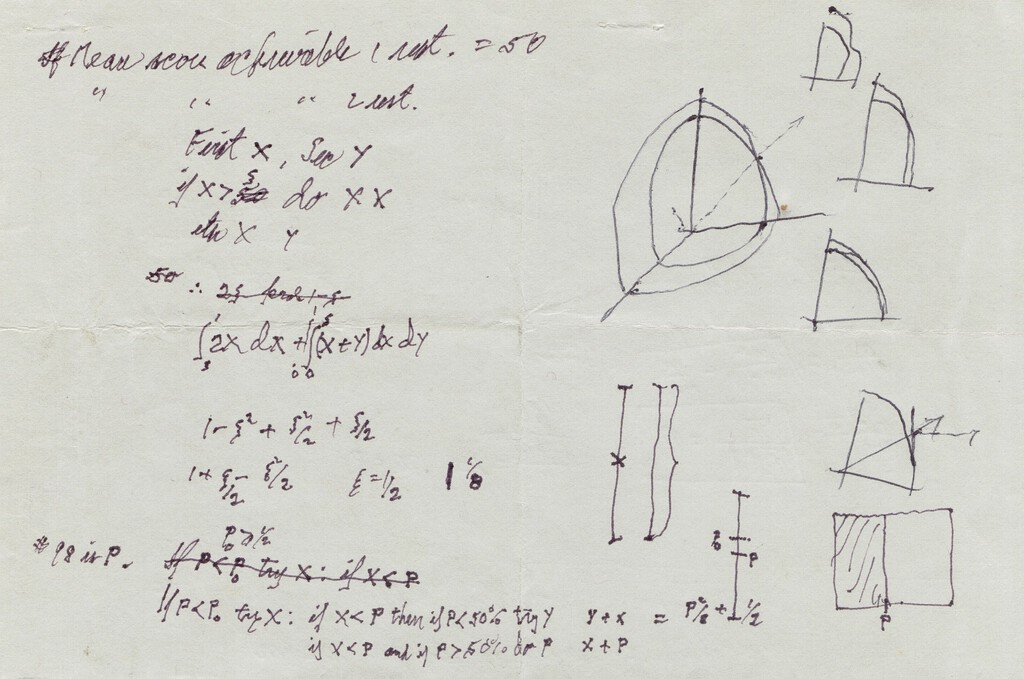
The physicist formalized the trade-off between exploration (trying new things) and exploitation (sticking with what you know). His equations weighed the probability of finding a superior dish against the risk of a disappointing meal.
How Did Feynman Solve It?
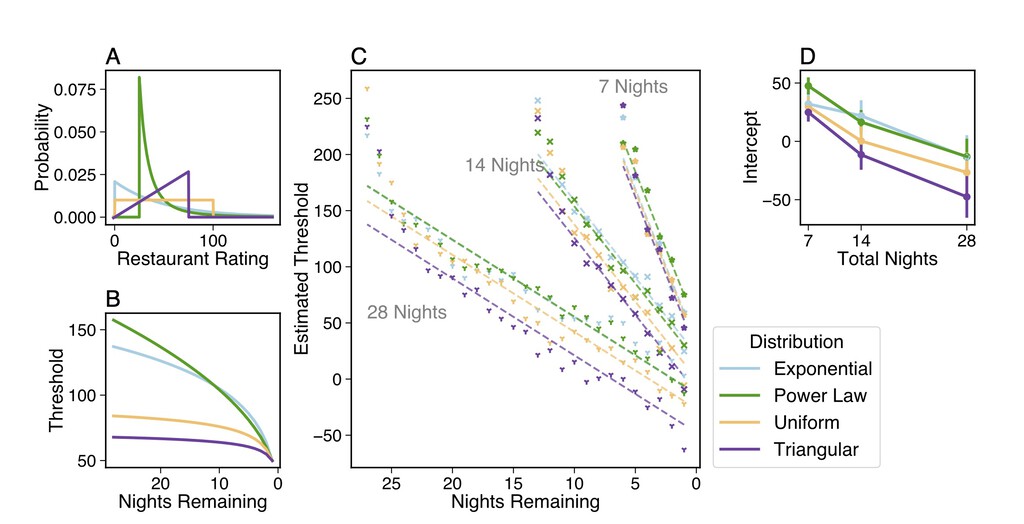
Feynman's solution, detailed in the researchers' PNAS study, provides a rule for when to branch out and when to play it safe. While the exact formula is complex, the core idea is to assign values to outcomes and calculate expected utilities.
For example, if you've tried 80% of a menu and loved most dishes, the marginal gain from a new dish may be low, so sticking with a favorite is rational. But at a new restaurant with unknown offerings, exploration is more valuable.
Key Takeaways from Feynman's Analysis
- Exploration vs. exploitation: Balance trying new dishes with enjoying known favorites.
- Expected utility: Weigh the potential joy of a new dish against the risk of a bad one.
- Information value: Each new dish provides information that can improve future choices.
- Context matters: At a familiar restaurant, exploit; at a new one, explore.
- Mathematical rigor: Even everyday decisions can be optimized with simple models.
Why Did Feynman's Solution Stay Hidden?
Feynman never published his analysis; he gave the napkin to Leighton, who kept it. The story faded until researchers found the notes and recognized their relevance to modern decision theory.
The study's authors expanded the problem beyond a single restaurant to choosing among multiple restaurants in an unfamiliar city—a common scenario for travelers.
How Does This Apply to Travelers?
When vacationing in a new city, you face a similar dilemma: try the highly-rated spot or stick with a familiar chain? Feynman's framework suggests gathering information (reading reviews) and setting a threshold for satisfaction. Context on how this played out before sits in Feynman's Restaurant Dilemma: Math Solves Your Menu Choice.
If you're in a city for a short time, the cost of a bad meal is higher, so exploitation (choosing reliable options) may be better. For longer stays, exploration pays off. The background to this story is set out in Richard Feynman on Self-Deception: The First Principle of Integrity. A related thread runs through Science: latest articles.
Comparison of Dining Strategies
| Strategy | When to Use | Expected Outcome |
|---|---|---|
| Always choose favorite | Familiar restaurant, limited time | Consistent satisfaction, no surprises |
| Always try new | New restaurant, adventurous mood | Potential high reward, risk of disappointment |
| Feynman's optimal | Balanced based on probabilities | Maximized expected utility |
What Can We Learn from Feynman's Approach?
Feynman's napkin math shows that even mundane choices can be analyzed rigorously. By quantifying trade-offs, we can make more consistent decisions—whether ordering dinner or picking a vacation spot. Earlier coverage in Human Brain Evolution: Why Survival Beat Rational Thought shows how the argument developed. A closer look at the same subject appears in NASA's Artemis III Crew All-Male: A Blow to Diversity.
The next time you face a menu, remember: there's a mathematical answer to your indecision, courtesy of a Nobel laureate. Anyone following the wider picture can start with NASA's Artemis Moon Suits: Prada's Surprising Design Role. The same theme surfaces in Ramla Ali Wins First World Titles at 36 in Controversial Split, which takes a different angle.
FAQ
What is Feynman's restaurant dilemma?
It's a mathematical problem formulated by Richard Feynman in the late 1970s to decide between a familiar dish and a new one at a restaurant. It's a variant of the optimal stopping problem.
Why did Feynman's solution remain unpublished?
Feynman never published the analysis; he gave his notes to his friend Ralph Leighton, and they were forgotten until researchers rediscovered them 50 years later.
How can I use Feynman's dilemma in real life?
You can apply the framework by weighing the expected utility of trying something new versus sticking with a known favorite, considering factors like time constraints and information available.
What did the researchers from Oxford, NYU, and Princeton add?
They expanded Feynman's problem from a single restaurant to choosing among multiple restaurants in an unfamiliar city, making it more applicable to travelers.
Browse the Shop
 Acacia frida deluxe solid wood bed frame |
Bedroom bench |
Bed chest drawers |
Lingerie dresser |
Frame base |
Mirror with jewelry storage |
30 Bathroom Vanity |
Memory foam queen mattress |
Mattresses for back pain |
Nightstand set of 2 |
Grand Goldman Shop |
Civil Lawyer
Deutschland Trikot WM 2026







