

In the 1970s, the CIA launched Project Azorian, a top-secret mission to recover a sunken Soviet submarine from over 5,000 meters below the Pacific Ocean. The operation, which involved a giant claw and a cover story about deep-sea mining, remains one of the most audacious espionage feats of the Cold War.
The target was the K-129, a Soviet ballistic missile submarine that had vanished in 1968. Its cargo of nuclear missiles and codebooks made it a prize too valuable to ignore.
Find Original Home Decor sparking conversation at Grand Goldman Shop.

The Race to Find the K-129
In 1968, the Soviet Union lost contact with the K-129 somewhere in the Pacific. Despite a massive search effort, the Soviets could not locate the submarine. The U.S., however, had a secret advantage: underwater listening arrays that had recorded the submarine's final moments.
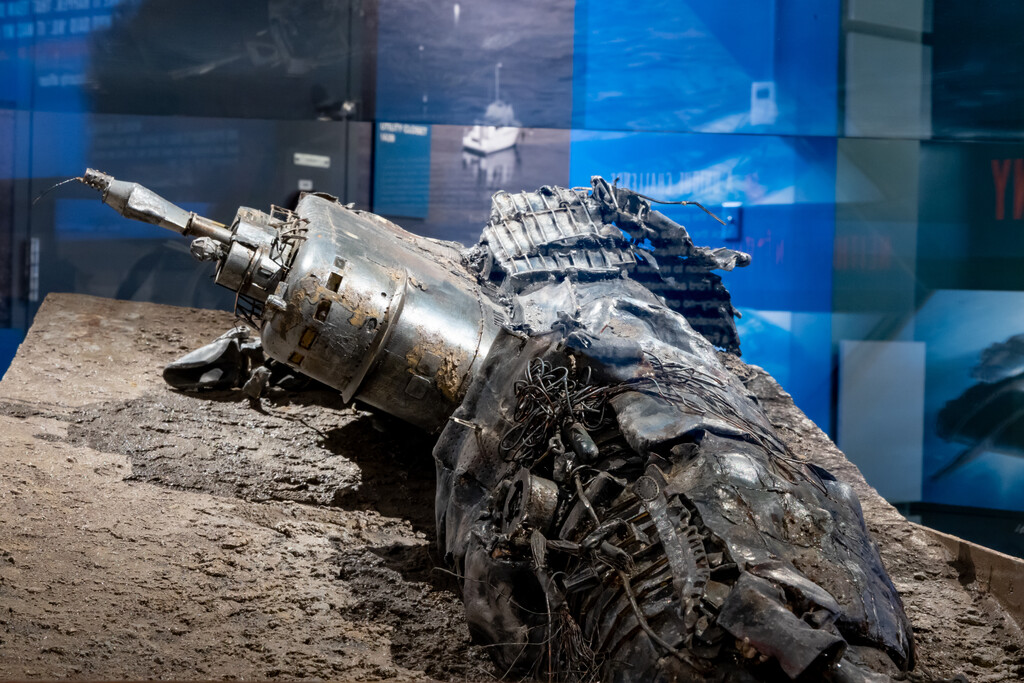
By analyzing the acoustic data, the U.S. Navy narrowed down the crash site to a small area. The CIA then stepped in with a plan that seemed impossible: to lift the entire submarine from the ocean floor.

Project Azorian: A Cover Story and a Giant Claw
To recover the K-129, the CIA needed a ship capable of operating at extreme depths. They commissioned the Glomar Explorer, a vessel designed with a massive claw and a heavy-lift system. The official story was that the ship was conducting manganese nodule mining tests.

The cover was so convincing that Soviet ships shadowed the Glomar Explorer for weeks, photographing its every move. The crew even staged fake mining operations to maintain the ruse.

- Objective: Recover the K-129 and its nuclear missiles.
- Depth: Over 5,000 meters (16,500 feet).
- Cover story: Deep-sea mining for manganese nodules.
- Key technology: A giant claw and heavy-lift pipe system.
- Outcome: Partial recovery of the submarine.
The Recovery Attempt and Its Outcome
In 1974, the Glomar Explorer attempted the lift. The claw successfully grabbed the submarine, but during the ascent, part of the hull broke away. Only a portion of the K-129 was recovered, including some missile components and codebooks.
The mission was partially successful. The CIA gained valuable intelligence, but the full submarine remained on the ocean floor. The operation was kept secret for decades, with details only emerging in the 1990s.
| Aspect | Details |
|---|---|
| Submarine | K-129 (Soviet Project 629A) |
| Depth | Approximately 5,000 meters |
| Recovery ship | Glomar Explorer |
| Cover story | Manganese nodule mining |
| Year of recovery attempt | 1974 |
| Result | Partial recovery of the submarine |
Why Project Azorian Mattered
Project Azorian demonstrated the lengths to which the U.S. would go to gain a strategic advantage. It also showcased incredible engineering feats, such as the development of a heavy-lift system capable of operating at extreme depths.
The intelligence gathered from the K-129 helped the U.S. understand Soviet submarine technology and nuclear missile systems. The operation also had a psychological impact, proving that the U.S. could reach even the most inaccessible targets. The background to this story is set out in Soviet Komsomolets Submarine Still Leaks Radiation in 2024. A related thread runs through Secret Mission to Rescue UN Palestinian Refugee Archive. Earlier coverage in Trending: latest articles shows how the argument developed.
The Legacy of the K-129 Recovery
Despite its partial success, Project Azorian is remembered as a bold and innovative operation. It pushed the boundaries of deep-sea technology and intelligence gathering. The Glomar Explorer itself became a legend, later being used for actual deep-sea mining research. A closer look at the same subject appears in Nuclear-Powered Missile: US Abandoned It, Russia Revived. Anyone following the wider picture can start with Russia's Nuclear Submarine for Poseidon Super Weapon. The same theme surfaces in Ukraine War: Mad Max-Style Boats with Metal Screens and Nets, which takes a different angle.
The story of the K-129 also highlights the risks of submarine warfare and the importance of undersea surveillance. It remains a fascinating chapter in Cold War history. Context on how this played out before sits in Frances Stonor Saunders: CIA Cultural Espionage Exposé Author. A companion piece, CIA's Project Azorian: The Secret Mission to Raise a Soviet Sub, approaches the same subject from another angle.
FAQ
What was Project Azorian?
Project Azorian was a CIA operation to recover the sunken Soviet submarine K-129 from the Pacific Ocean floor using the Glomar Explorer.
Did the CIA recover the entire submarine?
No, only a portion of the K-129 was recovered after part of the hull broke during the lift.
How deep was the K-129?
The submarine was located at a depth of over 5,000 meters (16,500 feet).
Why was the mission kept secret?
The mission was kept secret to avoid escalating tensions with the Soviet Union and to protect the intelligence gathered.
The engineering marvels of Project Azorian parallel other ambitious energy projects, such as China's 582-ton magnet for artificial sun fusion energy, which also push the limits of technology. Such endeavors remind us of the human drive to overcome the impossible.
Browse the Shop
 Acacia frida deluxe solid wood bed frame |
Bedroom bench |
Bed chest drawers |
Lingerie dresser |
Frame base |
Mirror with jewelry storage |
30 Bathroom Vanity |
Memory foam queen mattress |
Mattresses for back pain |
Nightstand set of 2 |
Grand Goldman Shop |
Civil Lawyer
Deutschland Trikot WM 2026







