

Security alarms are an essential element in any company. One of the advances that work best in this area is that ofalarms with image verification, a technology that is gaining prominence in homes, businesses and, increasingly, requests from insurers and security companies.
- Best alarms and security systems for small businesses
In the world of security, Technology is advancing by leaps and bounds. What were once simple motion sensors and blaring sirens are now sophisticated systems that not only detect intrusions, but alsoThey verify them with visual testsin real time.
Find Bleeding Edge Supplements at Scandalous Prices on iHerb.

But what exactly are they? How do they work? And above all, why have they become a key piece in police response and insurance coverage? Next, We explain it to you in detail.
What is an alarm with image verification and how does it work?
An alarm with image verification is a security system what a combination intrusion detection with cameras that capture images or videos at the time of the alarm. It is a type of alarm whose popularity is growing a lot.
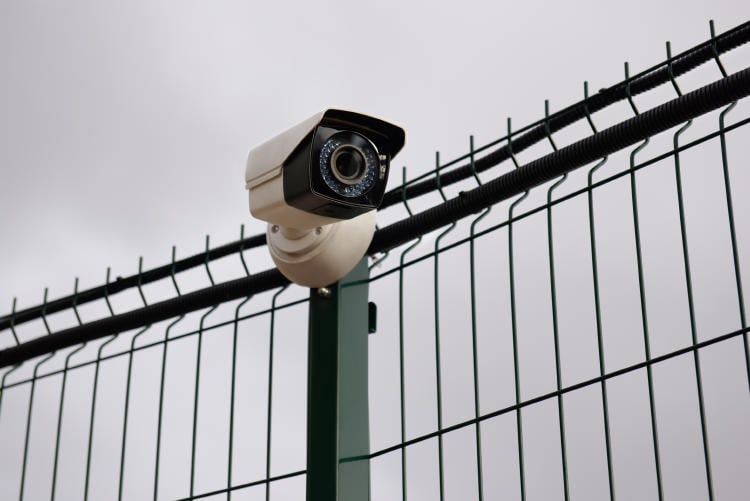
Unlike a traditional alarm —which only emits an audible signal or sends a warning without further information—, this type of systemgenerates a visual testthat allowsconfirm if the threat is realor it is a false alarm. Typically, this is an addition to an intelligent alarm system.
This not only improves system efficiency, but it allows a faster reaction, accurate and legitimate by alarm centers, police or emergency services.
In other words, It is not enough for “something” to move: With an alarm with image verification, you will know if that “something” is your dog, a flapping curtain by the wind or an intruder trying to access your property.
How it works step by step:
Motion detection
The system has sensors (normally PIR—passive infrared—) placed in strategic areas of the property. When one of these sensors detects suspicious movement, The verification protocol is automatically activated.
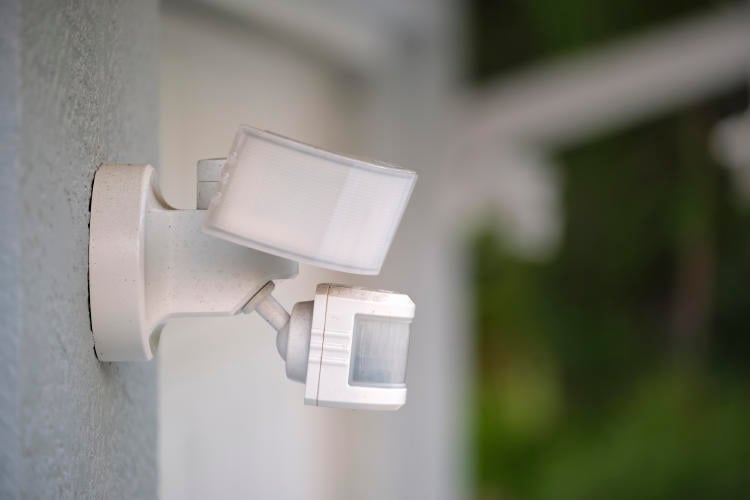
Image or video capture
In that same moment, the camera integrated into the sensor or installed near it takes a sequence of images or records a short video clip. This content is immediately sent to the alarm receiving center (ARC).
Real time analysis
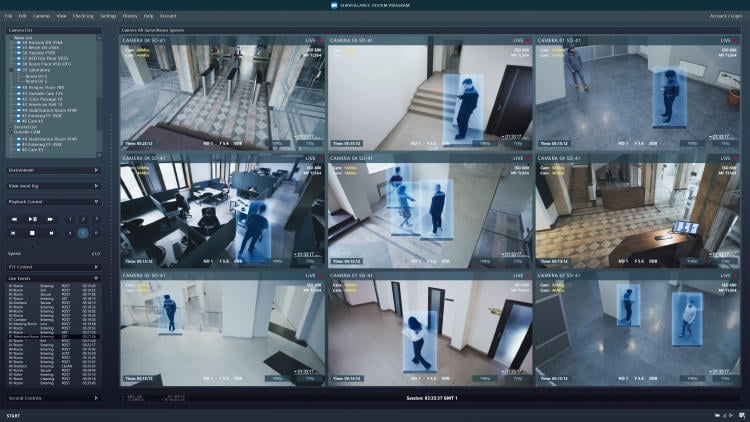
A security operator analyzes in a few seconds the images received for determine if there are signs of actual intrusion (an unauthorized person, for example) or if it is a false alarm. This considerably reduces the margin of error.
Immediate action
If the threat is confirmed, the protocol is activated to notify the police or emergency services with visual verification – something that in many countries and cities is a necessary condition for the police to intervene.
Registration and storage
Besides, images are usually stored for a certain time, which allows provide visual evidence in case of investigation, claim or litigation.
Why is visual verification important and why do insurers require it?
Alarms with image verification not only provide more information, butThey provide credibility.In many jurisdictions, The police only intervene if the alarm is verified, that is, if there is evidence that confirms the intrusion.
This is due to the large number of false alarms that are generated every day, which represents a unnecessary consumption of public resources and a slowdown in responses to real emergencies.
Thanks to visual verification, you achieve:
- Reduce false alarms by more than 80%.
- Increase arrest rate by acting faster and with greater precision. Improve legal and insurance protection by having documented evidence.
Furthermore, from the user's point of view, it offers real peace of mind. It is not the same as receiving a generic “movement detected” notification, What to see on your mobile or from the central office clear image of the hallway with an unknown human figure. The difference is crucial.
Insurance companies areincreasingly interested in systems with verificationper image for a very simple reason: They are more effective and more reliable. From their perspective, a system that can distinguish between a theft and an activation error means fewer unjustified claims, less fraud and lower operating costs.
In fact, many insurers offer discounts or better coverage if the property is protected with an image-verified alarm. Some even they condition the policy to the installation of a system of this type, especially in businesses, warehouses or high-value homes.
In the case of the security companies, Incorporating visual verification into your systems is not only a technical improvement, but also a response to current legislation in many European and Latin American countries. Over there,The police only come if an intrusion has been confirmed,whether by video, audio or eyewitness testimony.
Therefore, beyond being an innovation, image verification has become aoperational and legal requirement for many companies in the sector.
Alarms with image verification They are not simply a technological fad. They are a necessary evolution in the way we protect our spaces, we reduce false notices and we respond to real threats.
Its growing implementation in private homes and businesses shows that We are not talking about the future, but about the present of security. And the fact that insurers and security forces require or recommend this type of systems only reinforces its importance.
If you're considering installing an alarm, don't just look for “the cheapest” or “the loudest.” Think about what happens if it actually activates. Will you have proof? Will there be a response? Will you be calm? With an image verified alarm, the answer to all those questions can be much clearer.
Best bedroom hidden cameras | Best Spy Camera Watch | Best low level CO detector | Best Wifi Router EMF Protection | Best Camera for MEVO Plus | Best Security Camera Without Subscription | Best Budget Camera for Blue Iris | Best Barking Dog Alarms | Best Free VPN for Rainbet | Best Solar Powered Security Camera | Alarmes Maison
Home Decor Shop
 Acacia frida deluxe solid wood bed frame |
Bedroom bench |
Bed chest drawers |
Lingerie dresser |
Frame base |
Mirror with jewelry storage |
30 Bathroom Vanity |
Memory foam queen mattress |
Mattresses for back pain |
Nightstand set of 2 |
Grand Goldman Shop |
Civil Lawyer
Deutschland Trikot WM 2026
Acacia frida deluxe solid wood bed frame |
Bedroom bench |
Bed chest drawers |
Lingerie dresser |
Frame base |
Mirror with jewelry storage |
30 Bathroom Vanity |
Memory foam queen mattress |
Mattresses for back pain |
Nightstand set of 2 |
Grand Goldman Shop |
Civil Lawyer
Deutschland Trikot WM 2026










