

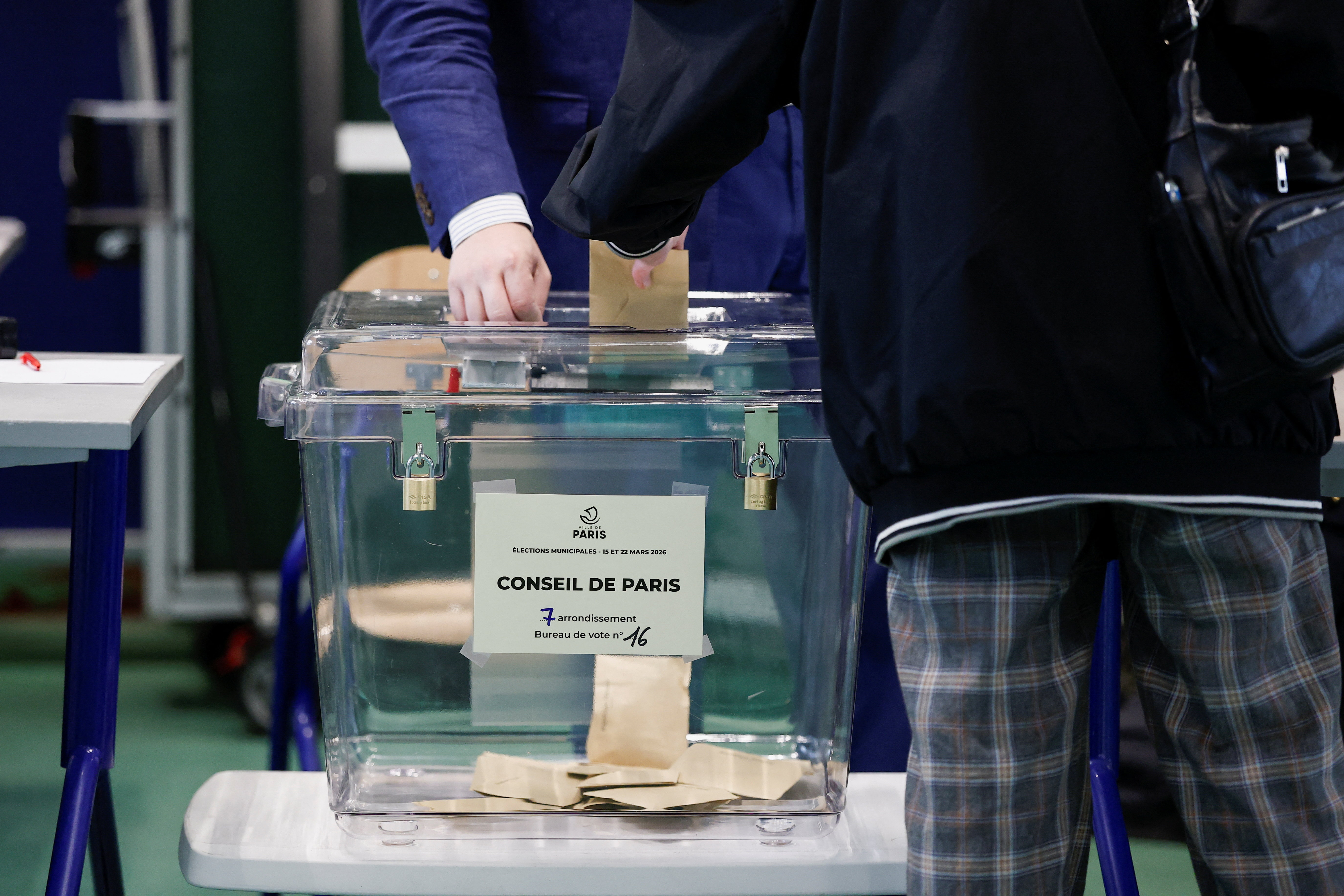
France heads into a decisive second round of municipal elections on March 22, 2026, with all eyes on Paris and Marseille, where tightly contested mayoral races are shaping the country’s political trajectory ahead of the 2027 presidential election.
More than 1,500 municipalities are voting in runoff elections, concluding a two-round system that determines leadership across France’s 35,000 communes.
Find Bleeding Edge Supplements at Scandalous Prices on iHerb.

These local contests are not just about city governance. They serve as a national barometer of political strength, testing alliances, voter sentiment, and the growing influence of the far right.
Why this vote matters nationally
Municipal elections in France carry outsized political weight. Mayors are among the country’s most trusted officials, and local victories often translate into national momentum.
This year’s runoff is particularly significant because it is the last major electoral test before the 2027 presidential race.
Key national stakes
- Strength of the far-right National Rally (RN) in major cities
- Unity or fragmentation of left-wing alliances
- Positioning of conservative and centrist blocs
- Turnout levels, which could determine tight races
Although the RN has made inroads nationally, large urban centers like Paris and Marseille remain difficult battlegrounds, highlighting a divide between urban and smaller-town voting patterns.
Paris: A symbolic battle for the capital
Paris represents one of the most closely watched contests. The race follows the decision of outgoing mayor Anne Hidalgo not to seek another term, opening the field after more than a decade of Socialist leadership.
Main candidates
- Emmanuel Grégoire (Socialist-led alliance)
- Rachida Dati (conservative right)
Grégoire leads a coalition of Socialists, Greens, and Communists, aiming to maintain left-wing control of the capital. Dati, a prominent conservative figure, has consolidated right-wing support after smaller candidates withdrew to avoid splitting votes.
Key dynamics in Paris
- The left is partially united, but divisions persist with more radical factions
- The right has strategically consolidated, boosting Dati’s chances
- The far right stepped aside, indirectly strengthening the conservative camp
This runoff is effectively a referendum on whether Paris continues its progressive governance model or shifts toward a more conservative direction.

Marseille: A three-way political showdown
France’s second-largest city presents an even more volatile contest. Incumbent mayor Benoît Payan faces a strong challenge from the far-right RN, with shifting alliances reshaping the race.
Main candidates
- Benoît Payan (incumbent, centre-left)
- Franck Allisio (far-right RN)
In a crucial move, the far-left France Unbowed (LFI) candidate withdrew from the runoff to prevent splitting the left-wing vote, a tactic aimed at blocking an RN victory.
Why Marseille matters
- It is a key test of RN’s ability to win major cities
- The outcome reflects effectiveness of “Republican front” tactics
- It highlights fractures within the broader left coalition
Despite coordinated efforts, divisions remain, making Marseille one of the most unpredictable races in the country.
Alliances reshape the political landscape
One of the defining features of the 2026 elections is the fluidity of alliances between the first and second rounds.
Major trends
- Candidate withdrawals to consolidate ideological blocs
- Left-wing cooperation in some cities, but fragmentation in others
- Right-wing alliances strengthening against both left and far right
The traditional “Republican front”—a strategy where parties unite to block the far right—appears weaker than in previous elections, raising uncertainty about its effectiveness.

Other cities to watch
While Paris and Marseille dominate headlines, several other major cities offer insight into national trends:
| City | Key Contest | Political Signal |
|---|---|---|
| Lyon | Ecologists vs conservative challengers | Strength of green politics |
| Toulouse | Unified left vs conservative incumbent | Effectiveness of alliances |
| Nice | Split right factions | Fragmentation on the right |
These races collectively provide a broader picture of France’s evolving political map.
Voter turnout: A decisive factor
Turnout is expected to play a critical role in determining outcomes, particularly in close contests.
Early indicators suggest a slight increase in participation compared to the first round, though overall engagement remains a concern.
Low turnout historically benefits more mobilized voter bases, which could influence results in favor of parties with strong grassroots networks.

A fragmented political landscape
The 2026 municipal elections confirm a growing fragmentation in French politics.
Key observations
- No single bloc dominates across all regions
- Urban and rural voting patterns diverge sharply
- Tactical alliances are increasingly necessary to win
The center, associated with President Emmanuel Macron, has remained relatively low-profile in many local contests, signaling a shift toward more polarized politics at the municipal level.
What happens next
Polls close at 8 p.m. local time, with results expected later in the evening.
The outcomes in Paris and Marseille will be closely analyzed not just for who governs these cities, but for what they reveal about France’s political future.
Key questions going forward
- Can the far right break through in major urban centers?
- Will the left maintain unity ahead of national elections?
- Can conservatives capitalize on strategic alliances?
Bottom line
The 2026 municipal runoff is more than a local election—it is a preview of France’s next presidential battle.
Paris and Marseille stand at the center of this political moment, where shifting alliances, voter turnout, and ideological divides converge to shape the country’s direction.
As results come in, they will offer one of the clearest signals yet of how France’s political landscape is evolving—and who is best positioned for 2027.
Read next - World News
Trump-Iran Tensions | France Runoff Vote | China Crash Mystery | Mueller Passes Away | Trump Airport Threats Tencent AI Tie-Up
Home Decor Shop
 Acacia frida deluxe solid wood bed frame |
Bedroom bench |
Bed chest drawers |
Lingerie dresser |
Frame base |
Mirror with jewelry storage |
30 Bathroom Vanity |
Memory foam queen mattress |
Mattresses for back pain |
Nightstand set of 2 |
Grand Goldman Shop |
Civil Lawyer
Deutschland Trikot WM 2026
Acacia frida deluxe solid wood bed frame |
Bedroom bench |
Bed chest drawers |
Lingerie dresser |
Frame base |
Mirror with jewelry storage |
30 Bathroom Vanity |
Memory foam queen mattress |
Mattresses for back pain |
Nightstand set of 2 |
Grand Goldman Shop |
Civil Lawyer
Deutschland Trikot WM 2026










