

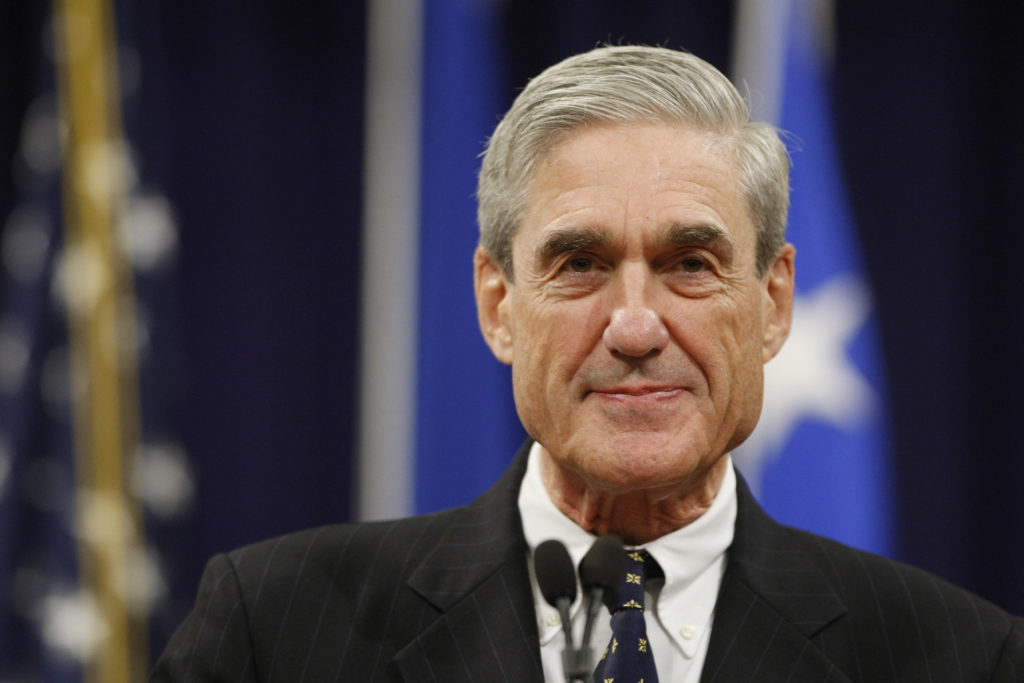
Former Federal Bureau of Investigation (FBI) Director Robert S. Mueller III has died at age 81, his family and law firm confirmed, marking the end of a life defined by public service, legal rigor and one of the most politically consequential investigations in recent U.S. history.
Mueller’s passing on March 20, 2026, was met with starkly divided reactions across Washington and the nation, reflecting the enduring controversies tied to his career and, especially, his 2017–2019 special counsel investigation into Russian interference in the 2016 U.S. presidential election and possible ties to then‑President Donald Trump’s campaign.
Find Original, High-end Home Decor that spark conversation at Grand Goldman Shop.

A Life of Service: From Marine to FBI Director
Born July 1944, Mueller graduated from Princeton University and served as a decorated Marine Corps officer in the Vietnam War, earning a Bronze Star and Purple Heart. After earning a law degree from the University of Virginia, he became a federal prosecutor, handling major cases including terrorism and financial crimes.
FBI Leadership and Transformation
Mueller was appointed FBI Director in September 2001, just days before the September 11 terrorist attacks. His tenure transformed the bureau’s priorities toward counterterrorism and intelligence integration, leading efforts to reorganize operations and enhance interagency cooperation in the years that followed.
| Role | Years |
|---|---|
| FBI Director | 2001–2013 |
| Special Counsel (Russia investigation) | 2017–2019 |
Colleagues and successors often credited Mueller’s disciplined, non‑partisan style with stabilizing the FBI through tumultuous times, though some critics faulted aspects of bureau conduct under his leadership.

The Russia Investigation: A Defining Chapter
In May 2017, Deputy Attorney General Rod Rosenstein appointed Mueller as special counsel to lead an investigation into Russian interference in the 2016 U.S. election, including any links to the Trump campaign. The probe took over from an FBI counterintelligence inquiry known as Crossfire Hurricane and expanded into related criminal matters.
Key outcomes of the Mueller investigation included:
- 34 individuals and entities indicted, including campaign associates and Russian operatives.
- Guilty pleas and convictions for figures like Paul Manafort, Roger Stone and Michael Flynn, though later pardoned by Trump.
- Confirmation of widespread Russian efforts to influence the election.
- No criminal charges against Trump for conspiracy with Russia.
- The report did not conclusively decide whether Trump obstructed justice, citing Justice Department policy barring indictment of a sitting president.
The Mueller Report, released in 2019, remains one of the most analyzed government documents of the 21st century, influencing legal and political discourse about foreign interference and executive accountability.
Battle Over Interpretation
Reactions to the Mueller investigation were sharply divided from the start:
- Many Democrats and legal scholars praised Mueller’s credibility and thoroughness.
- Trump and allies repeatedly denounced the probe as a “witch hunt” and politically motivated, seeking to discredit its findings.
- Justice officials such as Attorney General William Barr concluded that evidence did not clearly establish obstruction of justice.
The debate over Mueller’s conclusions — and what they meant for accountability at the highest levels of government — persisted long after the investigation formally ended.
Final Years and Health
In August 2025, Mueller’s family disclosed he had been diagnosed with Parkinson’s disease, which had progressively affected his health and public engagements. He died peacefully in Charlottesville, Virginia, surrounded by family.
Immediate Reactions: Bipartisan Praise and Political Backlash
Mueller’s death prompted outpourings of respect from across the political spectrum:
- Former Presidents Barack Obama and George W. Bush lauded his dedication and service.
- Congressional leaders highlighted his commitment to the rule of law.
However, Donald Trump’s response has overshadowed parts of the mourning period, with the former president posting on his Truth Social platform: “Good, I’m glad he’s dead. He can no longer hurt innocent people!”
Political and Public Backlash
Trump’s comments drew sharp criticism from lawmakers and commentators across the political spectrum, with Republicans like Michael Steele and Democrats such as Adam Schiff condemning the statement as “vile” and “disgusting.” Critics contrasted Mueller’s military valor and public service with the former president’s history of draft deferments during the Vietnam era.
Mueller’s Legacy
Robert Mueller’s legacy will be debated for decades. For supporters, he epitomized integrity and devotion to institutional norms. For detractors, his investigation’s limitations and contested conclusions remain points of political contention.
His career spanned critical moments in modern American history — from post‑9/11 counterterrorism to the fraught politics of electoral integrity. Whatever one’s view, Mueller’s life and work shaped national conversations about justice, foreign influence and the intersection of law and politics in the United States.
Remembering a Complex Public Figure
Mueller is survived by his wife, two daughters and grandchildren. His death closes a chapter on a life dedicated to public service, even as the political battles tied to his work continue to influence discourse in Washington and beyond.
Key Facts at a Glance
| Fact | Detail |
|---|---|
| Age at Death | 81 |
| Cause | Parkinson’s disease |
| Key Roles | FBI Director (2001–2013), Special Counsel (2017–2019) |
| Major Investigation | Russian interference in 2016 U.S. election |
| Notable Outcome | No charge against Trump for conspiracy or obstruction |
Mueller’s influence on U.S. law enforcement and political accountability endures, even amid polarized views of his most famous investigation.
Browse the Shop
 Acacia frida deluxe solid wood bed frame |
Bedroom bench |
Bed chest drawers |
Lingerie dresser |
Frame base |
Mirror with jewelry storage |
30 Bathroom Vanity |
Memory foam queen mattress |
Mattresses for back pain |
Nightstand set of 2 |
Grand Goldman Shop |
Civil Lawyer
Deutschland Trikot WM 2026
Acacia frida deluxe solid wood bed frame |
Bedroom bench |
Bed chest drawers |
Lingerie dresser |
Frame base |
Mirror with jewelry storage |
30 Bathroom Vanity |
Memory foam queen mattress |
Mattresses for back pain |
Nightstand set of 2 |
Grand Goldman Shop |
Civil Lawyer
Deutschland Trikot WM 2026










