

Installing a security camera in your home or business can help you make your home much safer. Before getting to it, we have collected Everything you need to know about video surveillance regulations: the laws that regulate it and how not to break them.
- Security camera with video analytics: is it worth it?
Surveillance cameras are a security element that does not should be missing in any home or business . Apart from achieving a great deterrent effect, they help you have much more control over your home. Combined with a good alarm system, you can rest easy.
Find Bleeding Edge Supplements at Scandalous Prices on iHerb.

Now, There is a regulation that you must abide by before you start installing cameras all over the house. We explain everything you should take into account and the most common problems you may encounter when creating a video surveillance circuit.
Everything you need to know about video surveillance regulations
In Spain, the regulations on video surveillance are composed mainly of the Data Protection Law, Law 5/2014 on Private Security and the Workers' Statute (in business).
Each one of them is responsible for imposing certain restrictions that favor the majority of the population . For this reason, they delve into different topics and regulate different areas, always with the objective of protecting the citizen.
The Organic Law on Data Protection and Guarantee of Digital Rights
This regulation is responsible for protect and process personal data of each of the citizens by companies or any other body that operates in Spain.
The Data Protection Law requires that companies that collect our information take responsibility for their treatment . This means that they do not sell our personal content or misuse it.
This regulation distinguishes the information that is collected in different degrees of security. So those of medium or high level They cannot be requested unless they are extremely necessary.
Of course, the company that is in charge of collecting the information must maintain professional secrecy and cannot use that data . If they break this law, they will face fines that can reach 600,000 euros.
Private Security Law 5/2014
This regulation is focused on promoting the collaboration between private security companies and state security forces . To do this, it establishes some obligations and applies sanctions for those who do not comply with them.
For example, images that have been captured by a private video surveillance company can be requested by state security forces in case you need it.
Security cameras cannot be installed that point towards the road or public spaces , unless it has been previously authorized by the competent administration of the area.
This law establishes a limit on the time that captured images must be saved by video surveillance cameras. These videos must be deleted every 30 days maximum, unless they are going to be used in a judicial process.
Furthermore, it adds that the treatment of the images and their content must be in accordance with the rest of the current regulations . That is, the intervention in the videos should be as minimal as possible.
Workers Statute
Within the Workers' Statute we go to article 20.3, where it is specified everything related to image processing by the company.
The Workers' Statute confirms that the businessman who owns the company has the right to install a video surveillance system. to ensure that your employees are fulfilling their obligations . However, it must meet a couple of principles to be considered legal.
The first of them is that of proportionality . It refers to the installation of the video surveillance system and its use conforming to a series of prerequisites, which are:
- Suitability: a facility suitable for the proposed mission.
- Need: check that there is no less aggressive measure that meets the same purpose.
- Proportionality: that more general benefits are achieved than harms among individuals.
On the other hand, the Workers' Statute establishes that Notify employees that they are going to be recorded by a security camera. To do this, the necessary measures will be placed, such as a poster or information sign.
The General Data Protection Regulation
This regulation is responsible for regulate the processing of information collected in European territory . Although it applies in all countries of the European Union, each one has the possibility of making its own laws.
In article 6 of this regulation it is clarified that The collection of information is lawful, as long as it is notified , there is consent from the agents involved and the rest of the laws that regulate data collection are complied with.
Access and processing of information is regulated through confidentiality contracts . With them, the necessary measures are established so that the data has the minimum possible processing.
In turn, a “ activity log ", this is a document in which you must write what data you collect, why you do it, where you keep it, if you transfer it to third parties...
Company commitments when having a video surveillance system
It is good to know what are the specific regulations that are responsible for regulating video surveillance circuits, but they can be a little dense and they don't make it 100% clear to you what you should do.
Therefore, we have collected all the obligations that camera owners have video surveillance. Most of them have been mentioned before, but here they are well organized:
- Registration of recordings: There must be a data processor who stores the images in a file for a maximum of one month.
- Personal que puede acceder a las grabaciones: Only the people responsible for the images will be able to see the images, such as the CRA, security guards or authorities.
- Notice to those involved: It is necessary to place a plaque or information sign to alert people who may be recorded.
- Where the cameras are placed: They must be located in places that do not violate the rights and freedoms of human beings, so changing rooms, private areas... On the other hand, they cannot be focused on public areas.
- Proportionality in use: It will be verified that there are no other less intrusive alternatives that achieve the same result.
Sanctions for breaching video surveillance regulations
Breaking the law has its consequences, in this case carries fines of different amounts and the most serious ones can lead to a prison sentence.
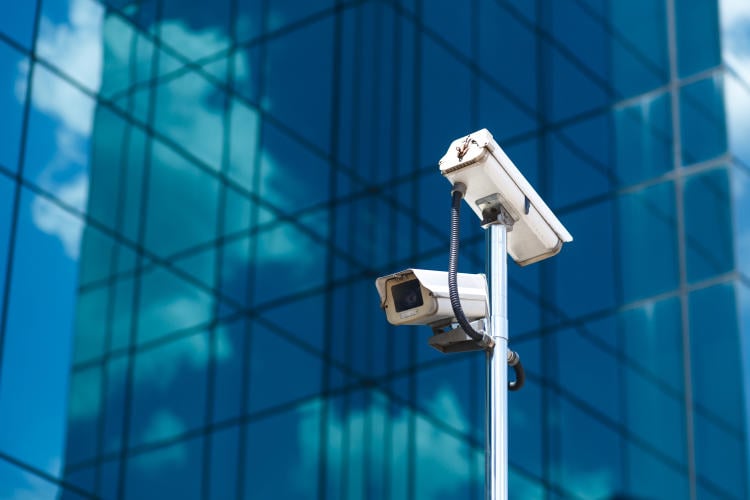
Depending on the type of violation you have committed, you will be fined accordingly . They are divided into three types: mild (up to €40,000), serious (between €40,000 and €300,000) and very serious (between €300,000 and €20,000,000).
Each case will be studied in accordance with the General Data Protection Regulation , regulations that regulate penalties. This explains why there is such a wide range between the prices of fines.
Make sure that the surveillance cameras you install comply with the relevant regulations if you do not want to incur an unnecessary fine. Contact a specialized company , since he will be in charge of expediting all the paperwork and will take responsibility.
From Yoigo Alarms We can help you improve the video surveillance of your home or business. Go to our website or call 900 622 398 so that our experts can give you an assessment and recommend the most appropriate.
Best bedroom hidden cameras | Best Spy Camera Watch | Best low level CO detector | Best Wifi Router EMF Protection | Best Camera for MEVO Plus | Best Security Camera Without Subscription | Best Budget Camera for Blue Iris | Best Barking Dog Alarms | Best Free VPN for Rainbet | Best Solar Powered Security Camera | Alarmes Maison
Browse the Shop
 Acacia frida deluxe solid wood bed frame |
Bedroom bench |
Bed chest drawers |
Lingerie dresser |
Frame base |
Mirror with jewelry storage |
30 Bathroom Vanity |
Memory foam queen mattress |
Mattresses for back pain |
Nightstand set of 2 |
Grand Goldman Shop |
Civil Lawyer
Deutschland Trikot WM 2026
Acacia frida deluxe solid wood bed frame |
Bedroom bench |
Bed chest drawers |
Lingerie dresser |
Frame base |
Mirror with jewelry storage |
30 Bathroom Vanity |
Memory foam queen mattress |
Mattresses for back pain |
Nightstand set of 2 |
Grand Goldman Shop |
Civil Lawyer
Deutschland Trikot WM 2026










