

Along with the alarms, the surveillance cameras They are very effective security devices and easy to install. Both in the private sphere (home or private offices) and in public spaces (street, transport or shops), they can help you deter thieves . In addition, you can request the recordings to report intrusions and thefts.
However, the installation of security cameras in companies must comply with the regulations of the Data Protection Agency. We explain all the details you need to know.
Find Bleeding Edge Supplements at Scandalous Prices on iHerb.

Regulations for security cameras in companies
Guarantee security and privacy to workers, as well as ensure the prevention of illegal activities , it is the responsibility of the company. For this reason, one of the most used security systems is video surveillance . Of course, as we told you before, it is essential to comply with the legislation that regulates its use in certain cases.
En Spain , these are the four regulations What you should know before installing security cameras in the workplace:
General Data Protection Regulation
The GDPR establishes a series of rules regarding where and when images can be recorded in a company, as well as how they should be used. For example, in our blog we have already talked to you about the regulations that affect hidden security cameras .
Organic Law on Data Protection and Guarantee of Digital Rights
All companies must comply with the LOPDGDD, 3/2018, de 5 de diciembre , whether they carry out their activity in the digital world or not. This affects the confidential data of employees, customers and suppliers.
Workers' Statute, article 20.3
Authorizes the businessman to install surveillance cameras or the security system that he considers most appropriate. The objective is none other than to guarantee that the workers' obligations are met, but without violating their dignity and right to privacy .
Private Security Law 5/2014
The objective of the Private Security Law is to regulate private security services carried out by private, natural or legal persons. All this in order to protect people and property, and in turn ensure public safety , through the regulation of private investigations carried out on them.
Likewise, private security services must coordinate with the Security Forces and Bodies of the State.
Obligations of companies regarding the installation of security cameras
If other security systems are clearly insufficient to guarantee the security In companies, these are the obligations that they must comply with if they decide to place surveillance cameras within their facilities:
Recording in permitted areas
Security cameras cannot be installed in any area of a company. Here the law is very clear. According to art. 89 of Organic Law 3/2018 of LOPDGDD, recording is prohibited in places that violate the dignity or right to privacy of workers such as:
- Private areas. Even if it is on behalf of the company, it is not allowed to record in places that belong to the private sphere, such as a home or other private business of the workers.
- Bathrooms and changing rooms. Nor can images be captured in these areas, which are within the intimate space of each person.
- Resting places. Likewise, it is prohibited to make recordings within the areas that workers use to enjoy their rest, such as the living room or dining room.
So, In which areas can you install cameras?
- Work areas. As we told you before, it is necessary to inform in advance of the presence of surveillance cameras. However, the employer does not have to have direct authorization from the employees. Of course, the cameras must be placed in work areas.
- Public spaces. You must be very careful here. Recording on public roads is illegal, except in cases where it is necessary to ensure the protection of certain facilities in the middle of the street. However, the cameras can only be placed on facades and indoors.
Privacy with security cameras: can they record me?
Deterrent plate or information poster
The company must inform all interested parties about the use of surveillance cameras within its facilities. As indicated by the Spanish Data Protection Agency , is mandatory place a deterrent plate. This is an information sign, visible to all users, through which they are notified of the presence of security cameras.
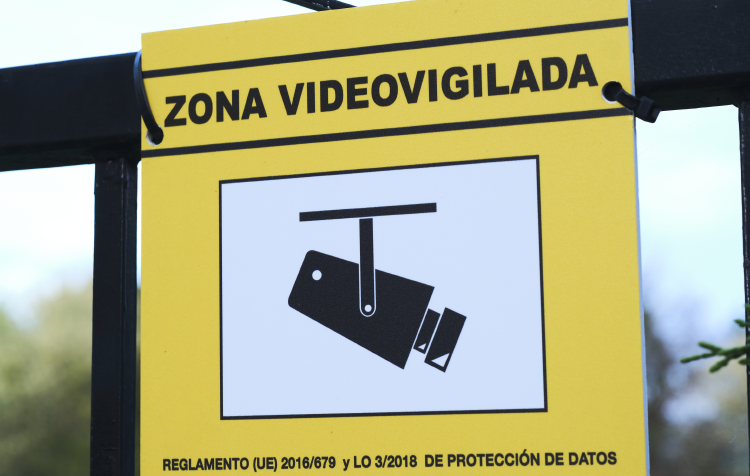
Image processing
According to article 8 of Organic Law 4/1997, recordings can only be keep for one month from its capture. However, there are exceptions. For example, if the images are related to crimes that go against the integrity of people or property. In this case, they will be in charge of the Security Forces and Bodies.
From the moment the workers know of the existence of these images, they will have a maximum period of 72 hours to deliver them to the authorities. Then they will have to get rid of them.
Limit access to recordings
The only people who can access the images captured by the security cameras are: security guards , the owners of the company, the alarm center , the people involved in the recordings and the authorities. Remember that failure to comply with the rules will be subject to fines and/or sanctions.
In addition to having a good video surveillance system, our Alarms reviews will help you choose the one that best suits your needs.
Read next: Best bedroom hidden cameras | Best Spy Camera Watch | Best low level CO detector | Best Wifi Router EMF Protection | Best Camera for MEVO Plus | Best Security Camera Without Subscription | Best Budget Camera for Blue Iris | Best Barking Dog Alarms | Best Free VPN for Rainbet | Best Solar Powered Security Camera | Alarmes Maison
Browse the Shop
 Acacia frida deluxe solid wood bed frame |
Bedroom bench |
Bed chest drawers |
Lingerie dresser |
Frame base |
Mirror with jewelry storage |
30 Bathroom Vanity |
Memory foam queen mattress |
Mattresses for back pain |
Nightstand set of 2 |
Grand Goldman Shop |
Civil Lawyer
Deutschland Trikot WM 2026
Acacia frida deluxe solid wood bed frame |
Bedroom bench |
Bed chest drawers |
Lingerie dresser |
Frame base |
Mirror with jewelry storage |
30 Bathroom Vanity |
Memory foam queen mattress |
Mattresses for back pain |
Nightstand set of 2 |
Grand Goldman Shop |
Civil Lawyer
Deutschland Trikot WM 2026










