

The glowing Apple logo above Fifth Avenue was more than launch-day theater. It was a reminder that in an era of ecommerce saturation, flagship stores still matter—especially when they function as brand billboards, customer-service hubs, tourist attractions, and media events all at once.
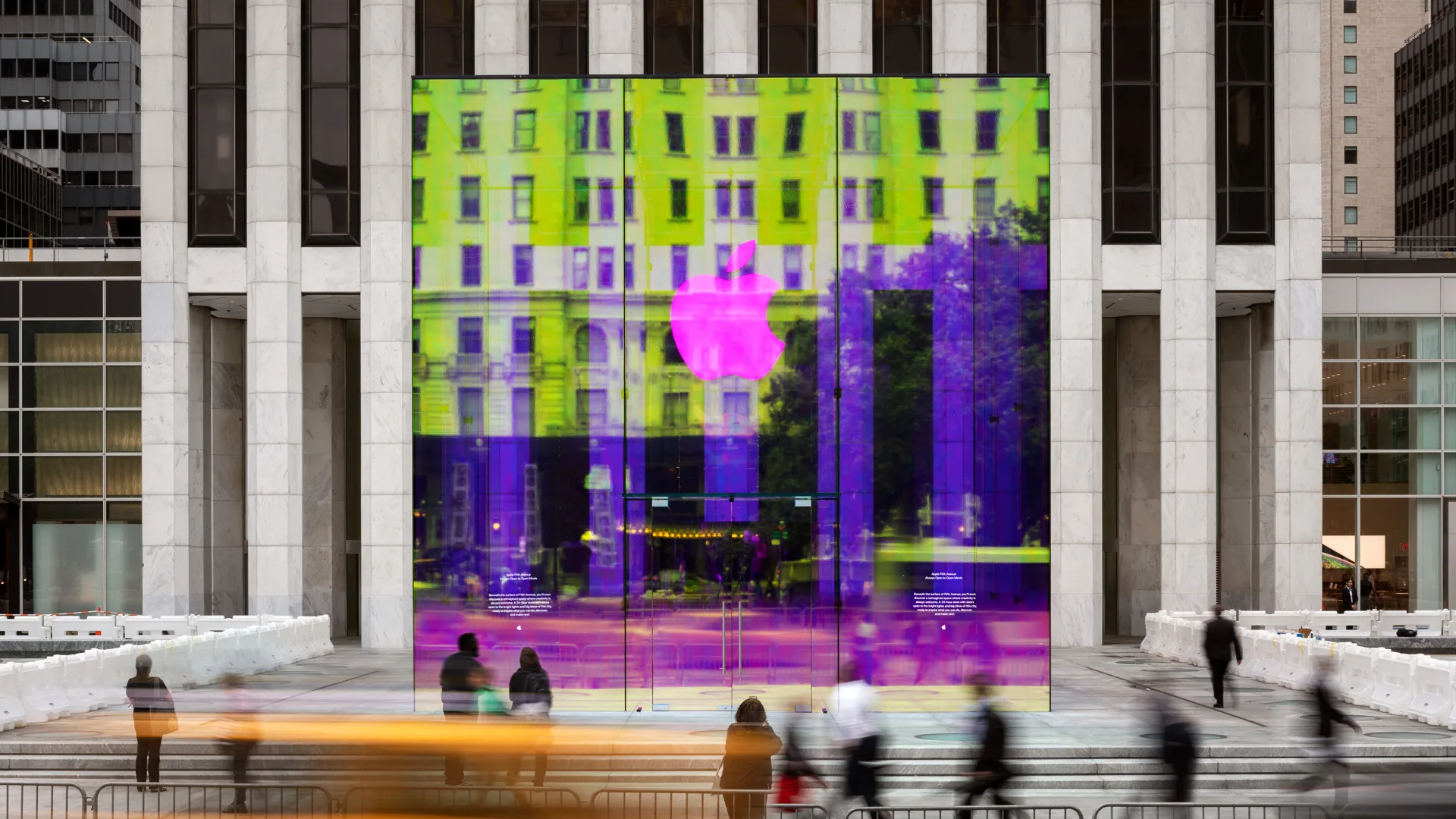
Ahead of the iPhone 16 launch, Apple transformed its iconic glass cube in Manhattan with a colorful “Apple Intelligence” glow, tying one of the world’s most recognizable retail locations to its next major platform push: artificial intelligence. The move landed at a moment when investors, retailers, and city landlords are all asking the same question—what still pulls people into physical stores? Apple’s answer appears to be simple: spectacle, ecosystem, and trust.
Find Bleeding Edge Supplements at Scandalous Prices on iHerb.

Why the Fifth Avenue Cube Still Matters
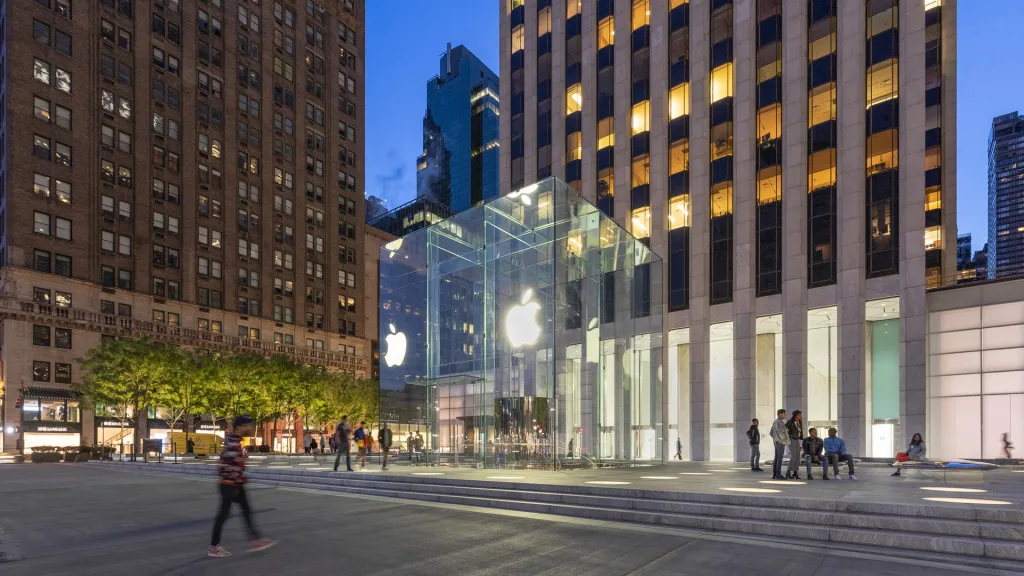
Apple’s Fifth Avenue store is not just another storefront. Since opening in 2006, the glass cube has become one of the company’s most photographed retail assets and one of New York’s most recognizable commercial landmarks. It reopened in 2019 after a major redesign that nearly doubled the underground retail space while preserving the cube as the symbolic entrance.
That makes any visual change to the cube a story in itself.
In September 2024, the cube was lit with a multicolor glow meant to evoke Apple Intelligence, Apple’s generative AI suite tied closely to the iPhone 16 cycle. The promotion arrived before the full public rollout of those AI features, signaling how central artificial intelligence had become to Apple’s product marketing—even before the software experience was fully in users’ hands.
What the cube communicates
The Fifth Avenue cube does several jobs at once:
- Launch-stage branding for major hardware releases
- High-visibility advertising in one of the world’s most premium retail corridors
- Social media amplification through organic photos and foot traffic
- Physical proof of relevance in an economy increasingly dominated by digital consumption
For Apple, the store itself is part of the product story.
Apple’s Retail Strategy Is Bigger Than Device Sales
Apple’s retail stores are often discussed as if they exist mainly to sell iPhones and Macs. In reality, they do much more.
Apple now operates more than 500 stores worldwide, and its retail footprint supports device discovery, technical support, trade-ins, upgrades, accessories, financing, workshops, and ecosystem lock-in. The physical store is where Apple turns product curiosity into long-term customer retention.
That matters because Apple is no longer just a hardware company.
According to Apple’s filings, Services revenue continued to grow in fiscal 2024, while categories such as Wearables and accessories showed pressure. That makes retail even more important: stores help Apple defend its installed base and keep customers engaged across subscriptions, software, and recurring ecosystem spending.
Why stores remain strategically valuable
Apple’s flagship retail model supports growth in several ways:
| Retail Function | Why It Matters to Apple |
|---|---|
| Product demos | Converts curiosity into purchase confidence |
| Genius Bar / support | Reduces churn and improves customer loyalty |
| Trade-ins and upgrades | Keeps users inside Apple’s ecosystem |
| Launch-day events | Creates urgency and free press coverage |
| Brand architecture | Reinforces premium positioning |
| Tourism and foot traffic | Extends Apple’s reach beyond pure shoppers |
The Fifth Avenue store does all of this at the highest possible visibility level.
The AI Glow Was Also a Message to Wall Street
The illuminated cube was not only meant for shoppers. It was also a signal to investors.
Apple Intelligence is Apple’s attempt to prove it can participate in the AI race without abandoning its privacy-first identity or its premium hardware model. By wrapping its flagship store in AI-themed visual branding, Apple effectively turned a retail icon into a strategic statement: AI is now central to the Apple sales narrative.
That is especially important because Apple has historically excelled not by being first, but by making emerging technology feel consumer-ready. The company appears to be applying that same playbook to AI.
Why the timing mattered
The timing around iPhone 16 was crucial because Apple needed to achieve three things at once:
- Reignite upgrade demand in a mature smartphone market
- Position AI as a reason to buy new hardware
- Keep retail stores central to the customer journey
The cube glow helped Apple do all three with a single visual.
Fifth Avenue Reflects a Larger Retail Truth
Apple’s Fifth Avenue activation also says something broader about brick-and-mortar retail in 2025 and beyond: physical retail is not dead—forgettable retail is.
Top-tier urban corridors continue to command attention and investment when they offer experience, prestige, and brand theater. Cushman & Wakefield’s 2025 Main Streets Across the World report points to the continued strength and strategic value of premier shopping streets globally, even as the sector evolves.
In that environment, Apple has a structural advantage. It does not need its stores to compete on discounting or convenience alone. It uses them to build emotional and cultural relevance.
What Apple understands better than many retailers
Many legacy retailers still treat stores as inventory distribution points. Apple treats stores as live media channels.
That distinction matters.
A flagship store that people photograph, share, revisit, and associate with major product moments becomes more than real estate. It becomes part of the brand’s communication system.
New York Gives Apple a Global Stage
There is also a location advantage that should not be overlooked.
Fifth Avenue remains one of the world’s most influential commercial corridors, where every storefront decision doubles as a branding decision. For Apple, putting AI-themed launch messaging on its Manhattan cube was not just about New York shoppers. It was about global visibility through press coverage, tourism, creator content, and investor optics.
The store’s 24-hour legacy and landmark status add to that aura. It is one of the few retail spaces where product marketing can feel like public infrastructure.
What This Means for Big Tech Retail
Apple’s Fifth Avenue glow is ultimately a case study in how major technology companies can keep physical retail relevant.
The lesson is not that every brand needs a glass cube in Manhattan. It is that stores work best when they do what websites cannot:
- Create memorable first impressions
- Build trust around complex products
- Turn launches into public events
- Reinforce premium brand identity
- Make technology feel tangible
Apple has spent years refining this formula, and the Fifth Avenue activation shows it still believes retail can shape perception as much as product specs do.
Bottom Line
The glowing Apple logo at Fifth Avenue was not just launch décor. It was a high-visibility statement about how Apple sees the future of consumer technology retail: AI-led, experience-driven, and deeply physical.
At a time when many brands are still trying to justify expensive storefronts, Apple continues to use one of the world’s most famous retail spaces as both a sales engine and a storytelling machine. That is why the cube still matters—and why it remains one of the clearest symbols of big-tech retail resilience.
Read next - Celebrity
Zendaya and Pattinson bring the drama to Rome premiere | Paul McCartney revisits Liverpool on new solo album | Haaland’s Viking book gift turns sports fame into heritage | BTS ARMY’s $5.3B tour economy is reshaping cities | Schiaparelli exhibit asks when fashion becomes art | AC/DC’s Stevie Young hospitalized before Buenos Aires shows | Netflix eyes global K-pop Demon Hunters concert tour | Ryan Gosling’s Project Hail Mary turns science into event cinema | Netflix tests theaters with Stranger Things animated spinoff | Oscars ratings fall 9% as TV audience habits keep shifting | Resume builder
Technology
Apple taps ex-Google exec to reboot Siri AI marketing | Meta policy chief Monika Bickert exits for Harvard | UK issues new screen-time rules for young children | Austria moves to ban social media for under-14s | Sony may raise PS5 prices again as memory costs climb | SpaceX IPO buzz fuels ticker speculation across social media | WTO nears reform deal despite US-India ecommerce rift | WTO ecommerce moratorium explained: why it matters now | Lloyds IT glitch exposed customer data for 448,000 users | Apple logo at Fifth Avenue signals Big Tech retail resilience |
Browse the Shop
 Acacia frida deluxe solid wood bed frame |
Bedroom bench |
Bed chest drawers |
Lingerie dresser |
Frame base |
Mirror with jewelry storage |
30 Bathroom Vanity |
Memory foam queen mattress |
Mattresses for back pain |
Nightstand set of 2 |
Grand Goldman Shop |
Civil Lawyer
Deutschland Trikot WM 2026
Acacia frida deluxe solid wood bed frame |
Bedroom bench |
Bed chest drawers |
Lingerie dresser |
Frame base |
Mirror with jewelry storage |
30 Bathroom Vanity |
Memory foam queen mattress |
Mattresses for back pain |
Nightstand set of 2 |
Grand Goldman Shop |
Civil Lawyer
Deutschland Trikot WM 2026










