

Technology is advancing by leaps and bounds, and it increasingly allows us to modernize more issues related to the security of our home. Thanks to home automation it is possible to automate the lighting, appliances, heating and even the lock of our house.
This last element is one of those that most often worries homeowners.
Find Bleeding Edge Supplements at Scandalous Prices on iHerb.

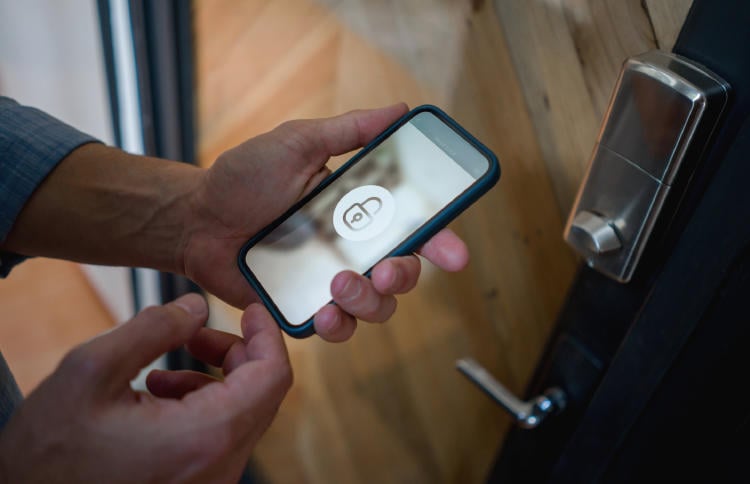
Unfortunately, break-ins and robberies are the order of the day, especially in second homes, although it is also possible for them to access our usual home, especially when we are not there.
To avoid this, one of the most effective ways isinstall a security lock. Electronic and smart locks are two of the safest options.
What is an electronic lock?
The electronic lock is a door opening and closing element that worksvia an electronic key. They lack the traditional cylinder, for which a metal key is needed to activate the pistons. In this case, to open and close it you only need to bring the electronic key closer, which will lock and unlock it automatically.
The cylinder of an electronic lock incorporates a motor that is driven upon detecting the electronic key and is responsible for moving the pistons to open or close the door.
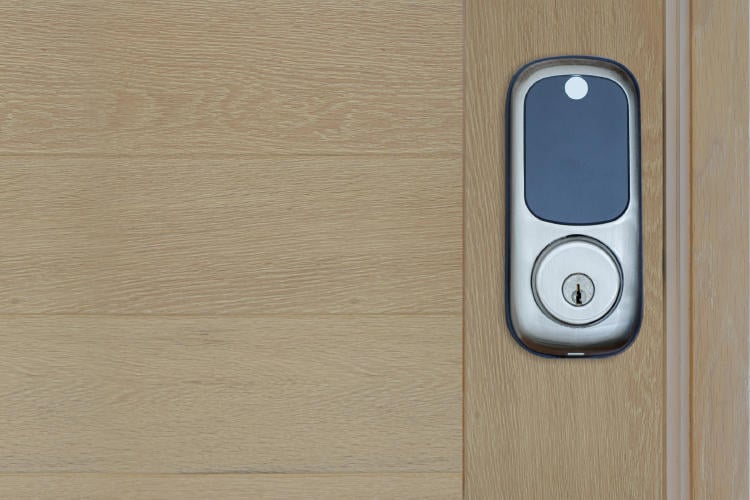
Regarding the type of key, it can have various shapes depending on how sophisticated the lock is. It may be a card, as is usually the case with hotel room doors.
But there are also electronic locksthat open with a fingerprint, or even with a mobile phone application.
What this type of locks allows is to improve the security of your home by limiting access control. And these closures are not vulnerable to the most commonly used theft techniques, such as bumping or lockpicks.
What is a smart lock?
The terms electronic lock and smart lock are often confused, because they have similarities. Starting with the characteristics they share, Smart locks have an opening system similar to electronic locks.
Just like these, They do not need a traditional key to open , since it will also be the internal motor, activated with an electronic key, that will lock and unlock the door. Up to this point, this similarity is what makes many users confuse both systems.
However, the smart lock is a home automation element, while the electronic one is not. This distinction means that smart locks can connect to a network, either throughWiFi or bluetooth. Thanks to this, they are programmable and can be opened and closed remotely.
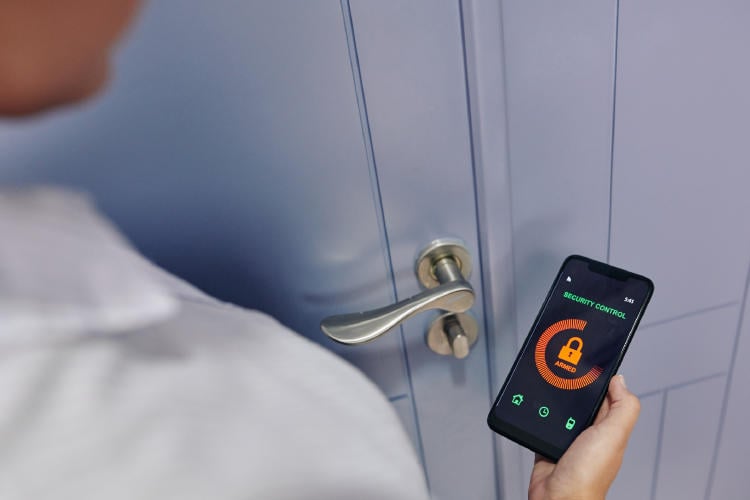
smart locks,can be controlled from a mobile appin addition to being opened with an electronic key. In this way, through your device you can control the opening and closing of your house.
It is very useful if, for example, you forgot to take keys or if you need to let someone into the house and you are not at the door at the time.
With a smart lock, It is also possible to set opening and closing codes , keys that you can share with family or people you trust and that will facilitate access control to your home.
Differences between an electronic and smart lock
When choosing one of these two locks, it is important to establish a list of differences that will allow you to decide which of the two best suits your needs:
-
Remote opening: Smart locks allow the door to be opened from a certain distance, as they can be controlled from an application. However, this distance is usually limited. On the contrary, Electronic locks require you to hold the key close to them to open.
- Key need: Although both locks usually have the electronic key option, the smart one does not need it. The main advantage is that the risk of losing or forgetting the keys is eliminated, although at the same time remember that you should always carry your cell phone or device necessary to control the lock.
- Password: Electronic locks always open with a key, while smart locks allow you to enter an opening and closing key. If you choose this alternative, you will have to remember this password.
- Home automation: smart locks, being home automation elements, can be integrated into a home automation network, which makes them programmable . Just as you can determine what time the lights turn on and off, this allows you, for example, to lock the door after a certain time for greater security.
Why install a digital lock
Regardless of whether you choose an electronic lock or a smart one, both They are safer options than traditional ones . The main advantage with respect to these is that they are resistant to attempts to be forced by means oflockpicks or methodbumping.
Taking into account that the majority of criminals who try to steal from homes look for a way to do so without being seen or heard, this type of locks are a very effective deterrent.
Most likely, if the thief sees that they cannot be forced, he will choose to leave.
Is an electronic or smart lock better?
When it comes to choosing one option or another, l The answer is always “it depends” . The differences between an electronic lock and a smart one allow them to adapt to different needs.
Smart locks, for example, have all the advantages of home automation, but also the disadvantage of connecting to a Bluetooth or WiFi network. And this type of device runs the risk of being hacked. Therefore, in terms ofcybersecurity es more advantageous to have an electronic lock.
However, smart locks also have a biometric opening, that allows you to open them using your fingerprint.
This makes them more secure in terms of access, since the fingerprint is something that cannot be stolen. With this alternative, You would also eliminate the complication of losing the keys.
Read next: Best bedroom hidden cameras | Best Spy Camera Watch | Best low level CO detector | Best Wifi Router EMF Protection | Best Camera for MEVO Plus | Best Security Camera Without Subscription | Best Budget Camera for Blue Iris | Best Barking Dog Alarms | Best Free VPN for Rainbet | Best Solar Powered Security Camera | Alarmes Maison
Browse the Shop
 Acacia frida deluxe solid wood bed frame |
Bedroom bench |
Bed chest drawers |
Lingerie dresser |
Frame base |
Mirror with jewelry storage |
30 Bathroom Vanity |
Memory foam queen mattress |
Mattresses for back pain |
Nightstand set of 2 |
Grand Goldman Shop |
Civil Lawyer
Deutschland Trikot WM 2026
Acacia frida deluxe solid wood bed frame |
Bedroom bench |
Bed chest drawers |
Lingerie dresser |
Frame base |
Mirror with jewelry storage |
30 Bathroom Vanity |
Memory foam queen mattress |
Mattresses for back pain |
Nightstand set of 2 |
Grand Goldman Shop |
Civil Lawyer
Deutschland Trikot WM 2026










