

In the world of alarms, the choice between infrared sensors and microwave sensors can make a difference in effectiveness of your security system. Today we will make you decide which team you are on, and if you are "Team infrared sensors" or "Teams microwaves".
- Differences between motion sensor and presence detector
The choice between infrared and microwave sensors will depend on your specific security needs. They both have their advantages and disadvantages, and in many cases, a combination of both can offer the best protection.
Find Bleeding Edge Supplements at Scandalous Prices on iHerb.

Team infrared or Team Microwave sensors, which alarm team are you on?
When you consider factors like the coverage area, environmental conditions, la presence of pets, energy consumption and budget, you will be able to make an informed decision to Effectively protect your home or business.
Below, we will explore in detail each type of sensor, its security applications, key differences, and How to choose the most suitable motion sensor for you.
What are infrared sensors?
Infrared sensors, also known as PIR sensors (Passive Infrared), detect changes in the thermal radiation emitted by moving objects. When a warm body, such as a person or animal, passes in front of the sensor, it detects temperature variation y activate the alarm.
They are common in residential security systems due to their low energy consumption y ease of installation . However, PIR sensors can be sensitive to changes sudden changes in temperature or the presence of pets, which could generate false alarms.
To mitigate this problem, There are PIR sensors with immunity to pets, able to distinguish between animals and people. Besides, its scope is limited and require a direct line of sight to function effectively.
What are microwave sensors?
The microwave sensors emit electromagnetic waves and detect changes in the frequency of reflected waves caused by the movement of objects.
Unlike PIR sensors, they can detect movement through walls and other obstacles, which makes them ideal for larger areas or with obstructions. They are less susceptible to environmental conditions, such as temperature or light, and offer greater coverage.
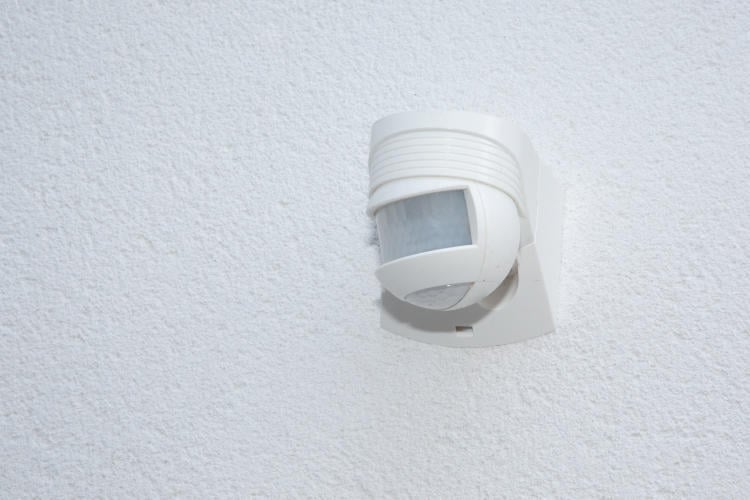
However, its high sensitivity can cause false alarms if not calibrated correctly. Furthermore, they usually have a higher energy consumption and they can interfere with other electronic devices.
Despite these disadvantages, their ability to detect motion in adverse conditions makes them valuable in industrial or commercial environments.
Security applications
Now that you better understand the characteristics of each type of sensor, We are going to explain to you the different applications in security systems that they may have, since, depending on the situation, it will be better to use one or the other.
Infrared sensors in security systems
PIR sensors are widely used in indoor security systems, as homes and offices.
They are effective in detecting the presence of intruders in specific areas and easily integrate with other security devices. Its low cost and ease of installation make them a popular choice for protection of closed spaces.
Microwave sensors in security systems
Microwave sensors are preferred in environments where a broader coverage or in difficult environmental conditions. They are common in perimeter security de industrial facilities, warehouses y exterior areas.
Their ability to detect movement through obstacles makes them ideal for protecting areas with complex structures or with high environmental interference.
Key differences between infrared and infrared sensors microwave
La main difference between both sensors lies in their detection method. PIR sensors detect changes in the thermal radiation, while microwave sensors detect changes in the frequency of reflected waves.
This means that microwave sensors can detect movement through obstacles, while PIRs require a direct line of sight.
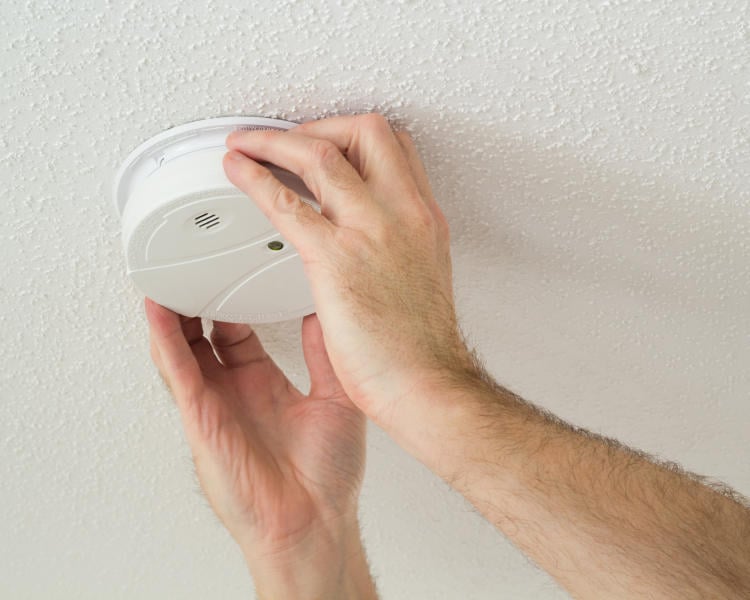
In terms of sensitivity, the sensors microwaves are more sensitive and can cover larger areas, but this also makes them more prone to false alarms if they are not calibrated properly.
The sensors PIR are less sensitive, but they offer a more accurate detection in specific areas. Furthermore, the PIR consume less energy and they are more economical than microwave sensors.
Which is better?
There is no definitive answer about which sensor is better, given that depends on the needs specific security. If you are looking to protect a small indoor area with a low risk of interference, a PIR sensor may be sufficient.
If you need to cover a larger or obstructed area, or if environmental conditions are variable, a microwave sensor may be more suitable. Besides, there are dual technology sensors that combine both models to minimize the disadvantages of each one.
These sensors require that both technologies detect motion simultaneously to activate the alarm, thus reducing false alarms and increasing the reliability of the security system.
How to choose the right sensor for your security needs
Depending on what your needs are, those of your home and those who live with you, everything can change, since each one has its own characteristics.
When choosing between infrared and microwave sensors, consider the following factors:
- Coverage area: If you need to cover a wide area or with obstacles, microwave sensors are more suitable.
- Environmental conditions: In environments with sudden changes in temperature or high humidity, microwave sensors offer greater reliability.
- Presence of pets: If you have pets, opt for PIR sensors with pet immunity or dual-technology sensors to avoid false alarms.
- Energy consumption: If you are looking for energy efficiency, PIR sensors consume less energy than microwave sensors.
- Budget: PIR sensors are generally cheaper than microwave ones.
Evaluating these factors will help you select the sensor that best suits to your security needs. And remember that security is an investment, and choosing the right sensor is a crucial step to guarantee the protection of your loved ones and your property.
Best bedroom hidden cameras | Best Spy Camera Watch | Best low level CO detector | Best Wifi Router EMF Protection | Best Camera for MEVO Plus | Best Security Camera Without Subscription | Best Budget Camera for Blue Iris | Best Barking Dog Alarms | Best Free VPN for Rainbet | Best Solar Powered Security Camera | Alarmes Maison
Home Decor Shop
 Acacia frida deluxe solid wood bed frame |
Bedroom bench |
Bed chest drawers |
Lingerie dresser |
Frame base |
Mirror with jewelry storage |
30 Bathroom Vanity |
Memory foam queen mattress |
Mattresses for back pain |
Nightstand set of 2 |
Grand Goldman Shop |
Civil Lawyer
Deutschland Trikot WM 2026
Acacia frida deluxe solid wood bed frame |
Bedroom bench |
Bed chest drawers |
Lingerie dresser |
Frame base |
Mirror with jewelry storage |
30 Bathroom Vanity |
Memory foam queen mattress |
Mattresses for back pain |
Nightstand set of 2 |
Grand Goldman Shop |
Civil Lawyer
Deutschland Trikot WM 2026










