

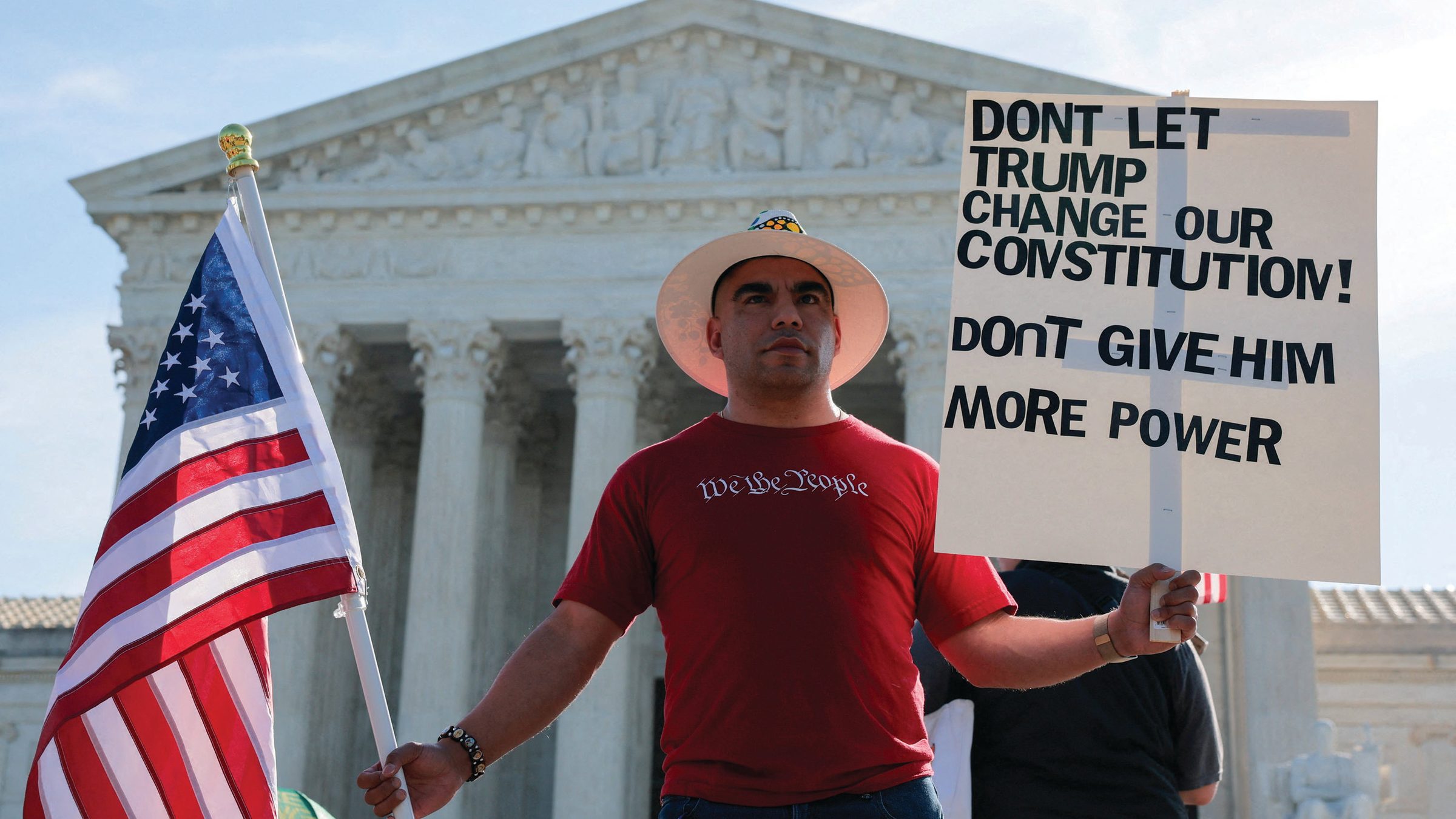
On April 1, 2026, the US Supreme Court heard oral arguments in Trump v. Barbara—one of the most consequential constitutional cases in years.
At issue is whether President Trump's executive order declaring an end to birthright citizenship for children born in the US to parents without permanent legal status is consistent with the Fourteenth Amendment to the Constitution. Trump attended the proceedings personally, becoming the first sitting president in US history to be present at oral argument.
Find Original, High-end Home Decor that spark conversation at Grand Goldman Shop.
The Constitutional Question
The Fourteenth Amendment states that all persons "born or naturalized in the United States, and subject to the jurisdiction thereof, are citizens." The administration argues that the "subject to the jurisdiction thereof" clause excludes children of undocumented immigrants and temporary visa holders, because their parents owe allegiance to a foreign state.
Legal scholars across the ideological spectrum have broadly challenged this interpretation as historically unsupported.
The Government's Narrow Reading
Solicitor General D. John Sauer argued that the Fourteenth Amendment was primarily intended to secure citizenship for formerly enslaved Americans and their descendants—not to confer citizenship on all persons born on US soil regardless of parental status. Sauer struggled to answer pointed questions from justices, including whether Native American children born today would qualify under the administration's proposed test.
Challengers and the ACLU Position
The ACLU, representing the plaintiff class, argued that approximately 5 million US-born children would be affected over the next 20 years if the executive order were upheld. Several state attorneys general filed supporting briefs emphasizing the order's incompatibility with over 125 years of legal precedent. Justice Amy Coney Barrett's prior ruling limiting nationwide injunctions has shaped the procedural posture of the case, requiring it to proceed as a class-action lawsuit.
What Comes Next
A ruling is expected before the Court's term ends in late June or early July 2026. The decision will likely resolve not only the birthright citizenship question but also clarify broader principles around the executive's power to reinterpret the Constitution unilaterally. Legal analysts believe the Court's conservative majority appears skeptical of the administration's position based on the tenor of oral argument questioning.
Read next - Health
2026 measles outbreak | drug import tariffs | CDC testing pause | healthcare top concern | hearing gene therapy | cholesterol drug breakthrough | Title X funding | Iowa Medicaid tax | deep sleep hormone | BMI accuracy study
Science
Artemis II launch | forbidden black holes | Starship to Uranus | fusion plasma mystery | China R&D lead | dynamic DNA movement | quantum computer plan | magnetic field mystery | DNA robots medicine | ocean nanoplastics discovery
Birthright citizenship case | Section 230 lawsuits | Roundup cancer lawsuits | conversion therapy ruling | ISP copyright ruling | tariffs authority ruling | social media trials | Monsanto Supreme Court | talc asbestos verdicts | death penalty bias
Browse the Shop
 Acacia frida deluxe solid wood bed frame |
Bedroom bench |
Bed chest drawers |
Lingerie dresser |
Frame base |
Mirror with jewelry storage |
30 Bathroom Vanity |
Memory foam queen mattress |
Mattresses for back pain |
Nightstand set of 2 |
Grand Goldman Shop |
Civil Lawyer
Deutschland Trikot WM 2026
Acacia frida deluxe solid wood bed frame |
Bedroom bench |
Bed chest drawers |
Lingerie dresser |
Frame base |
Mirror with jewelry storage |
30 Bathroom Vanity |
Memory foam queen mattress |
Mattresses for back pain |
Nightstand set of 2 |
Grand Goldman Shop |
Civil Lawyer
Deutschland Trikot WM 2026










