


What happens to the alarm system that I have installed at home if there is a power outage or a loss of electricity due to a breakdown or accident? What do we do if we want to install an alarm in a place without electricity? Don't we have options?
As we mentioned in the subtitle,The lack of electricity does not limit safety at allprovided by a good alarm system that is not excessively old.

Nowadays all systems have a battery that lasts a few hours to ensure safety in any situation. So your security cameras work without a problem.
What would we do if not faced with a thief who, before breaking into the house, cuts off the electricity? Do they have it that easy? Obviously not.
All alarms currently on the market work without electricity. They even send a notice to the Alarm Receiving Center (ARC) if they are running out of battery.
In addition, there are alarm systems that directlyThey do not require electricity to operate. They are ideal for sheds, garages or country houses that do not have electricity or where it is restricted for a period of time.

How does an alarm work without electricity?
The power supply for the alarms that does not require electricity isan internal battery.They are systems widely used in country houses, garages, stables or second homes. Areas where, due to various circumstances, they do not have continuous electricity.
This type ofBatteries can last up to 72 hours of uninterrupted operation.For this reason, they are devices with excellent autonomy and reliability.
However, in some cases the objective is to maintain the autonomy of an alarm for longer: days or even entire months without having to replace batteries.
In this case, these alarms use other alternative sources of energy other than electricity such as, for example,photovoltaic energycoming from solar panels.
These alarm systems are independent that do not need to be connected to any electrical source andhardly require maintenance.
Its autonomy, however, does not limit the functions at all.Like the rest of the alarms, they are connected to an Alarm Receiving Center. In case of intrusion, they carry out the alert communication without problem as long as there is mobile coverage.
That is to say that they areGMS alarmsthat connect to the control panel and the owner's phone with a SIM card, and send alerts and calls to the registered mobile phone.
Therefore, these types of alarms use arechargeable batterythrough alternative energy sources automatically, mobile telephone networks to issue alerts and can be wired or wireless.
They are especially useful forowners of garages or uninhabited properties,especially, since they warn you of an illegal occupation, as well as for owners of agricultural facilities in the countryside.

Alarms connected to the current: What happens when the power goes out?
Typically, however, most of the alarm systems we install in our properties do have access to electricity, soThe optimal thing is to install a traditional alarmwhose energy source is electric current.
And what happens when the power goes out?Are we left unprotected against thieves? As we have already explained, this possibility does not exist and is just a myth fueled by ignorance of how modern-day alarms work.
An alarm, currently, it doesn't stop working at any time, even though the light goes out or there is a total disconnection of the electrical current to your company or home.
More than ready devices
The alarms are already more than ready forcope with an energy outage,given that they have a main system connected to the electric current and a secondary one that runs on batteries.
When the main system fails or collapses, due to the loss of the electrical power supply, for example, the built-in technology allowssend a notice to the central office of the power failure.
Furthermore, the battery immediately becomesyour energy source, which makes it possible to operate uninterruptedly despite the circumstances.
These batteries have a variable life of several hours (approximately 6 hours). However, its theoretical duration differs from its actual one. The autonomy depends on the age of the battery and how many devices are connected to the central system.
Thus, an alarm with many motion sensors will last less without power than one that has only a single sensor or a single additional device.
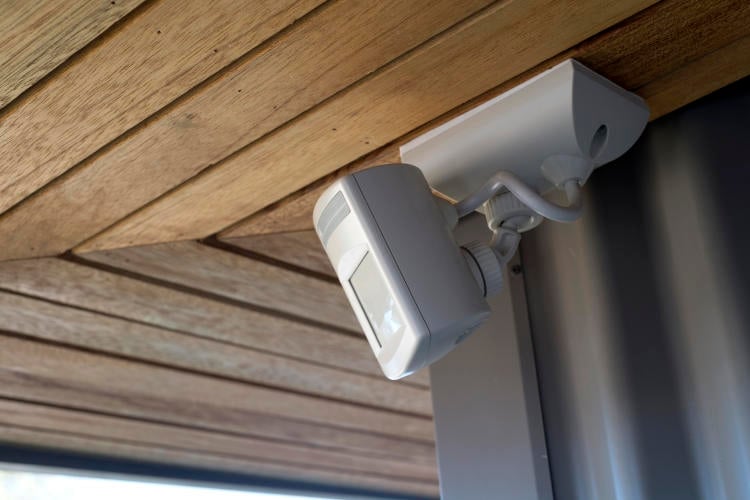
In any case, when that battery runs out, the alarms have abackupor emergency battery thatwill be activated for at least another 24 hours.
As you see, it isIt is very complicated for the alarm system of a home or company to stop working.That is highly unlikely to happen, given the additional battery systems it has to back up a power outage.
End the legends
Therefore, if someone had told you the false myth that an alarm will leave you stranded on a night without light...It's time to banish itand explain how a 21st century alarm system truly works.
Technology has greatly improved alarm systems in recent decades andthe power supply to keep them always activeIt couldn't be less.
Thus, the alarm system of your home or company will always be alert ofthe dangers that lurk and the possible threats. Even in cases where we leave properties uninhabited for months…
What is technology for if not to make our lives easier and more comfortable?An alarm system is essential for the security of yours and your home…and, as we have told you, you can be sure that none of them are going to leave you stranded.
Read next: Best bedroom hidden cameras | Best Spy Camera Watch | Best low level CO detector | Best Wifi Router EMF Protection | Best Camera for MEVO Plus | Best Security Camera Without Subscription | Best Budget Camera for Blue Iris | Best Barking Dog Alarms | Best Free VPN for Rainbet | Best Solar Powered Security Camera | Alarmes Maison










