

Security is no longer limited to a traditional lock. This is where the systems come into play.access controlthroughelectronic keys, RFID tags or PIN codes. In this complete guide you will discover everything you need to know about it.
- Control panel with touch screen vs traditional keyboard
Today, both homes and businesses need safer, more comfortable and modern solutions to Manage who enters and who leaves. That is why we are going to see all these options, how they work, what advantages they have, what types exist and which one fits best with your home, office, store or neighborhood community.
Find Bleeding Edge Supplements at Scandalous Prices on iHerb.

What exactly is access control?
An access control system allows you to limit who accesses a space using means that are more secure and easier to manage than a traditional key. Some of these means areRFID tags, proximity cards, electronic keys or PIN codes.
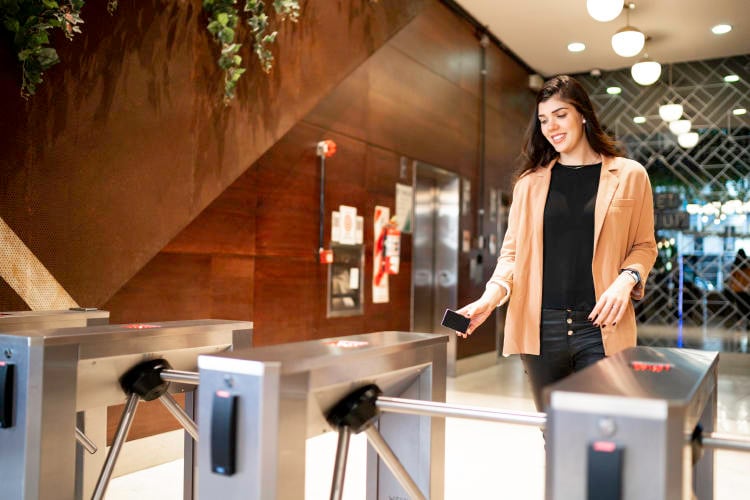
Its mission is twofold: to improve thesecurity, avoiding unauthorized copies, and facilitating thedaily management, allowing you to control who enters, where and at what time.
For example, you can give your provider a Temporary PIN, provide an RFID tag that expires after use or rent a guest card that only valid during certain hours.
Advantages of modern access control systems
- They are more secure than traditional keys, since they are encrypted and are not easily duplicated.
- They allow remote management from a mobile app, so you can add or remove users instantly.
- They record accessto know who entered, when and where.
- They can limit the hours, which is useful for external services or temporary employees.
- They provide comfort,Well, they don't need physical keys.
- They are scalable, so you can start with one door and expand the system.
Types of access control available
Electronic keys
They replace your physical key with a digital device. It communicates with the lock using specialized technology.
Advantages:
- They are not duplicated in hardware stores.
- They can be deactivated in case of loss without changing the entire lock.
- They allow you to manage multiple doors with a single key.
RFID or proximity tags
They are small devices (like keychains) that They open doors by bringing them closer to a reader.

Advantages:
- Very quick to use.
- Resistant to daily use.
- Cheap to replace if lost.
They are very common in garages and communities residential, but can also be used in offices, daycares, or any other type of business.
Electronic cards
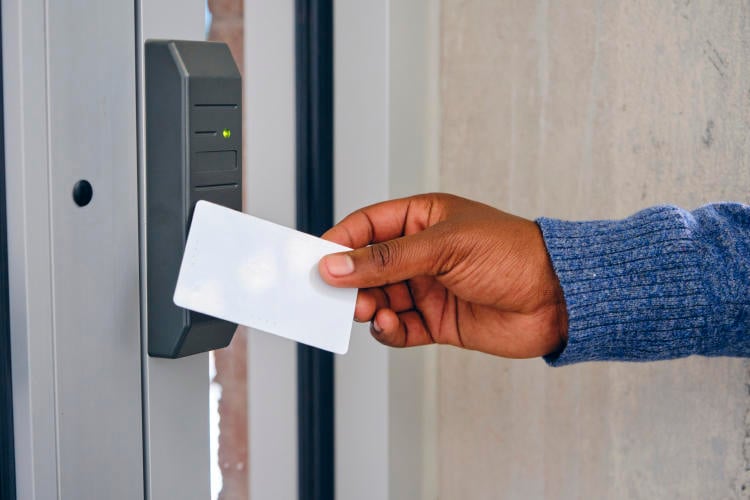
They work the same as a tag, but they are designed in credit card format.
Advantages:
- Convenience of transport (carry them in your wallet).
- Customizable to identify the owner.
- Cheap to produce and replace.
They are maybe the most popular access control device among users because they are mainly used in hotels. In them, they can fulfill double function, since they not only allow access to the room, but also activate the light service once inside.
PIN codes
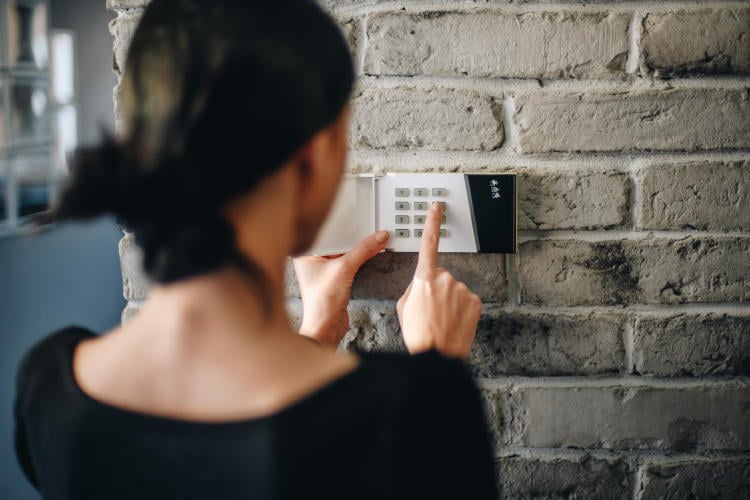
PIN codes are numerical keys which are inserted into an electronic keypad connected to the door opening.
Advantages:
- You don't have to carry anything.
- Ideal for shared access.
- They can be changed periodically for safety.
These PIN codes are increasingly used in the access to tourist homes, although they also serve for other cases, for example, for cleaning companies, where staff can receive a different code each day to maintain security.
Biometric control
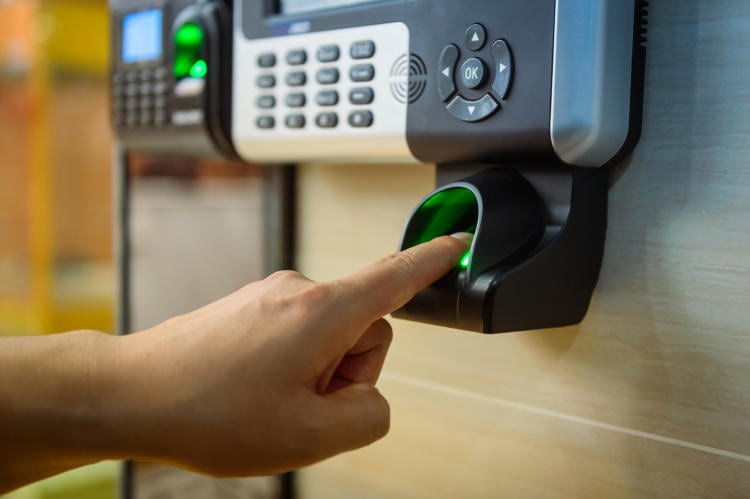
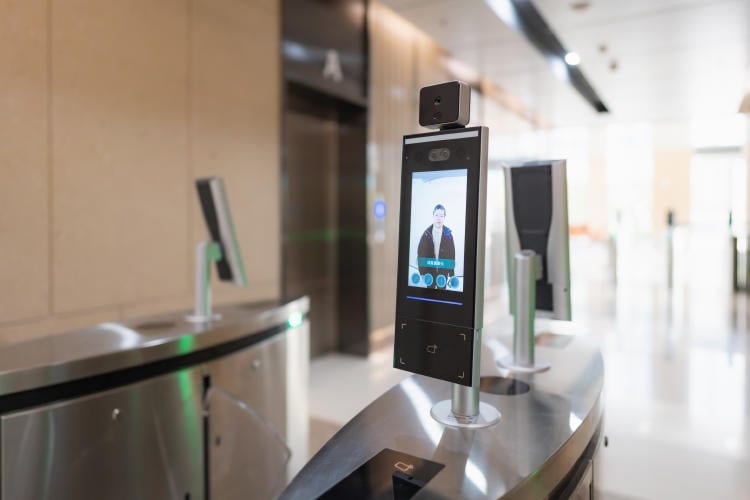
Biometric control uses fingerprints, facial or iris recognition to open access. Increasingly used in high security offices.
Advantages:
- Cannot be duplicated.
- Maximum comfort: you don't need anything physical.
It is a more expensive option, due to its sophisticated recognition system, making it more common for senior positions in banks or other offices, as well as in laboratories.
Access control trends
Access control is evolving rapidly due to citizens' need to feel safe,tanto en sus hogaresas in their companies. Some trends that are already arriving in Spain are:
- Control from mobile: More and more electronic locks work with apps that allow you to open the door with your smartphone.
- Temporary access with dynamic codes- Very useful in Airbnb-type vacation rentals, where each guest receives a unique PIN that expires at the end of their stay.
- Integration with voice assistants: opening the door with Alexa or Google Assistant is now possible in several models.
- Advanced biometrics: more precise fingerprints and facial recognition with artificial intelligence, capable of identifying even in low light conditions.
- Hybrid systems: locks that accept tags, PIN and mobile app at the same time, so that each user can choose their preferred method.

Access control practical cases
To better understand how these systems are applied, let's look at real examples:
- Home with teenagers: In a single-family home, parents install an electronic lock with PIN and tags. Each child has their personal code and, if they forget, they can use the RFID tag. Parents receive notifications every time someone enters.
- Shared office: In a coworking, users have an RFID card valid only during office hours. The system keeps a record to know who has been in the space.
- Neighborhood community: the portal, garage and storage rooms are opened with the same tag. If a neighbor loses the key fob, the administrator can deactivate it and issue a new one in minutes.
- Store with multiple entrances: Staff use tags to enter through the back door and the supplier logs in with a PIN code that changes weekly. This prevents third parties from using old accesses.
These examples show how access control adapts to each need, from something as personal as a home to something collective as a community.
Which system to choose according to your needs?
Homes:
A combination ofelectronic keys or RFID tagsis usually enough. They are secure, comfortable and easy to manage from your mobile.
small offices
The ideal is to combinePIN + tags. You can control who comes in and when, ideal for shifts or temporary employees.
Businesses or stores
Here the best is a mixed system: tags for employees, PINs for suppliers. Additionally, integrate access control withalarm and video surveillanceadds a layer of protection.
Large companies
El biometric control o smart cards with detailed history are the best option for advanced security.
How to save on the installation of an access control system: self-installation
You can find access control systems that are easily installed at home, which will basically allow you to save, but there are Important differences you should know:
Self-installable:
- Ideal for homes or small businesses.
- They require certain technical skill.
- They are not usually connected to a CRA.
Professional installation:
- Custom settings according to access and schedules.
- Integration with cameras, sensors and alarms.
- Technical support and maintenance included.
- Direct connection to a receiving center for immediate police intervention.

Whether we are talking about protecting a store, an office with several employees or a community,professional installation is the best option. On the other hand, for an apartment for personal use, a self-installing system may be sufficient.
Tips for safe and efficient use of access control
- Regularly update PIN codes and deactivate access for users who no longer need it.
- Make sure tags or cards are in good condition.
- Do not share access indiscriminately.
- Keep the app and firmware updated to avoid vulnerabilities.
- Always combine it with a professional alarm for maximum protection.

Benefits of integrating it with your alarm
With systems like Alarms with Verisure, you can integrate access control, motion sensors and video surveillance in a single platform:
- You manage from your mobile Who comes in and when.
- You receive alerts live.
- If there is an incident, thecentral receiving station (CRA)validate and alert the police.
This multiplies the effectiveness of the system and is ideal for environments such as neighborhood communities and stores.
El access controlIt is, today, one of the most complete and adaptable solutions to reinforce security. What a few years ago was exclusive to banks or corporate buildings, is now available for any home, business or community of neighbors in Spain.
The key is inchoose the system that best suits your reality. A family home benefits greatly from electronic keys or tags; a business with multiple entrances needs a combination of PIN and RFID; and a great company may require biometrics and registration detailed access.
But the most important thing is that these systems offer more than just security:give confidence and control. Knowing who comes in, when and how allows you to focus on what really matters: your family or your business.

If, in addition, you integrate access control with an alarm system connected to acentral receiving station like Verisure from our Alarms, you will have the peace of mind that your protection is always backed by professionals.
Because, in the end, Security is not an expense: It is an investment in peace, continuity and trust.
Best bedroom hidden cameras | Best Spy Camera Watch | Best low level CO detector | Best Wifi Router EMF Protection | Best Camera for MEVO Plus | Best Security Camera Without Subscription | Best Budget Camera for Blue Iris | Best Barking Dog Alarms | Best Free VPN for Rainbet | Best Solar Powered Security Camera | Alarmes Maison
Browse the Shop
 Acacia frida deluxe solid wood bed frame |
Bedroom bench |
Bed chest drawers |
Lingerie dresser |
Frame base |
Mirror with jewelry storage |
30 Bathroom Vanity |
Memory foam queen mattress |
Mattresses for back pain |
Nightstand set of 2 |
Grand Goldman Shop |
Civil Lawyer
Deutschland Trikot WM 2026
Acacia frida deluxe solid wood bed frame |
Bedroom bench |
Bed chest drawers |
Lingerie dresser |
Frame base |
Mirror with jewelry storage |
30 Bathroom Vanity |
Memory foam queen mattress |
Mattresses for back pain |
Nightstand set of 2 |
Grand Goldman Shop |
Civil Lawyer
Deutschland Trikot WM 2026










