

A painting falls in the middle of the night. There is no noise, just a slight vibration. The alarm does not detect it, you need a device that locates things before, because at that moment you can't know ifIs it an intrusion or a simple coincidence. For these moments they arrivevibration sensors.
- AI knocks on your door. Top best Smart Locks for 2025
Anyone who has felt the ground shake when a truck passes by has experienced the power of vibrations. Invisible, but revealing,vibrations can alert you to movements before other sensors react .
Find Bleeding Edge Supplements at Scandalous Prices on iHerb.

Vibration sensors: the device that detects before the alarm
Vibration sensors have become relevant as key tools in early protection. Capable of locate imperceptible movements, These devices can trigger alerts before a door is opened or a window is broken.
In this article you will learn what they are, how they work and what technologies they are made of . We will also review your advantages and why they are increasingly used in security, industry and home automation.
What are they?
Vibration sensors are devices designed to detect oscillations, impacts or physical movements on a surface or object. They do not need direct contact with the aggressor nor do they depend on a loud sound to activate themselves.
They work like Anticipatory "senses" that react to the slightest mechanical change . They are used both in security systems as in maintenance predictive industrial and smart home applications.
How do they work?
These sensors capture mechanical movements through sensitive materials or electronic components that convert vibration into an electrical signal. This signal can be processed to determine the intensity or frequency of the event .
Once the signal is registered, the system can activate an alert, record data or even perform automatic actions . Some models distinguish between natural and artificial vibrations , reducing false alarms.
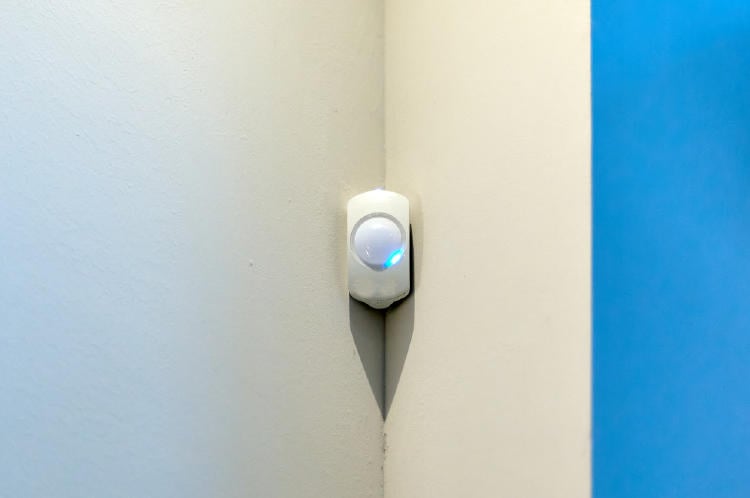
4 types of vibration sensors
Strain gauges
Strain gauges are elements that adhere to a surface for measure its deformation when subjected to stress . When a vibration occurs, the gauge detects the elongation or compression of the material and turns it into an electrical signal.
Furthermore, they are used in monitoring of bridges, buildings and heavy machinery . Its precision allows locate even small variations which could indicate an incipient mechanical failure, allowing repairs before further damage occurs.
microphone sensors
These sensors, similar to conventional microphones, capture pressure waves generated due to sound or mechanical vibrations . They are widely used on rigid surfaces , such as windows or metal walls, where movements generate a detectable vibration .
By being in direct or very close contact with the structure they protect, they can even locate a gentle blow or attempted manipulation . They are common in security display cases, ATMs or armored vehicles .
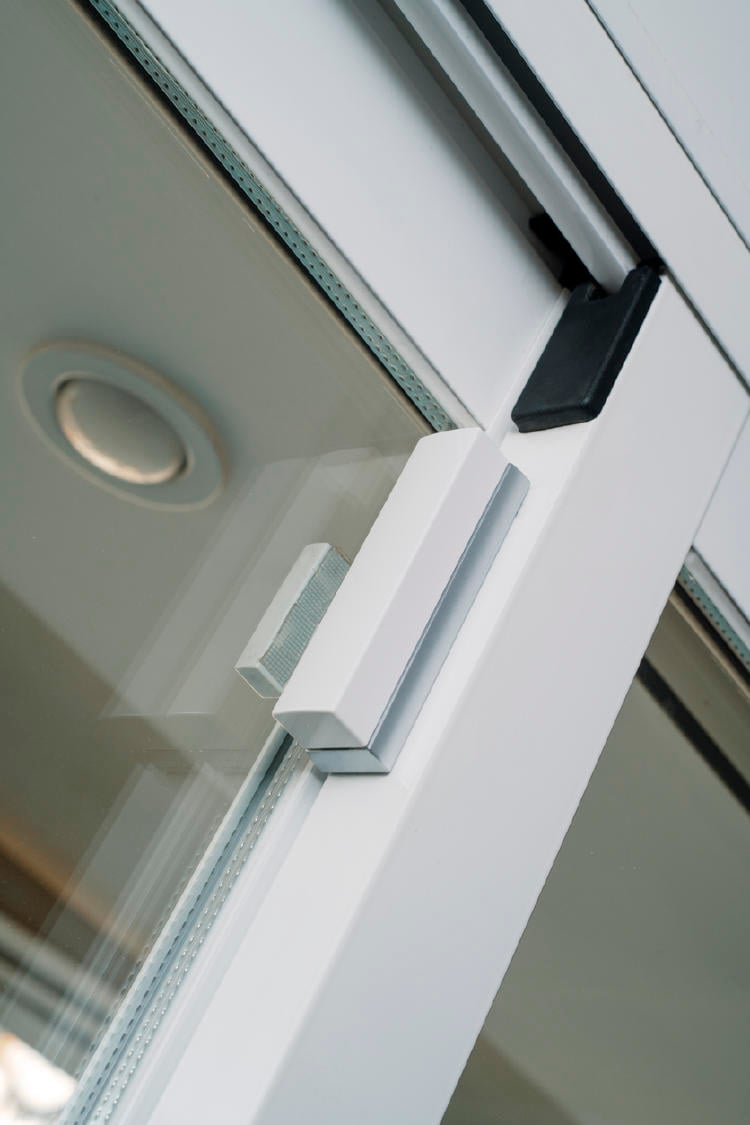
Shock sensor technology
"Shocksensor" type sensors are designed to capture sudden jolts or direct impacts . They are common in car alarm systems and armored doors . They operate by means of a spring or internal mass that moves when receiving a sudden vibration.
They are calibrated for differentiate between a small movement , like closing a door with force, and an intentional attack , like trying to pick a lock. This allows reduce false alarms , one of the biggest challenges of any security system.
Accelerometers
The accelerometers measure the acceleration of an object in one or more axes . They are extremely sensitive to small movements and vibrations , so they can detect specific patterns of activity. Many Current mobile devices include them for locate gestures or falls.
In security systems, they allow Identify repetitive knocking, drilling, or lock picking attempts . They are also used in drones, industrial systems and structural monitoring platforms.

Benefits
One of the main advantages of oscillation detectors is their anticipation capacity. They can detect events before damage occurs visible or other more conventional sensors are activated, such as cameras or motion detectors.
Additionally, they offer a passive and discrete system. They do not require light, emit sound or need constant monitoring. They work silently , recording any alteration with great precision. This makes them i Deals for environments where privacy is sought or where other technologies are not viable.
Another great advantage is its versatility . They can be installed in a wide variety of surfaces and configure to different levels of sensitivity . From locate robbery attempts in a showcase until monitor the vibration of an industrial motor , its applications are very broad.
Disadvantages
One of the main challenges is calibration . If a sensor is poorly adjusted , can generate false alarms due to natural vibrations , such as strong wind, nearby machinery, or even heavy footsteps in a building.
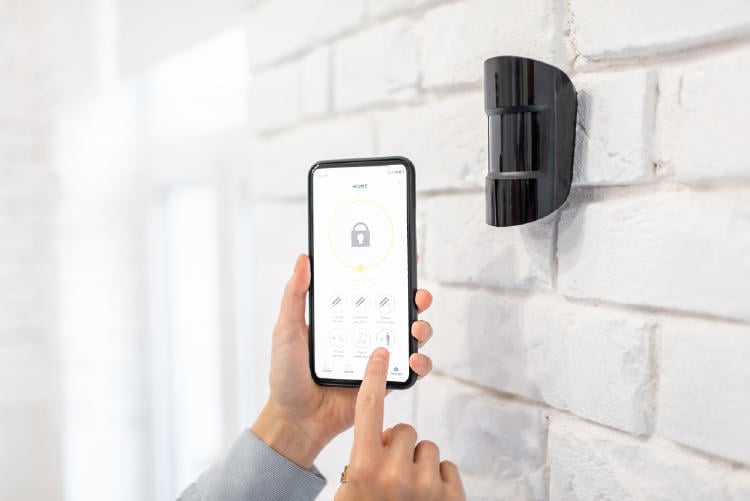
They also require a specific technical installation . It is not enough to place them on a surface; it is necessary to analyze the structure, the environment and the intensity of usual vibrations to ensure its effectiveness without interference .
Another limitation is that They do not provide visual or sound information . They detect that something has happened, but not what. Therefore, often integrate with other systems such as cameras or alarms for offer a complete security system.
Put an extra level of protection in your home
Vibration sensors represent a silent but powerful technology . With the ability to anticipate visible events, they provide a extra level of security and efficiency in multiple areas . In the world of early detection, they come before the alarm.
Best bedroom hidden cameras | Best Spy Camera Watch | Best low level CO detector | Best Wifi Router EMF Protection | Best Camera for MEVO Plus | Best Security Camera Without Subscription | Best Budget Camera for Blue Iris | Best Barking Dog Alarms | Best Free VPN for Rainbet | Best Solar Powered Security Camera | Alarmes Maison
Browse the Shop
 Acacia frida deluxe solid wood bed frame |
Bedroom bench |
Bed chest drawers |
Lingerie dresser |
Frame base |
Mirror with jewelry storage |
30 Bathroom Vanity |
Memory foam queen mattress |
Mattresses for back pain |
Nightstand set of 2 |
Grand Goldman Shop |
Civil Lawyer
Deutschland Trikot WM 2026
Acacia frida deluxe solid wood bed frame |
Bedroom bench |
Bed chest drawers |
Lingerie dresser |
Frame base |
Mirror with jewelry storage |
30 Bathroom Vanity |
Memory foam queen mattress |
Mattresses for back pain |
Nightstand set of 2 |
Grand Goldman Shop |
Civil Lawyer
Deutschland Trikot WM 2026










