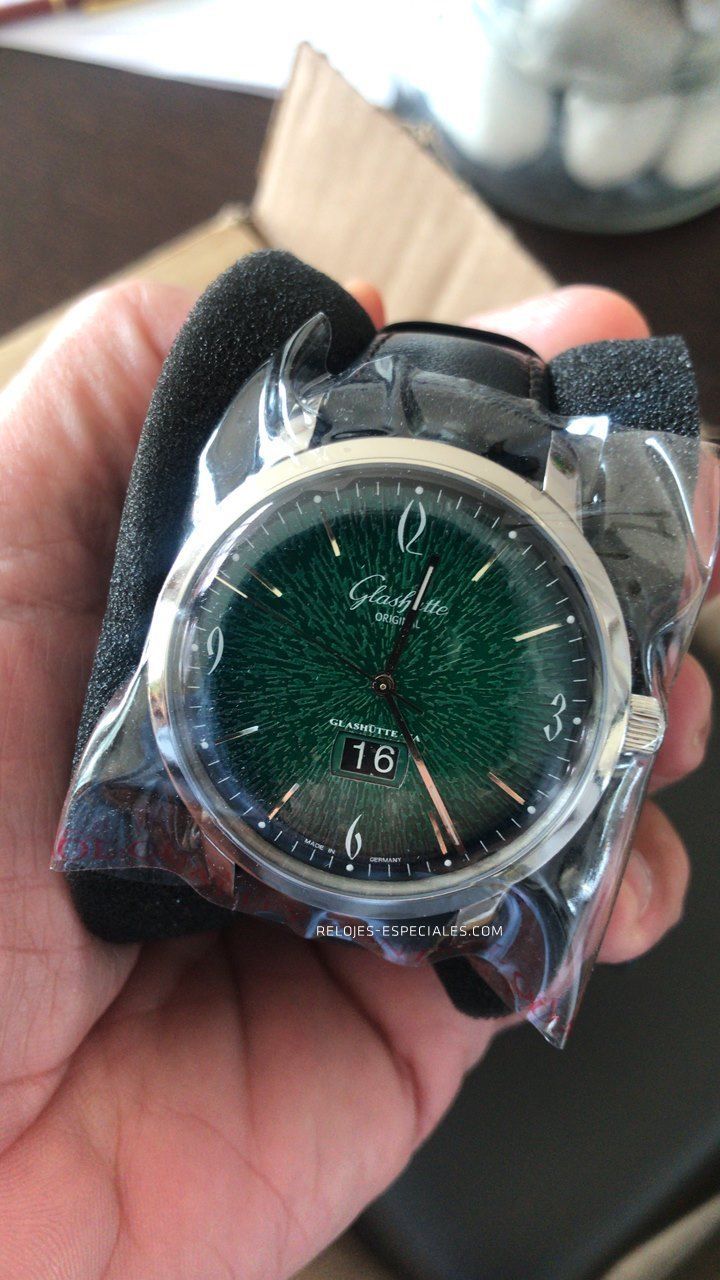
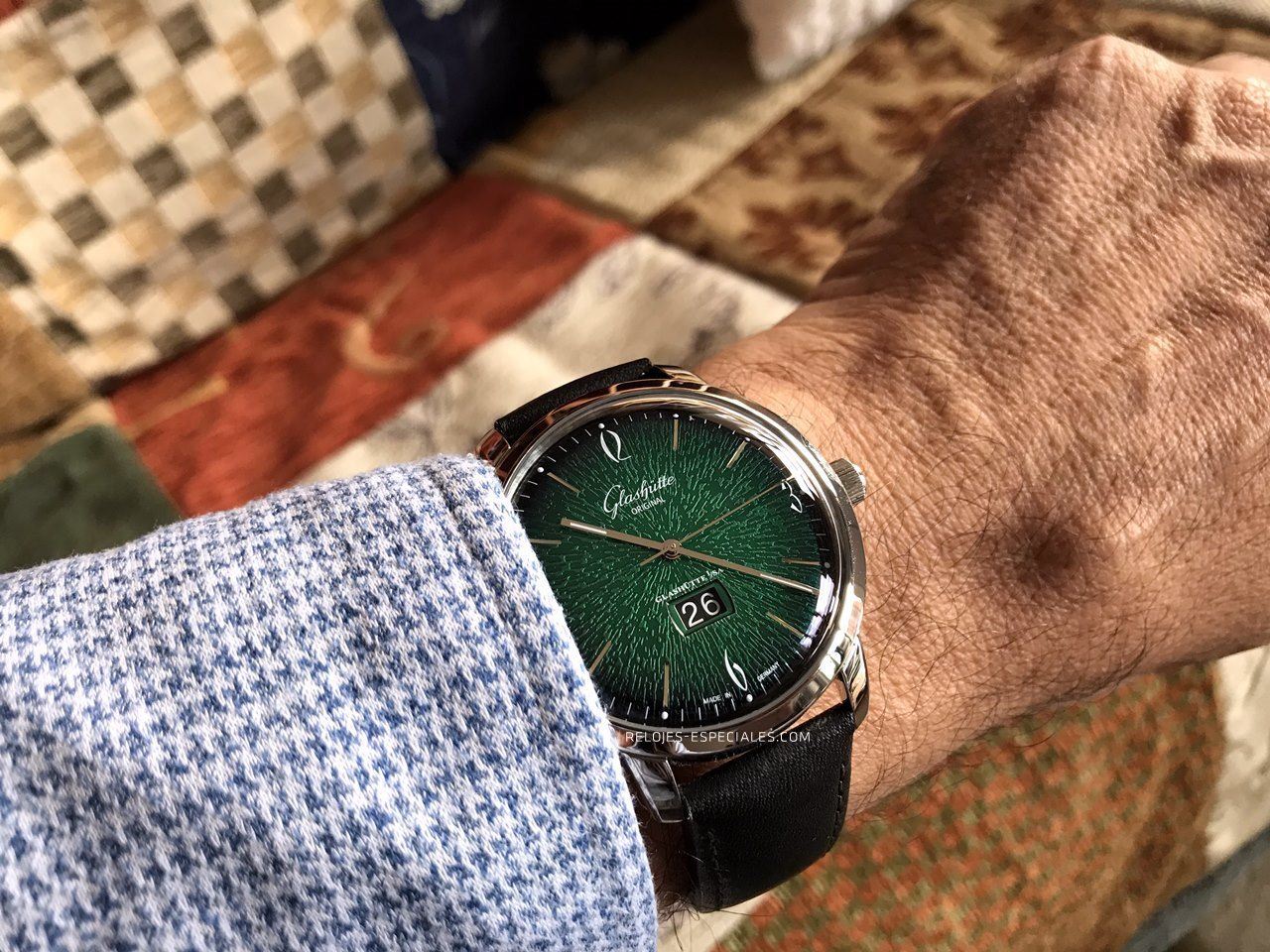
It goes without saying that I am a fan of Glashütte Original, something that conditions my assessments and that I admit can affect my objectivity. With this in mind, I will say that it is very possible that in a while I will regret not having bought theGlashütte Original Sixties Panorama Datewith the green sphere in 2018 (the only year in which it has been produced), and that when I can go for it the market prices have increased due to exclusivity. But at the time of writing this article, early 2019, I have too many fronts open to even consider it.
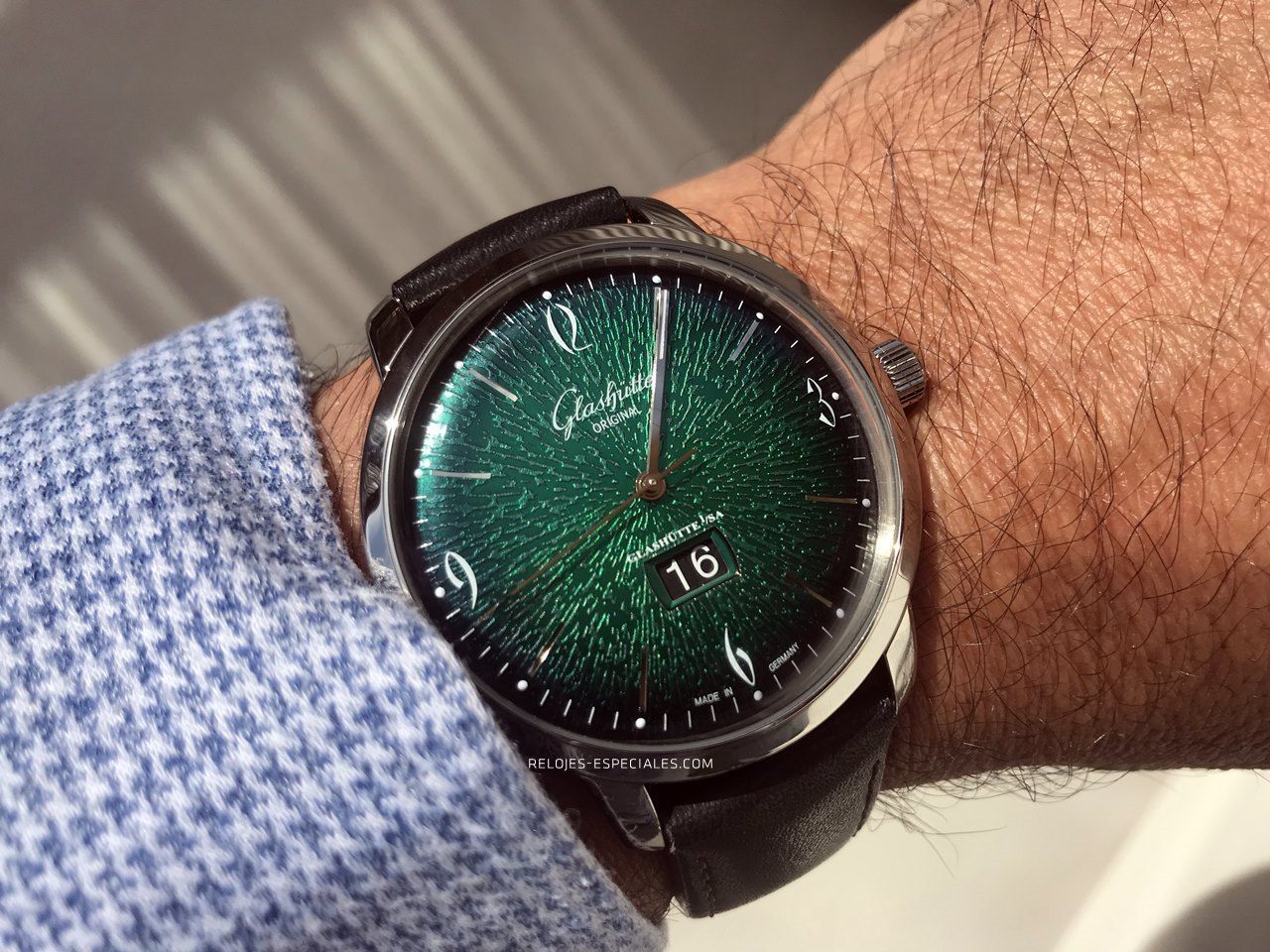

I am specifically talking about the model 2-39-47-04-02-04, which when read this way sounds a bit sad although it provides a lot of information to those who know how to read it: panoramic date (2) caliber 39-47, green dial (04) Sixties in steel (02) and with a leather strap (04). I prefer to call himGlashütte Original Sixties Panorama Date, an expression that for some will still remain a mystery while for others it will sound like heavenly music. It belongs to the successful Sixties collection, which together with the Seventies has “popularized” the brand among a broader audience of fans, who have discovered that there is an interesting life beyond Swiss brands.
One of the things I appreciate most about Glashütte Original is that, unlike some of its neighbors in the watchmaking town of Glashütte (Lower Saxony) and the vast majority of Swiss brands, it has dared to put Fine Watchmaking in steel cases. Because Haute Horlogerie is not only about large complications (such as tourbillons or perpetual calendars, which it has) but also decorations and finishes of some of its calibers made by hand, such as the chamfering of the bridges or the blueing of the screws that hold the different components.
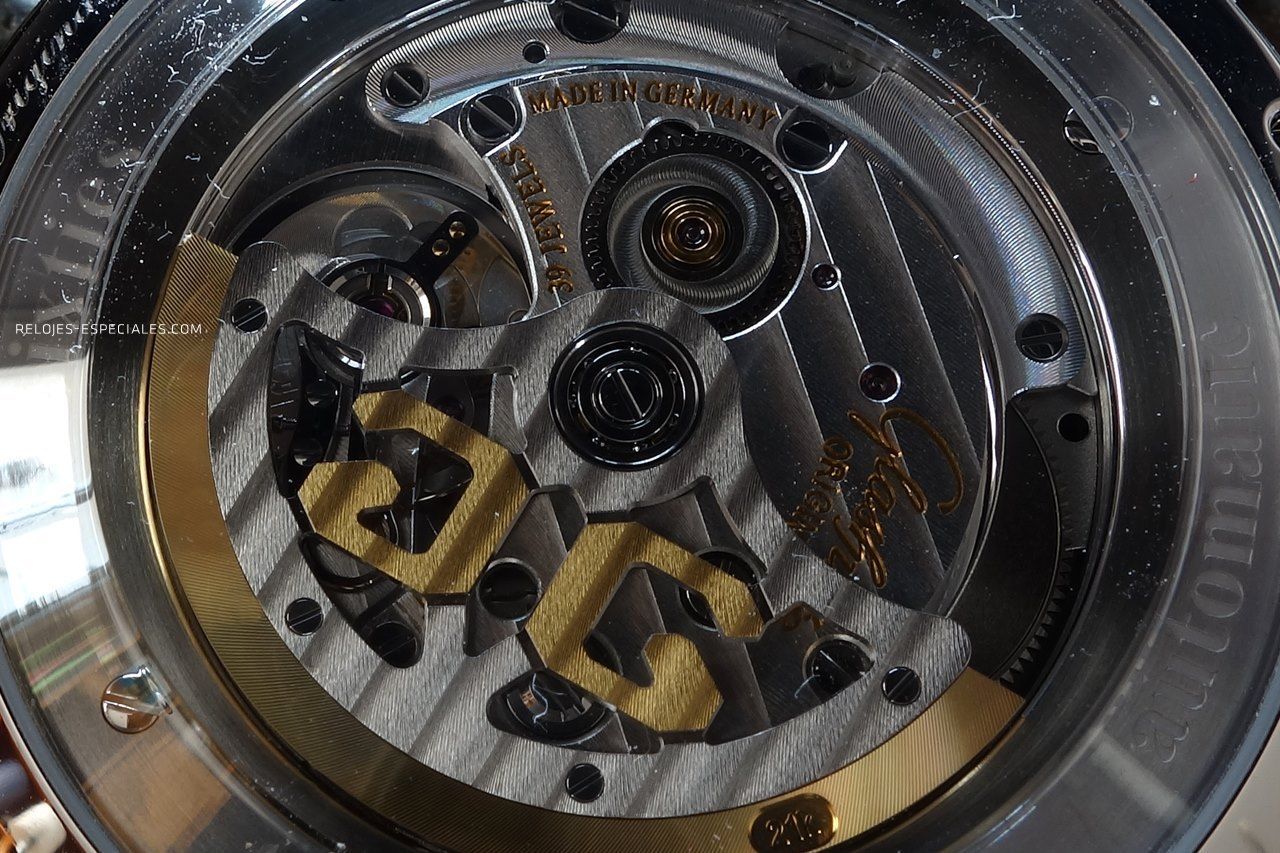
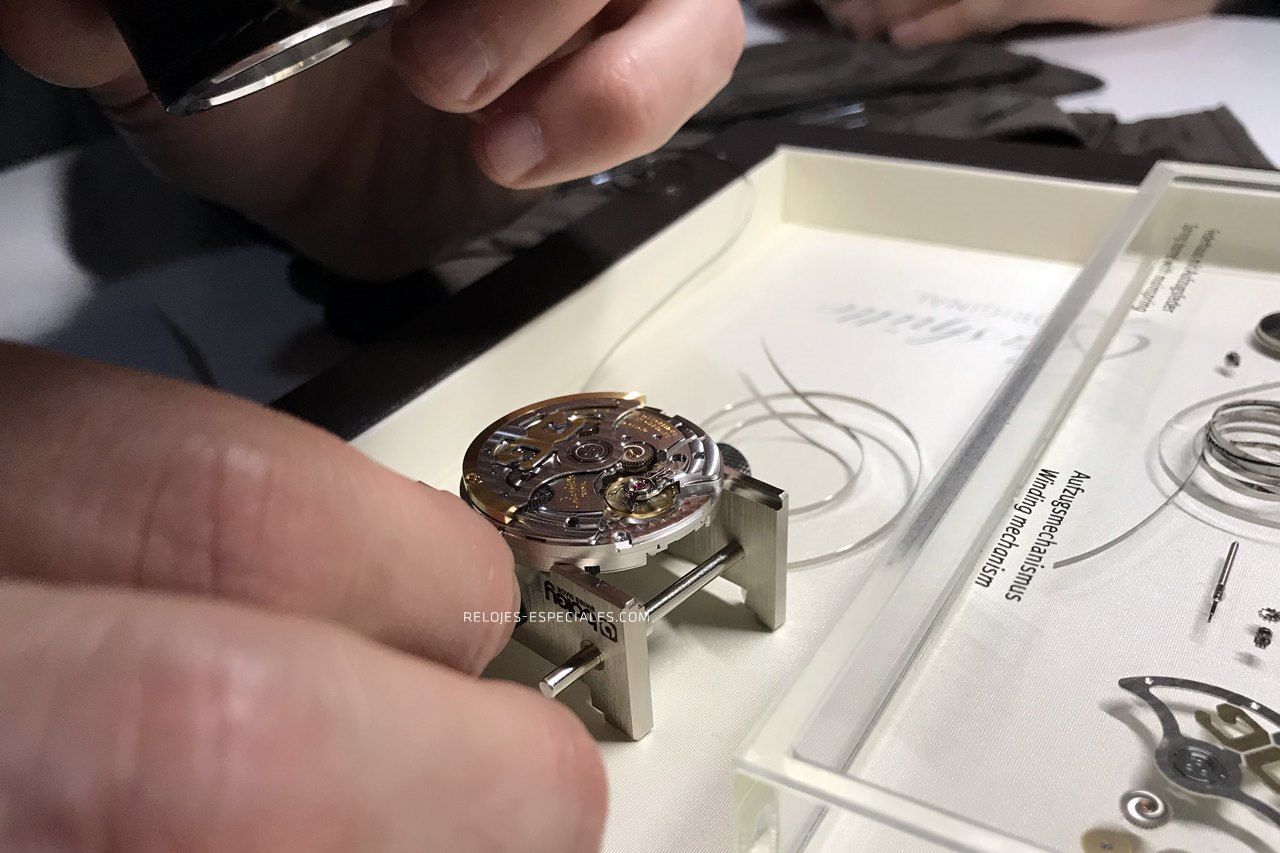
And this Sixties is an example of this: even though it is a single hour with a panoramic date, it is equipped with an automatic manufacture caliber, the 39 (is it enough to be manufactured to be considered Fine Watchmaking?). The caliber 39 also features a stop seconds hand (when removing the crown: it helps to set the time with the precision of the second) and the large date module with two concentric discs, a Glashütte Original patent that, by the way, has just expired and is now publicly available. We'll see how long it takes for competing models with that feature to appear. I emphasize the concentric disks because they are the ones that are at the same height and make the window partition unnecessary...
Something that differentiates German watchmaking (and that is common among them) is the three-quarter plate: unlike the traditional Swiss construction of "bridges" that hold the different elements of the caliber, the German movements - and mainly Glashütte - have a "lid" that literally covers them in three quarters, while the one that is visible contains the regulating organ or balance-spiral assembly. In the case of the caliber 39 – as in almost all those that are part of the Glashütte Original catalogue – the fine adjustment of the movement of that balance is carried out using a spring in the shape of (and called) a swan neck. This three-quarter construction has been used since 1864 and ensures more stable operation of the entire mechanism.
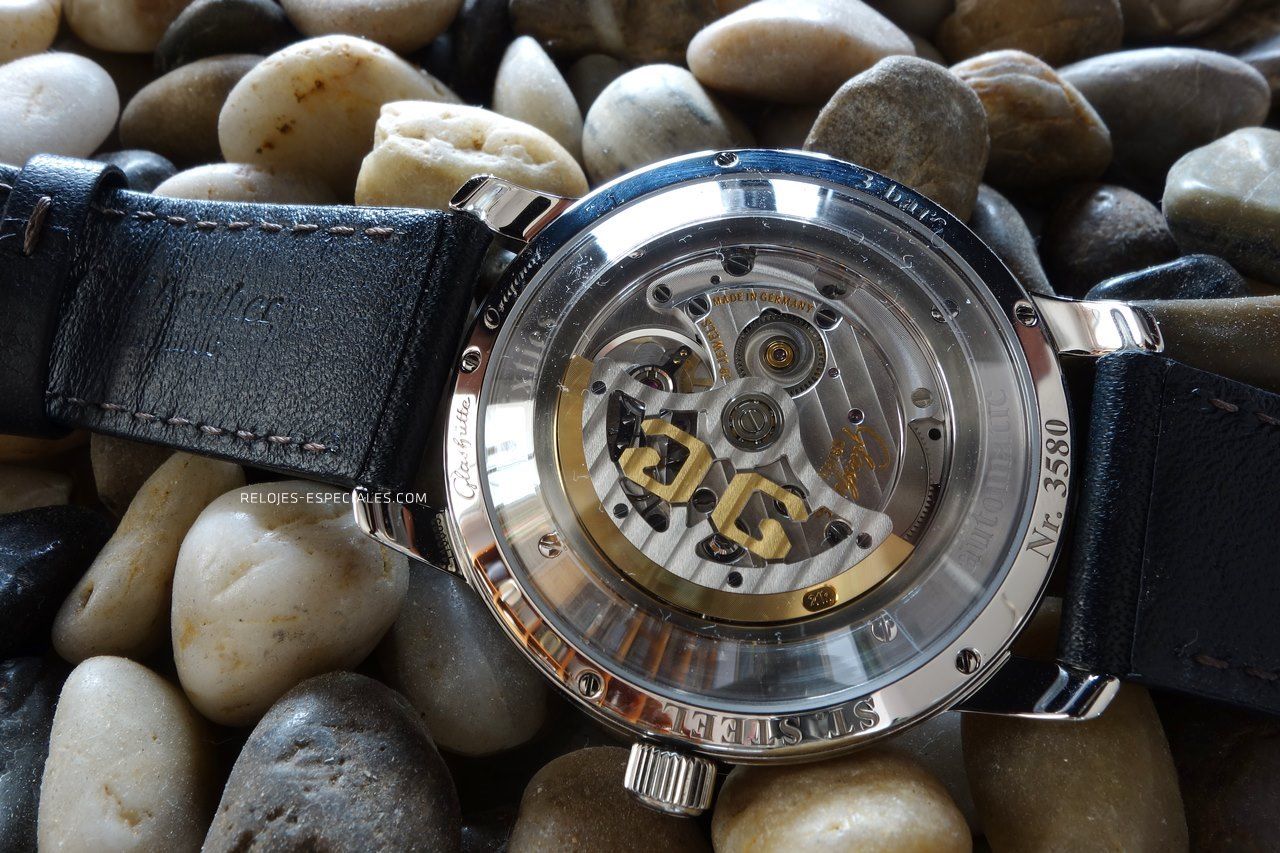
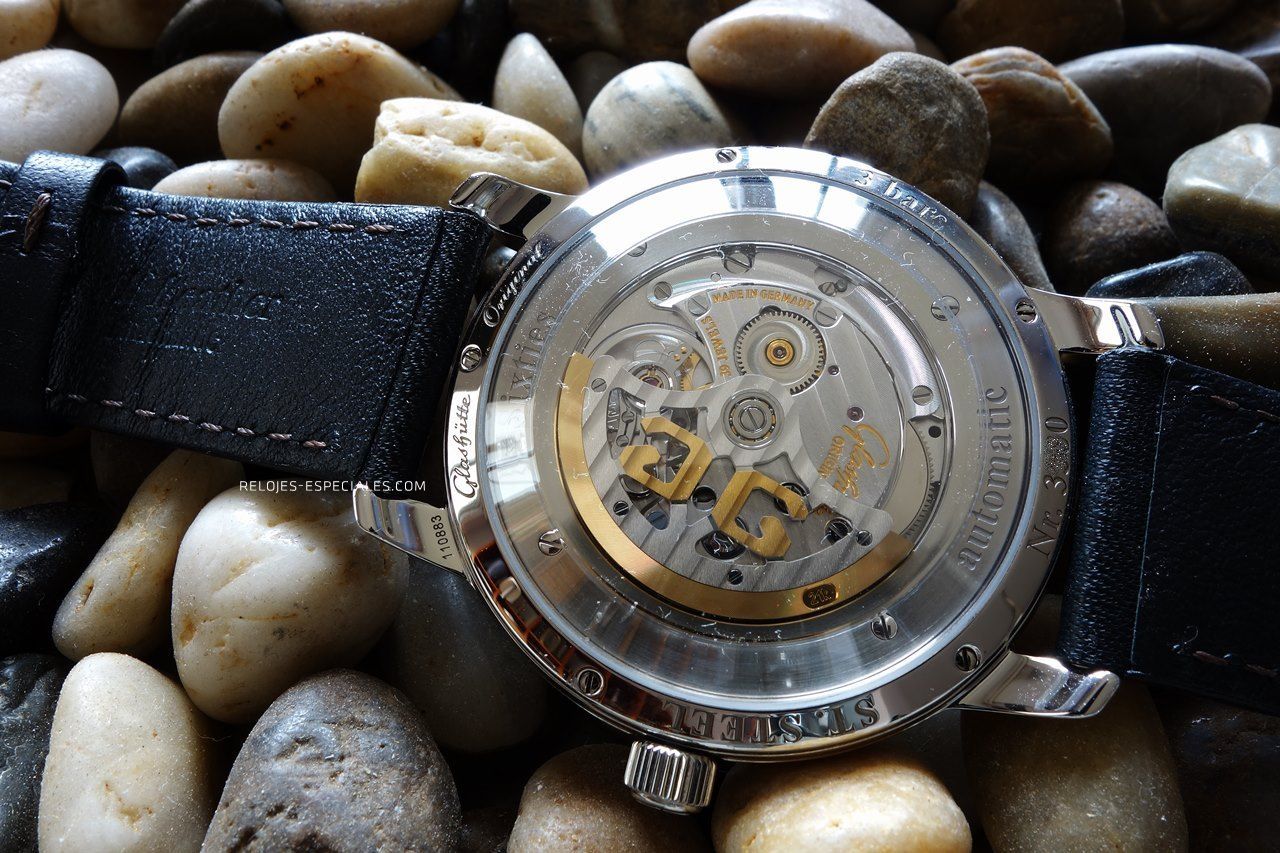
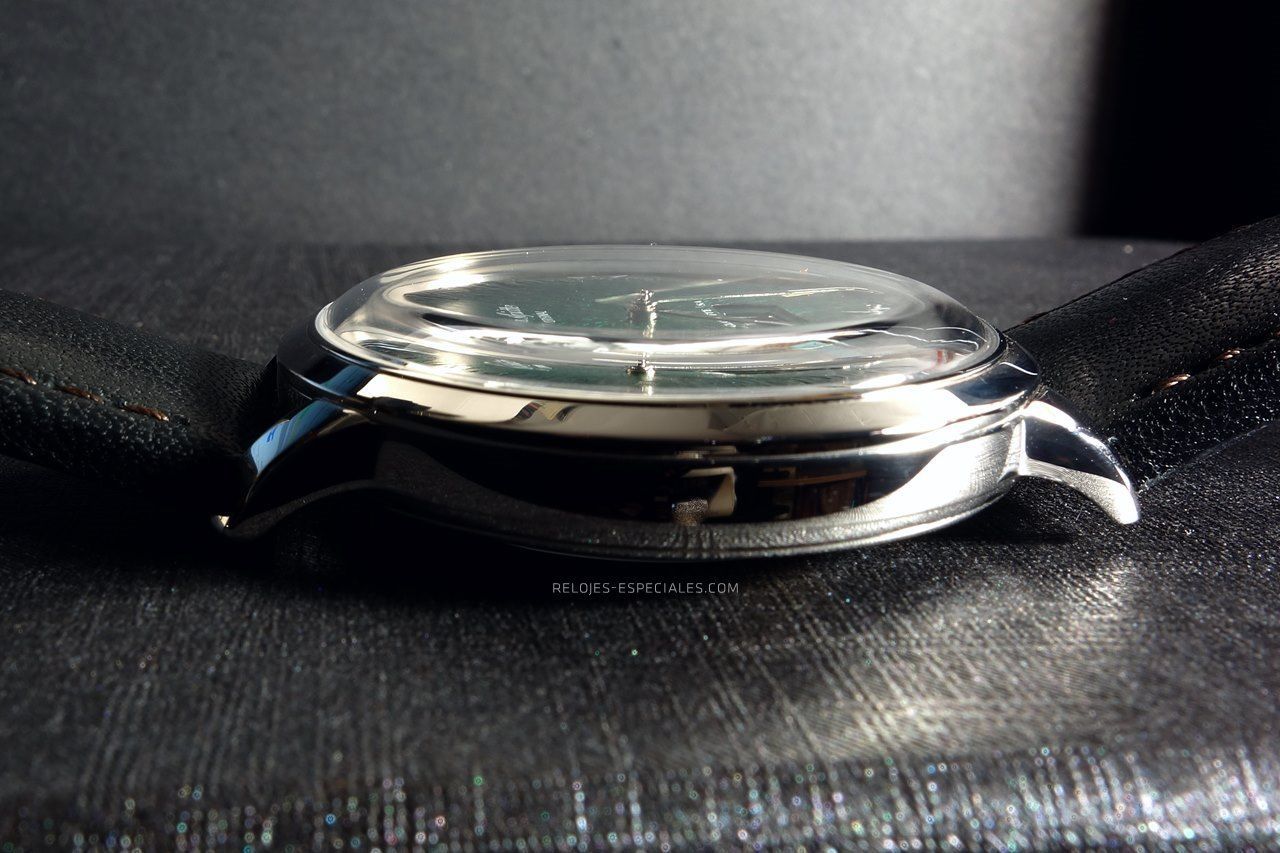
The steel case has classic shapes and despite its 42 mm diameter, it fits well on a wrist with a circumference of 18 cm. This is thanks to the design of the lugs, which take a seemingly well-studied curve so that, being a large watch to be classic, it sits without problems even on smaller wrists. Compared to what is usual, there are no nuanced parts, the entire watch is polished to a mirror. The sapphire crystal is domed, which helps give the watch that vintage look that characterizes the collection in which it is part. The crystal that closes the bottom of the case is also made of sapphire, although not domed, revealing the caliber 39, with its oscillating weight made of 21-karat gold.
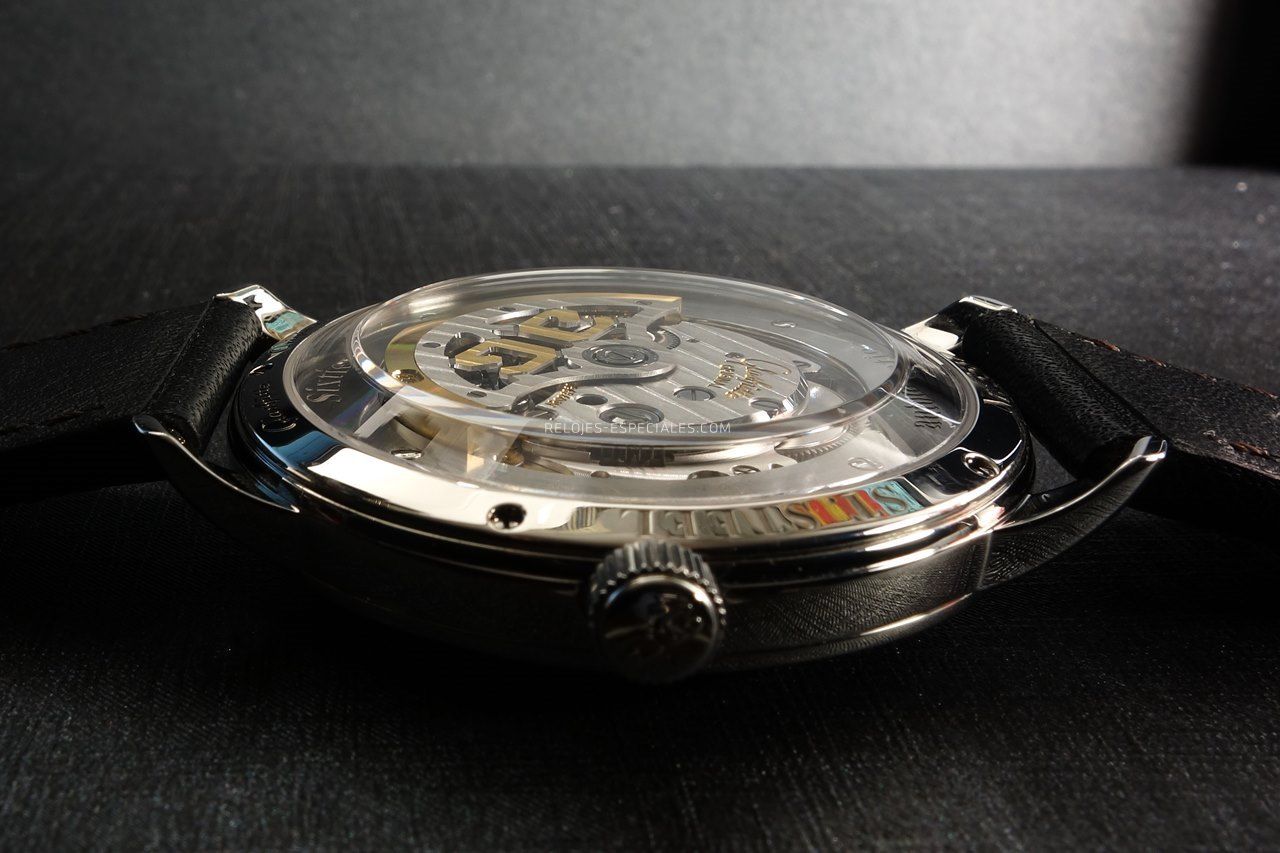
The strap is the second most important thing in the overall aesthetic of a watch, and I've seen cases where great watches were somewhat dulled by a poor strap. Fortunately, at Glashütte Original they are perfectly aware of this and theGlashütte Original Sixties Panorama DateIt is presented accompanied by a magnificent Barenia strap (calf with a special treatment) that perfectly rounds off the set. Personal opinion, of course. The buckle is also made of polished steel.
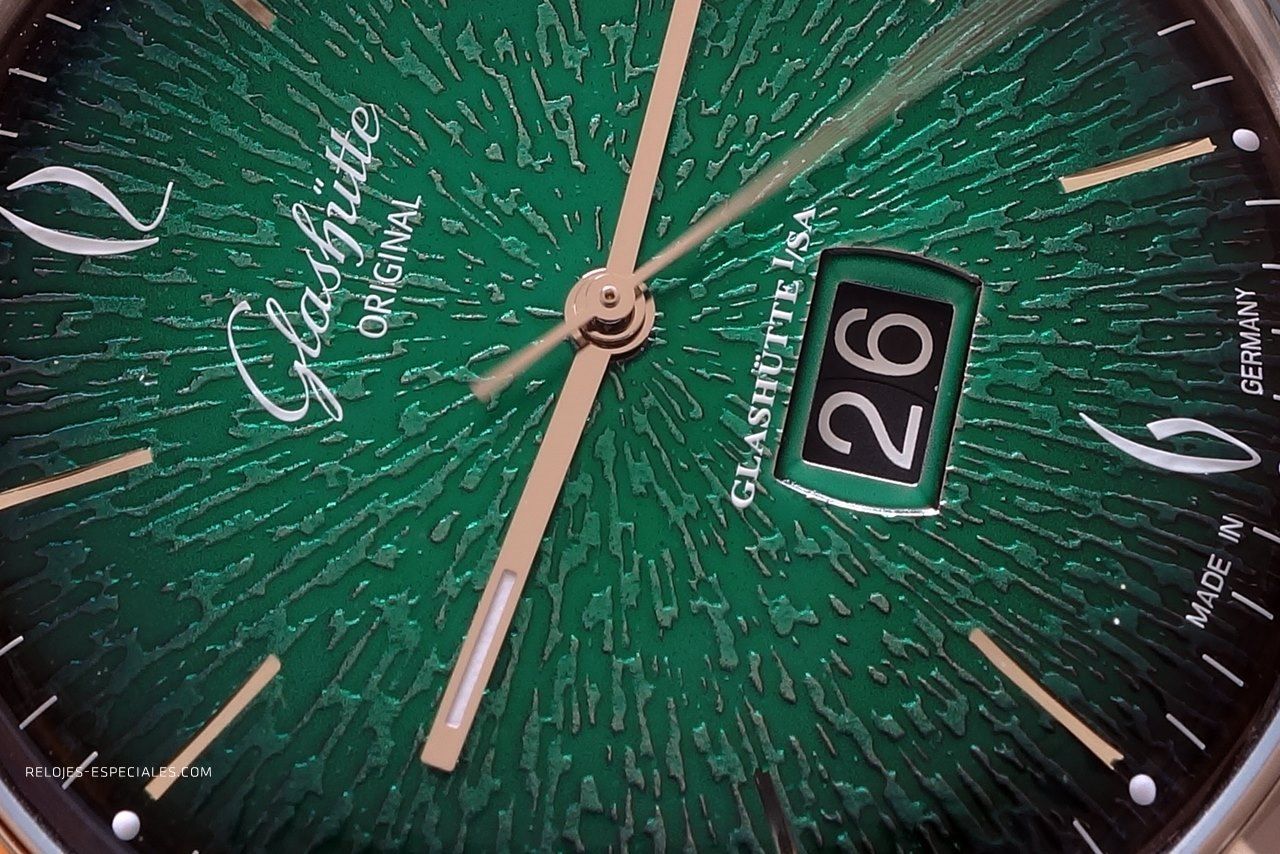
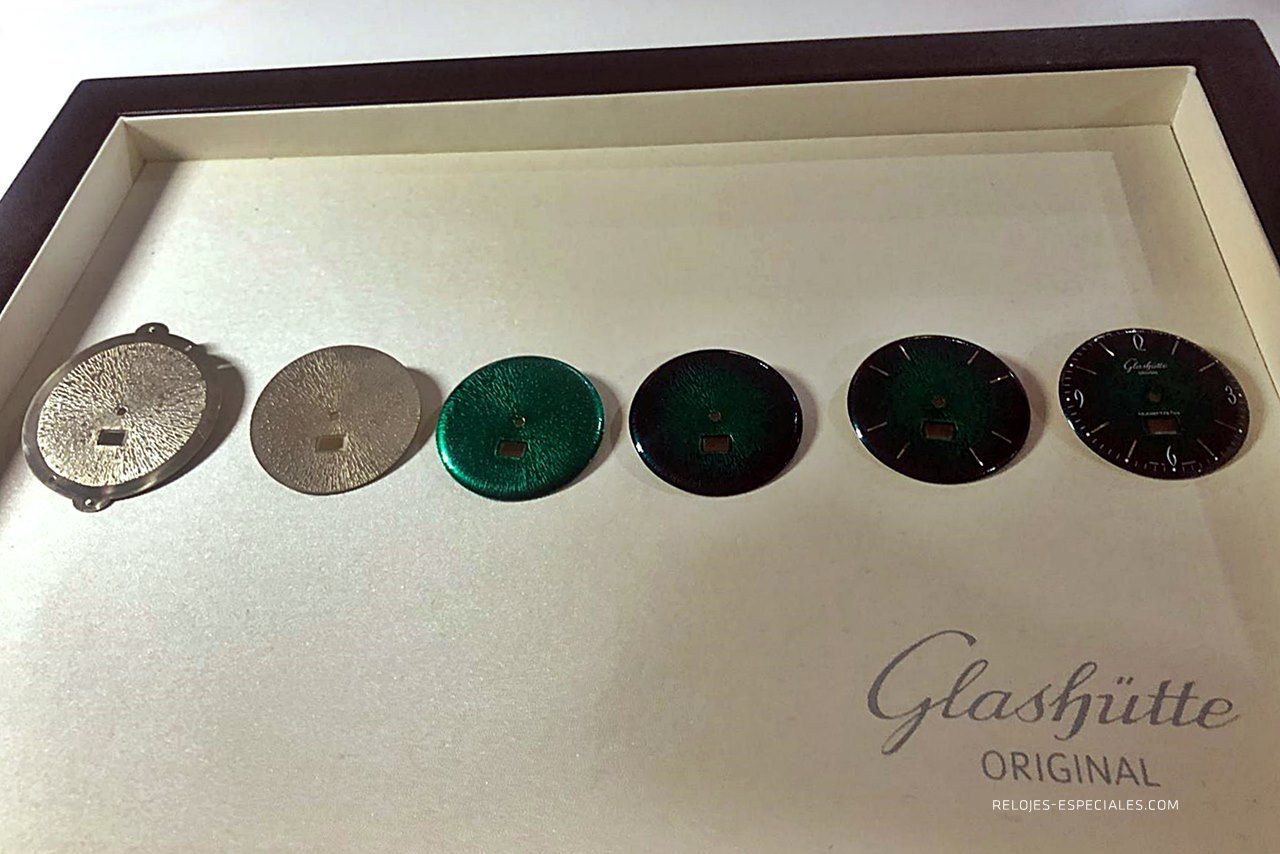
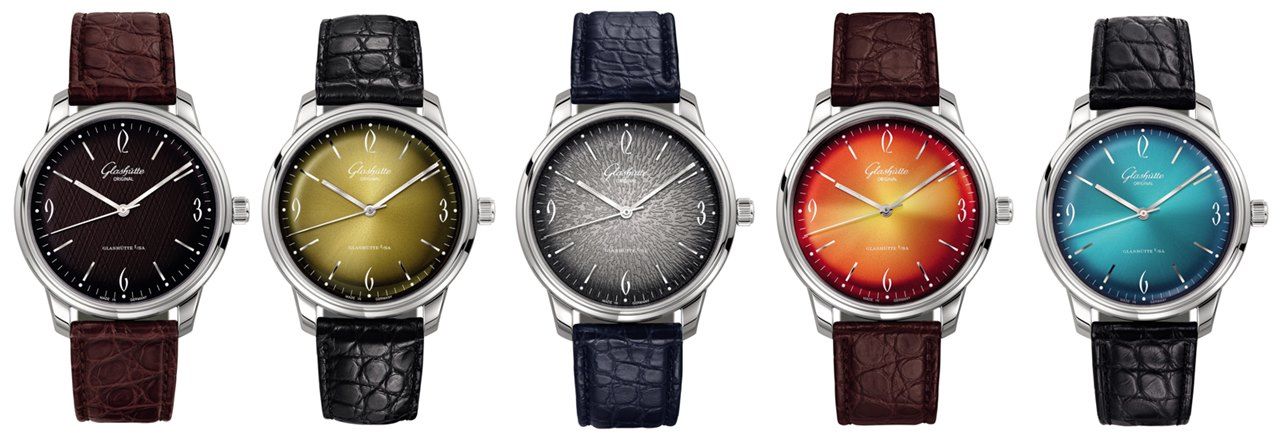
The spheres ofGlashütte Original Sixties Panorama DateThey are usually black, pearly white or blue, and in 2015 a limited series – Iconic – of 25 sets or games was launched, each made up of five watches whose dials, all different, were an authentic tour of the know-how of the manufacture. Because it must be remembered here that Glashütte Original has its own dial factory, located in Pforzheim, heir to the one that was the supplier of the Glashütte Uhrenbetriebe (the GuB), predecessor of Glashütte Original itself. It was precisely at the end of 2015 when I had the rare privilege of visiting its facilities. And I say “rare privilege” because when I was there it was the first time that the Press was invited, but shortly after it was decided to eliminate that stage of the visit to the manufacturing facility.I put a report here.
These 25 sets (exclusive to the brand's boutiques around the world) were enormously successful, from which Glashütte Original drew two lessons: that the colored spheres were very popular... and that 25 units of each were too few for the demand generated. That is the reason why for 2018 they decided to release a Sixties in green. Limited series? Yes and no: there would be no limit on units, but the model would only be available during 2018. There are actually two models: this one with a large date, 42 mm, and the base Sixties without a date, more faithful to the original Spezimatic, 39 mm. The watches are numbered, but not with respect to any quantity (that is, they do not have the inscription XX/XX but only XXX). Taking into account that the production of Glashütte Original (estimated, never confirmed by the brand) is about 15,000 watches per year and that the unit that I have tested has a number close to 3,600, we can say that the success has been equally great: almost 25% of the production... but it is still my assumption.
And this brings us to the beginning of this article: that mesmerizing green color of the dial (hand-finished, by the way, which makes each watch unique) is what keeps me up at night. I don't know when, but as soon as the stars align properly I'll try again.