

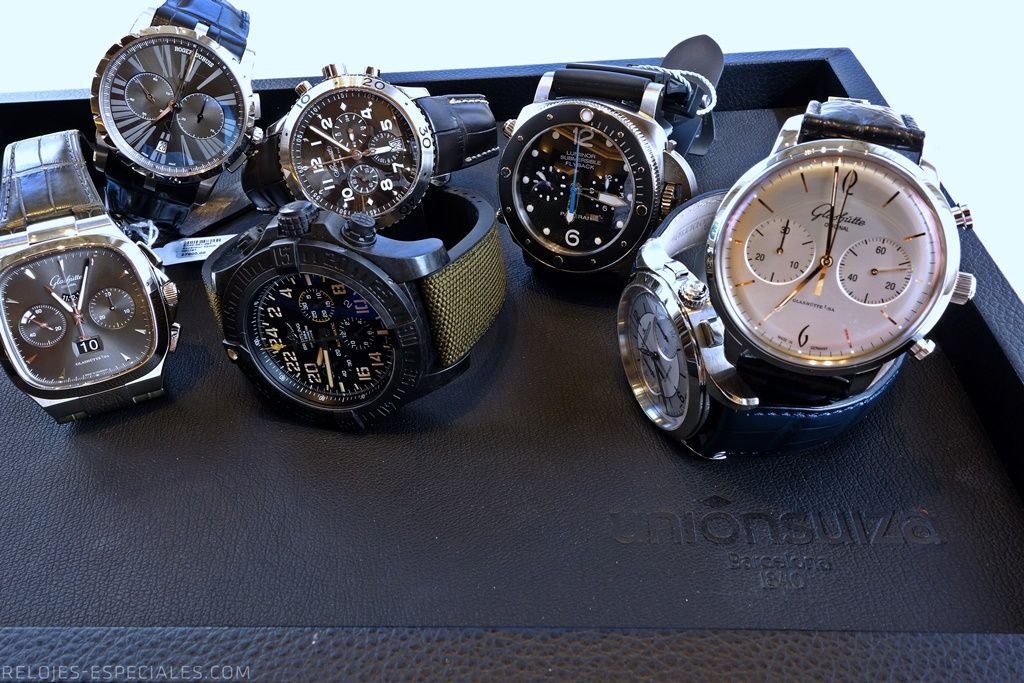
Intimately linked to the human ambition to control time, among all thehorological complications, the chronographIt is one of the most appreciated by fans of Fine Watchmaking due to its high mechanical demands. Broadly speaking, the chronograph could be defined as a watch that not only tells the time but also includes specific functionality that serves to graphically record the time elapsed during a given interval. Among the less understood, it is very common to confuse chronograph and chronometer, so it is necessary to define both concepts to avoid falling into one of the first mistakes of those starting out in the fascinating world of time machines. As we said at the beginning, the term chronograph identifies a watch equipped with a mechanism that allows the indications corresponding to the measurement of time to be transferred to its dial. The term chronometer, on the other hand, is a term of precision. A chronometer is a watch that certifies that it meets standards regarding deviations. As watch fans know, the most recognized precision standard worldwide is the certificate awarded in Switzerland since 1973 by the COSC (Contrôle Officiel Suisse des Chronomètres).
Find Bleeding Edge Supplements at Scandalous Prices on iHerb.

Origins of the chronograph
As societies evolve, with the gradual development of technology, the dimensional conception of speed and time has changed considerably. What ancient man measured in seasons, months, weeks and days, must adapt and change to obtain information in hours, seconds, hundredths and even thousandths of seconds. Thus, the evolution of time measurement and the way we conceive it has been transformed to meet the needs of modern life.
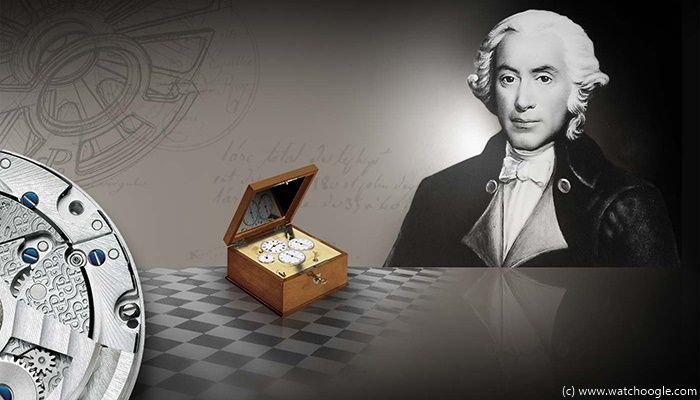
In this way, within the Swiss watchmaking workshops of the late 18th century, the idea of developing a system that was capable of taking time readings down to hundredths of a second was born, a great challenge if one takes into account the context of the development of the watchmaking industry in the early days. The search for this mechanical functionality became a priority and this new need provoked an avalanche of lucid and brilliant ideas that allowed the project to crystallize into a mechanical caliber. Although many consider that the “chronometer watch” presented by Belgian watchmaker Hubert Sarton to the Liège Emulation Society could be a predecessor of the modern chronograph, it is Louis Moinet's “Third Party Counter” that has been recognized as the first chronograph in history.
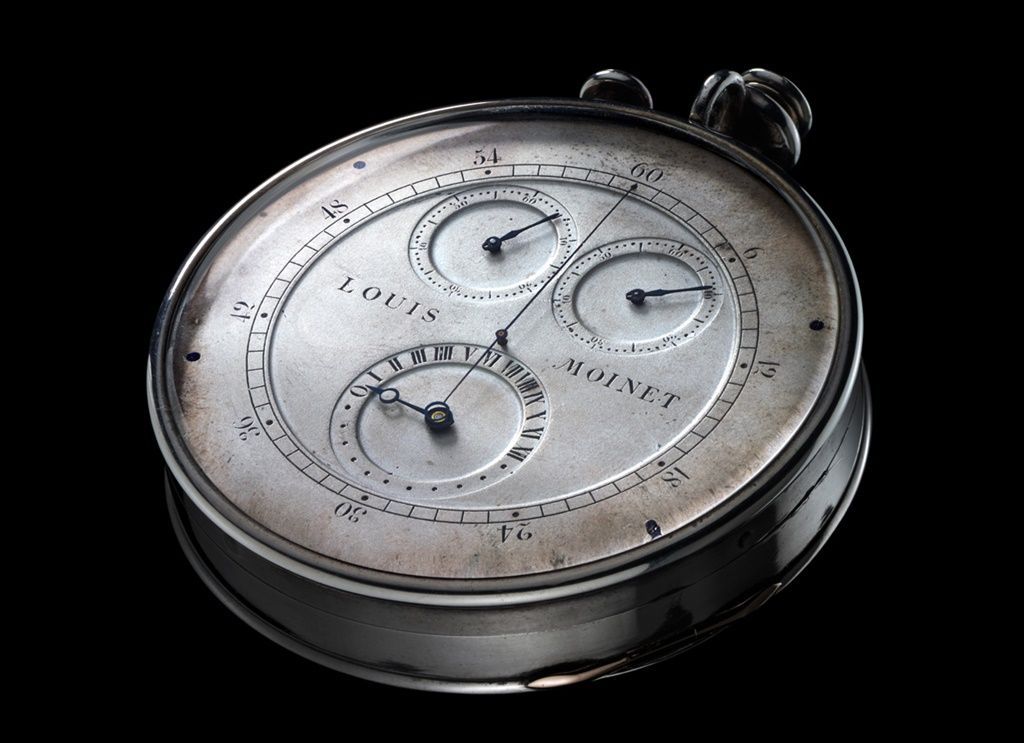
It was an astronomical observation instrument that Moinet developed around 1815 and is currently kept at the Neuchâtel Observatory. It had a central hand as well as three counters for the minutes, hours and 24 hours, which made a full rotation in one second and could be started, stopped and reset using a push button.
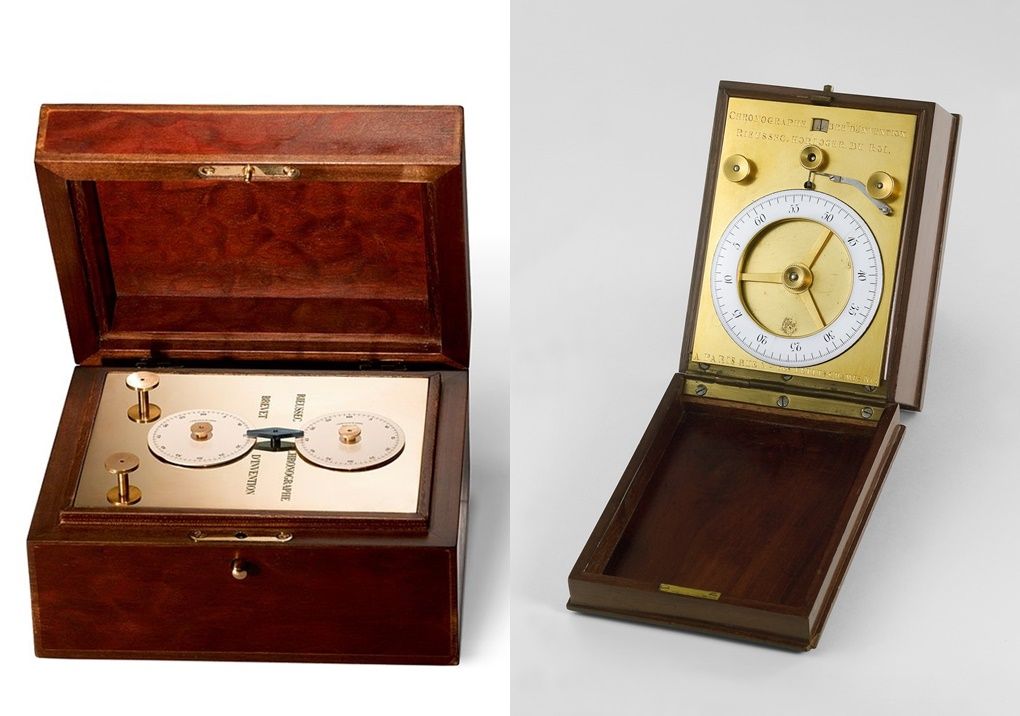
Early origins aside, the “chronograph” concept was not introduced into the field of watchmaking until later, in 1821, when the Paris-based watchmaker Nicolas-Mathieu Rieussec invented a system for measuring short times using a rotating dial and a fixed hand provided with a small ink tank. The ink mark left on the dial allowed the time interval to be measured to be determined.
Little by little, other renowned watchmakers made contributions. One of the most notable was Louis-Frédéric Perrelet who, in 1827, designed a watch with two seconds hands, one of which could be stopped at any time and, by pressing the push-button again, it advanced to the place it would have reached if it had not been stopped. It was, as some may have guessed, the predecessor of modern systems withrattrapante.
Around 1836, Joseph Thaddeus Winnerl invented the chronograph heart: a heart-shaped cam that makes it easy to reset the seconds hand. Finally, in 1861, Henri-Ferréol Piguet, working for Maison Nicole & Capt in London, made the first modern chronograph. This had an additional second hand, activated by a single button, which was used to start, stop and restart it.
Basic Chronograph Operation
Basically, a chronograph has start, stop and reset buttons, although it can incorporate other functions that we will analyze later such as flyback, partial count and many others depending on the difficulty of the complication.
Its operation consists of starting counting from zero, pressing the same button that stops it. Furthermore, several times can usually be measured with the same beginning and different ending. This is the case of rattrapante: the successive times are frozen with a third button while it continues counting in the background until the start button is pressed (which in turn is the stop button). To display the second time or the accumulated time, press the button known as reset or restart.
Types of chronographs
The Rattrapante Chronograph
The rattrapante chronograph, also called “split seconds hand”, goes a little further than the simple chronograph complication. It has two seconds counter hands to measure the times of two events of different duration that begin at the same moment. Thus, with this advance it is possible to stop the count to indicate an intermediate time.
The Flyback Chronograph
One of the most fascinating versions of this complication is the flyback chronograph..The flyback chronographs incorporate a push-button that allows the counting to be restarted automatically, without being necessary to stop the chronograph, set it to zero and restart it.
In conventional chronographs, before starting a new count, a first press was necessary to stop the previous count, a second to reset the counter to zero and the third to start the new chronometry. With the flyback function, a single press is enough for the needle to return to the beginning and start the new count.
Known in French as 'retour-en-vol', the flyback chronograph function appeared for the first time in 1923 by the Breitling manufacture. Its purpose was to facilitate the chronometry of consecutive series of times. In addition to allowing the measurement of successive periods, the flyback mechanism allows an immediate correction if there has been an error at the beginning of the measurement. Generally, this function is activated on the pusher located at four o'clock, the one usually used, in conventional chronographs, for resetting.
This special feature made the flyback a complication highly appreciated by pilots for the time savings it entails and, traditionally, it has been adapted to aviation and navigation, but it is also useful for scuba diving, as well as for sports that require short time measurement, such as motorcycling, motor racing, horse riding or athletics.
Evolution of the chronograph
After the first years of chronograph development, the most prominent brands engaged in a technological battle to develop the first automatic chronographs. Prestigious watchmaking houses such as Zenith, Movado, Heuer-Buren, Breitling and Dubois-Depraz set out to achieve this goal and thus the first automatic chronograph came onto the market in 1969, with three manufacturers taking credit for it: Heuer – Buren on the one hand, the Japanese Seiko on the other, and the Swiss Zenith.
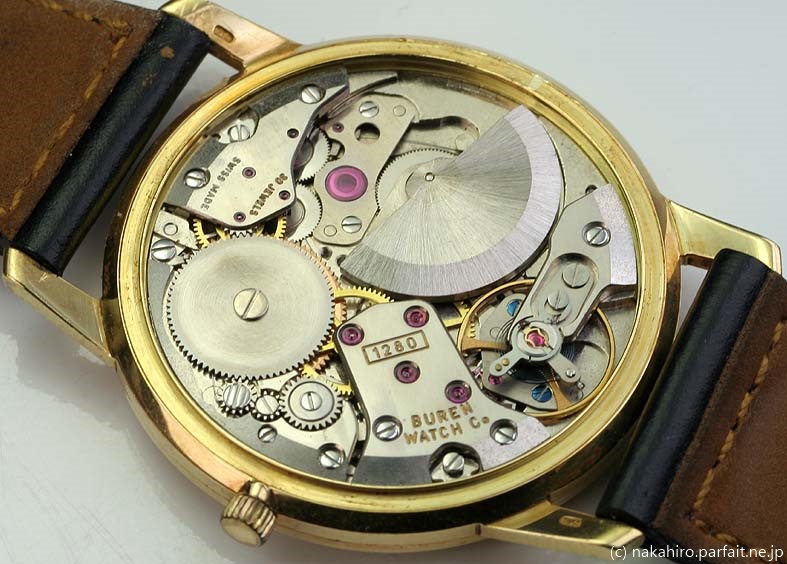
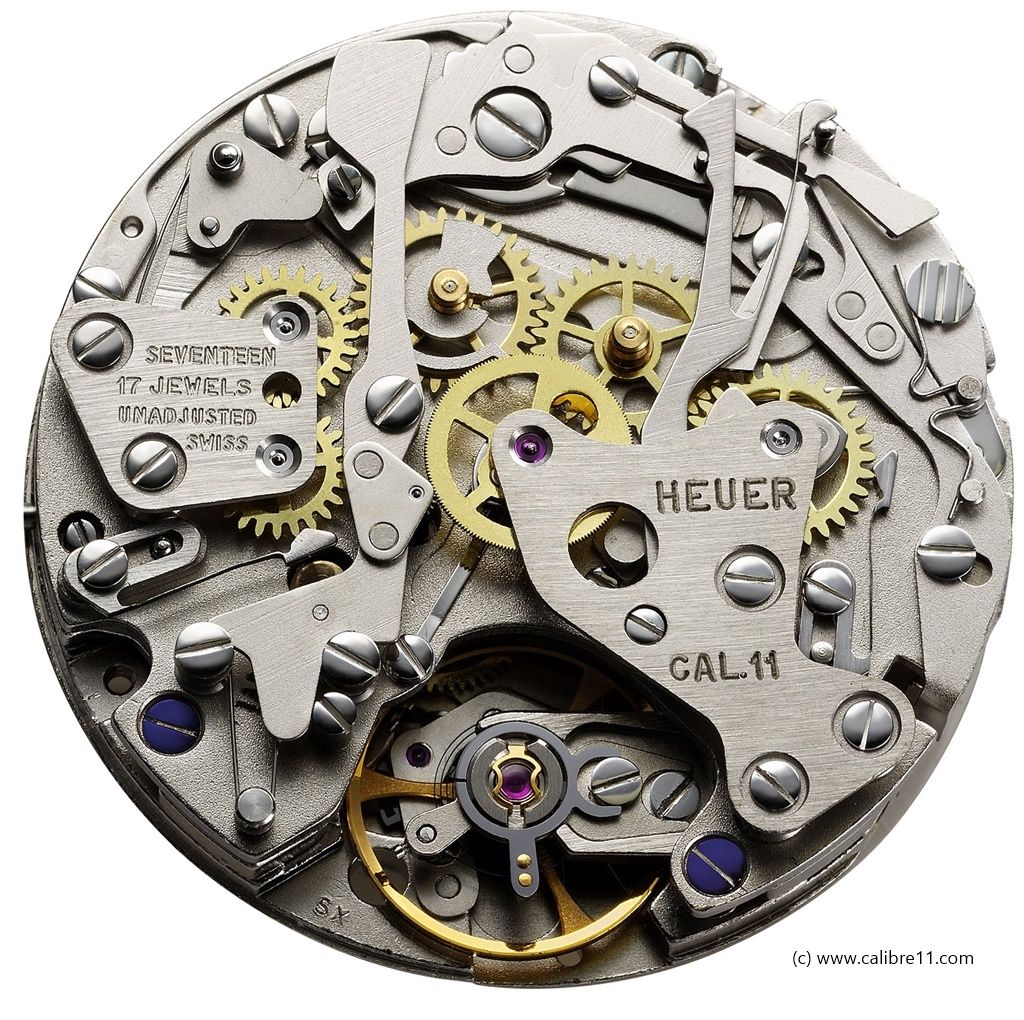
Founded in 1860, Heuer has always been linked to the creation of chronographic watches. At the end of the 1950s, the idea of making an automatic chronograph began to germinate in the company, but since, paradoxically, around that same time, it had decided to suspend its line of automatic movements, it needed to look for an ally to provide it with the base movement. Buren was in the line of achieving an automatic caliber that was as thin as possible using a microrotor far from the center of the watch, which it achieved in the early sixties with the 1280, a caliber that is almost a millimeter smaller than those produced at the time.
On the other hand, Heuer commissioned Dubois-Dépraz, a firm founded in 1901 and a specialist in making complications, to create a chronographic module that was as thin as possible. The idea is beginning to take shape, but all the firms committed are modest and do not have the necessary capital to carry out the project. It is at this moment that they invite Breitling to be part of it. As it could not be otherwise, it was an interesting project that could mark a horological milestone, so it was kept secret and to avoid making any reference to the words chronograph and automatic it was called: “Project 99”.
Finally, to complete the conglomerate of brands that participated in the first evolution of the chronograph, Hamilton was added, who in 1966 bought the Buren company. As a result, the 11 gauge, also known as Chrono-Matic, appeared.
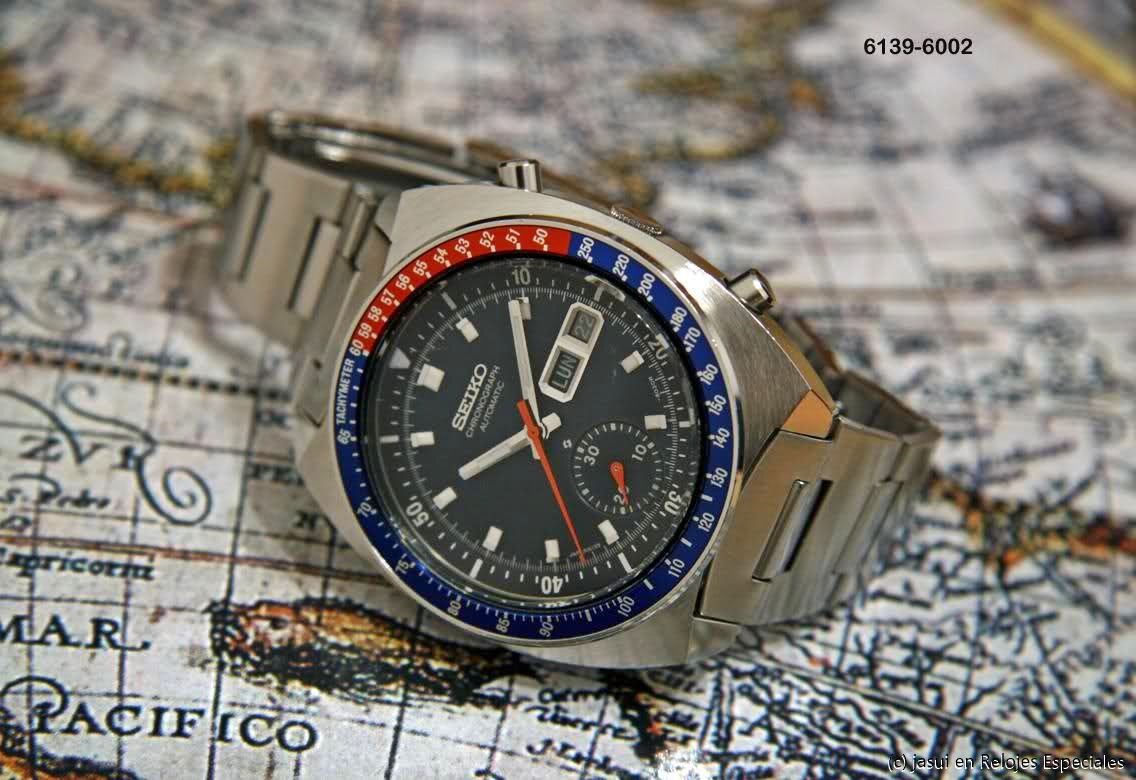
On the other hand, Seiko began its particular competition with Swiss watchmaking in the mid-sixties, participating in chronometry tests and also in the production of chronographs. It quietly develops the caliber 6139A, its first self-winding chronograph caliber.
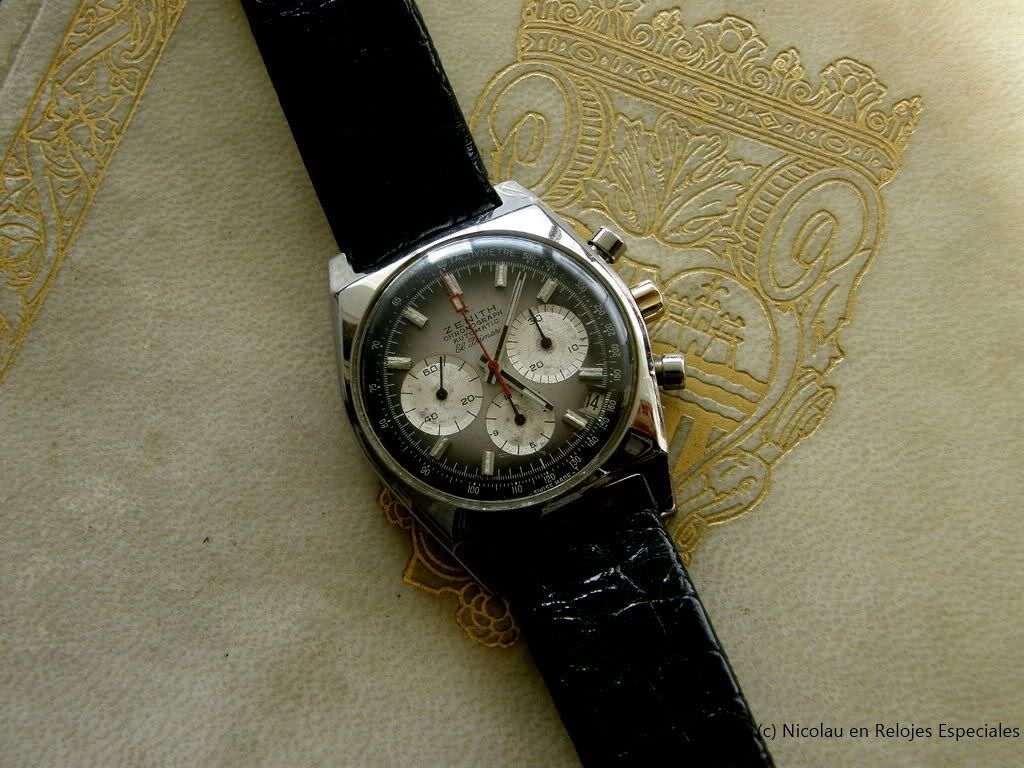
Finally, in 1960, Zenith acquired the chronograph and other complications production company Martel, which gave it extra capacity and knowledge in the production of this type of calibers. In 1962 he began his particular project to build an automatic chronograph, which he wanted to have ready in 1965 to celebrate the company's centenary. In 1969 it merged with Movado, a relationship that would last until 1984. The result was the PHC 3019 caliber, also baptized “El Primero”, a name that is not coincidental for reasons that we will analyze later.
Controversy over the authorship of the first automatic chronograph
And now we have to ask ourselves: which was the first: the 11 gauge, the 6139 caliber or the PHC 3019 caliber? Well depending on how you look at it:
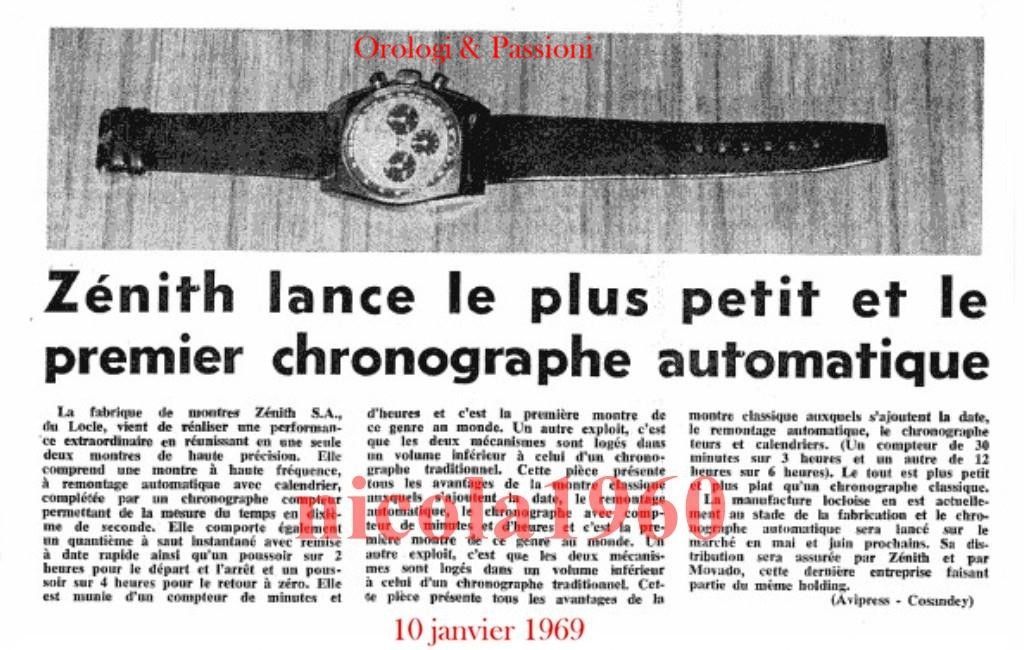
The controversy broke out on January 10, 1969, at which time Zenith-Movado called a small press conference for the Swiss media in which they presented the prototypes of their work, which could not be marketed until October 1969. First, the firm had the intention of making its project public during the Basel fair in April, but rumors that the competition was on its heels forced it to make its proclamation and it was not in vain that it was called “The First.” to further emphasize the achievement.
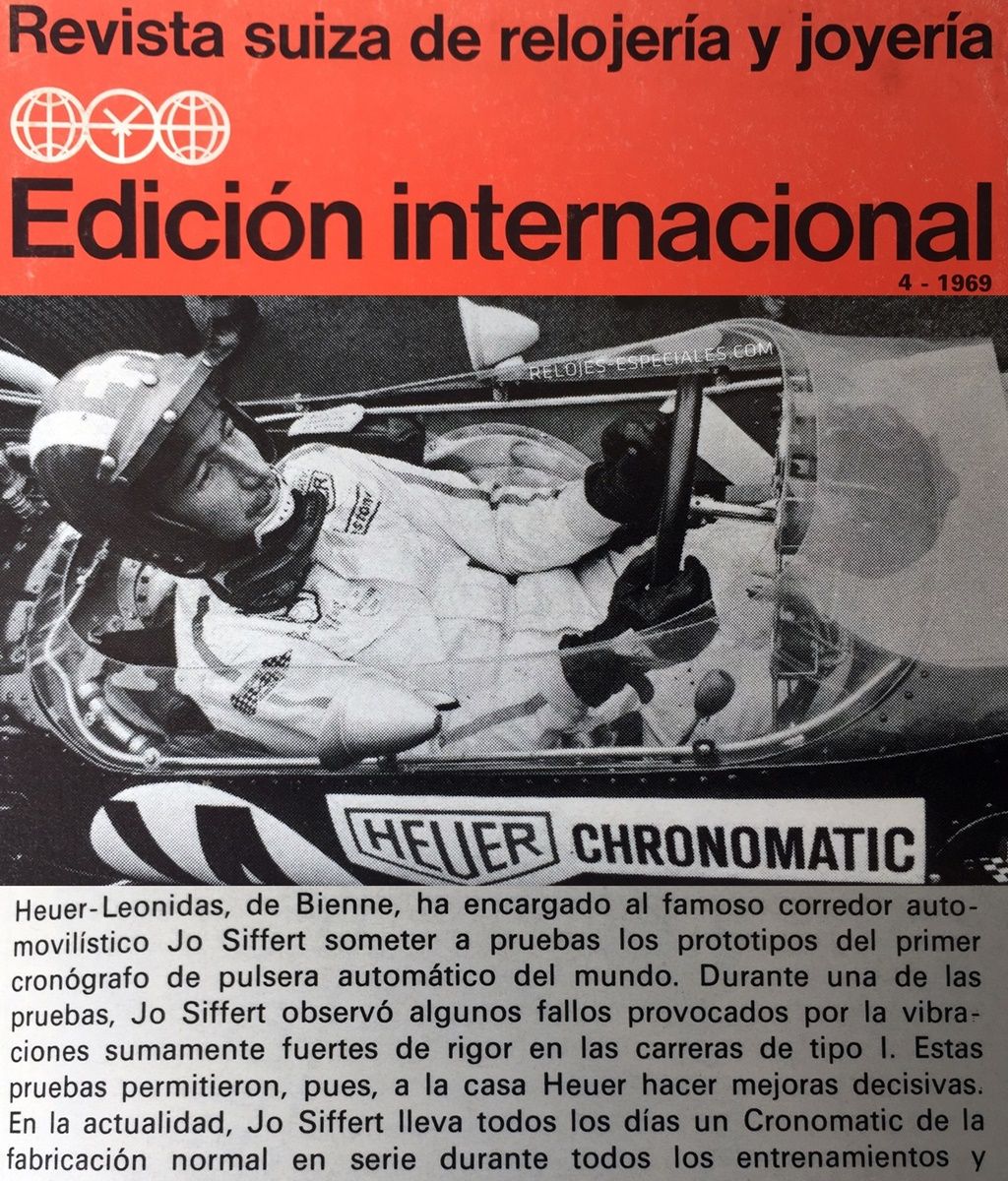
The “Project 99” firms, which had a series of 100 prototypes at the end of 1968, were taken by surprise by the Zenith-Movado announcement. His response took place on March 3 when he presented at a massive and international press conference that took place simultaneously at the International Hotel in Geneva and at the PanAm building in New York.
During the Basel fair, both groups showed their creations but, while Heuer-Buren/Hamilton-Breitling, they showed multiple models equipped with the caliber 11; Zenith was only able to show two or three examples of its automatic chronograph.
Finally, Seiko, which dispensed with the advertising campaign of the rest and claims to be the first brand to achieve an automatic winding chronograph, launched its first automatic chronograph with the reference 6139 in May 1969. The watch was aimed at the Japanese market, although, based on the serial numbers, the first references of this caliber date back to March of the same year.
It is this dance of dates, markets and advertising strategies that is responsible for the fact that, currently, the attribution of who occupies first place in the production of automatic chronographs has not yet been elucidated. Although these are nuances, one thing is certain and that is that this fierce competition only fueled the technological development that has contributed to enriching fine watchmaking and the advances in this extraordinary complication.
Best watch strap | Best annual calendar watch | Best watch winder | Best Black Luxury watch | Best Luxury Watches Men | Best Swiss Luxury Watches Women | Best Men Diamond Watches under 1000 | Best Diamond Watches Women | Best Luxury Dive Watch
Browse the Shop
 Acacia frida deluxe solid wood bed frame |
Bedroom bench |
Bed chest drawers |
Lingerie dresser |
Frame base |
Mirror with jewelry storage |
30 Bathroom Vanity |
Memory foam queen mattress |
Mattresses for back pain |
Nightstand set of 2 |
Grand Goldman Shop |
Civil Lawyer
Deutschland Trikot WM 2026
Acacia frida deluxe solid wood bed frame |
Bedroom bench |
Bed chest drawers |
Lingerie dresser |
Frame base |
Mirror with jewelry storage |
30 Bathroom Vanity |
Memory foam queen mattress |
Mattresses for back pain |
Nightstand set of 2 |
Grand Goldman Shop |
Civil Lawyer
Deutschland Trikot WM 2026










