

The French term “tourbillon” was used in astronomy by 17th century scholars as a synonym for planetary system. Presumably, the master watchmaker Louis Abraham Breguet chose it for its similarity to the mechanism invented by him in 1795 in which several elements rotate around a central axis. But what is a tourbillon and what is it for?
To understand it correctly we need to go back a century before, when the Dutch physicist and astronomer Christiaan Huygens (considered by many the father of modern watchmaking) discovered and applied the phenomenon of isochronism by inventing the balance wheel with spiral spring regulation, which corrects the average deviation of clocks from their time from 40 minutes per day to just three. The new system gave rise to many inventions of exhausts for speed regulation. The spiral-flywheel-exhaust assembly is commonly called “regulating organ” for obvious reasons.
Find Bleeding Edge Supplements at Scandalous Prices on iHerb.

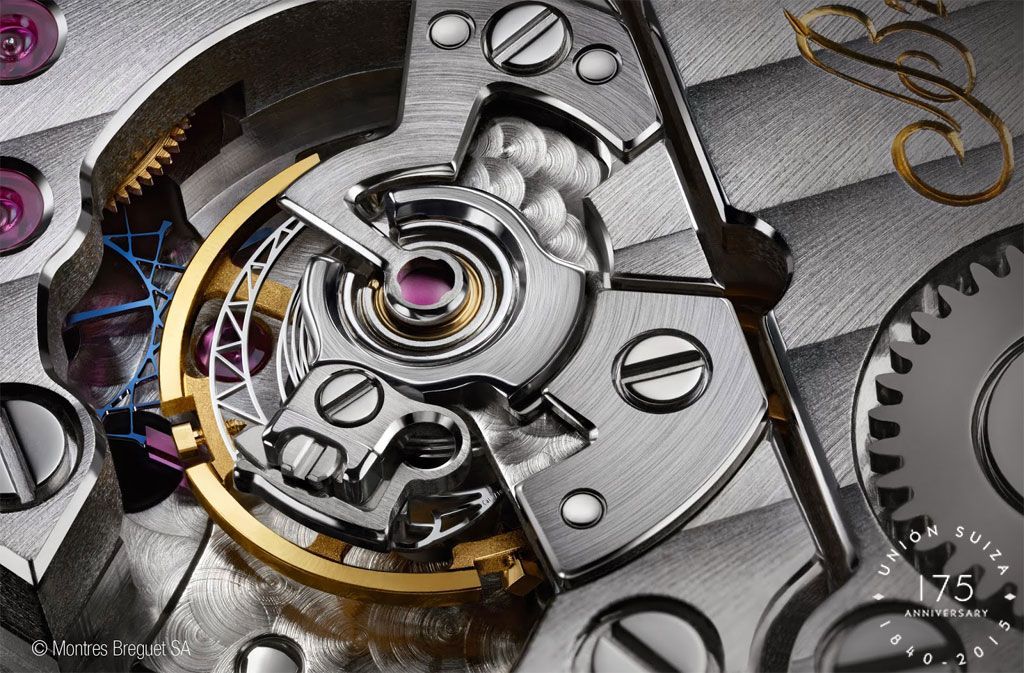
With this invention, and already in Breguet's time, watchmaking technology had managed to solve most of the problems of accuracy and reliability but, as a mechanical system, the regulating organ was still subject to the influence of external factors such as temperature, vibrations and gravity.
And it is this last one that Breguet set out to compensate, if not cancel. At the time (18th century) all portable watches were pocket watches (the standardization of the wristwatch would not come until well into the 20th century), and these watches spent most of the time placed in the pockets of their wearers' vests, which meant they were always in the same position - vertical - except when they were taken out from there to check the time. Exactly the opposite of the ideal (horizontal position).
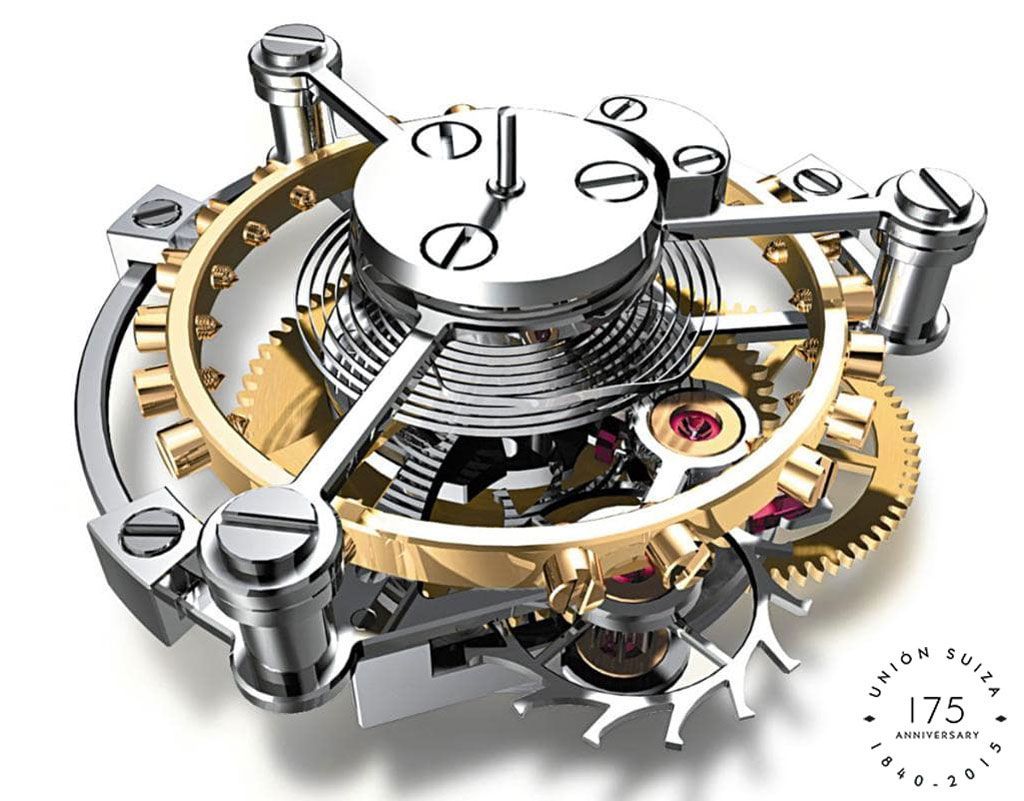
Breguet se dio cuenta de que la frecuencia de oscilación del volante variaba en función de su posición, lo que influía directamente en su precisión. La solución –infinitamente más fácil de describir que de ejecutar- era colocar todo el órgano regulador en una jaula de acero que fijada sobre la rueda de segundos giraría sobre su propio eje una vez por minuto, compensando así las desviaciones de la primera mitad de vuelta con las de la segunda. Tan compleja –y cara- era su construcción, que el propio Breguet sólo construyó 35 relojes con tourbillon en los 18 años que transcurrieron desde la invención hasta la muerte del relojero, y casi siempre para clientes adinerados entre los que se cuentan las familias Borbon y Hannover.
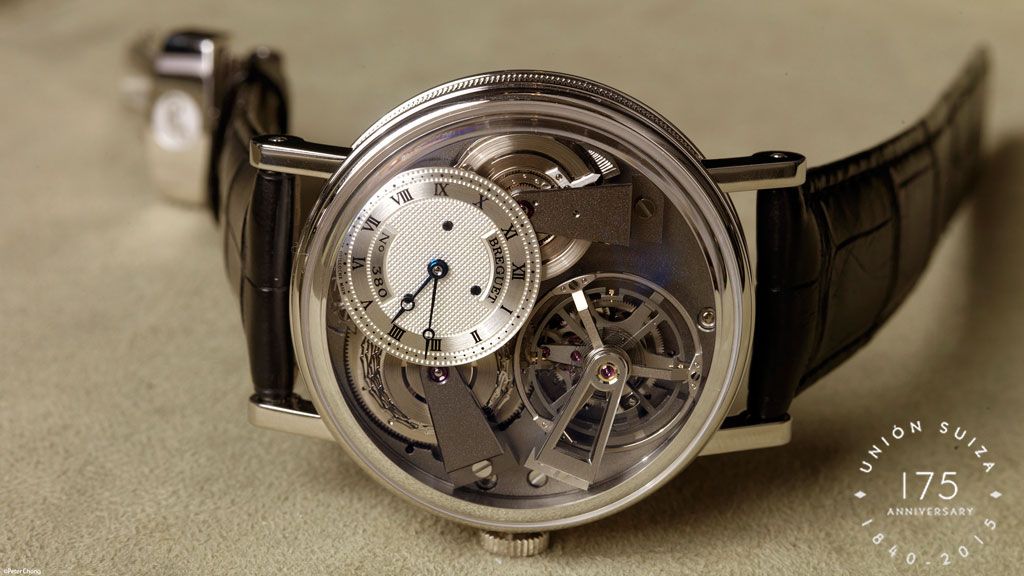
Perhaps for this reason (and because Breguet was already an important watchmaking company that had to be profitable) after the death of Louis-Abraham the tourbillon fell into disuse in favor of other improvements also discovered by him, such as the curve that bears his name applied to the spiral spring or the anchor applied to the escapement, and it was not until 1980 (180 years after its patent) that the first tourbillon was mounted on a wristwatch. And it is in this type of watches – wristwatches – where the tourbillon stops being a “useful complication” and becomes a demonstration of the virtuosity of the person who makes it since, despite the new technologies available, building it is still a task within the reach of very few.
After a few “dark years” due to the quartz crisis (1970s), Breguet rose from the ashes thanks to the Swatch Group and today produces some of the most beautiful tourbillons that can be admired in watchmaking today.
Best watch strap | Best annual calendar watch | Best watch winder | Best Black Luxury watch | Best Luxury Watches Men | Best Swiss Luxury Watches Women | Best Men Diamond Watches under 1000 | Best Diamond Watches Women | Best Luxury Dive Watch
Browse the Shop
 Acacia frida deluxe solid wood bed frame |
Bedroom bench |
Bed chest drawers |
Lingerie dresser |
Frame base |
Mirror with jewelry storage |
30 Bathroom Vanity |
Memory foam queen mattress |
Mattresses for back pain |
Nightstand set of 2 |
Grand Goldman Shop |
Civil Lawyer
Deutschland Trikot WM 2026
Acacia frida deluxe solid wood bed frame |
Bedroom bench |
Bed chest drawers |
Lingerie dresser |
Frame base |
Mirror with jewelry storage |
30 Bathroom Vanity |
Memory foam queen mattress |
Mattresses for back pain |
Nightstand set of 2 |
Grand Goldman Shop |
Civil Lawyer
Deutschland Trikot WM 2026










