

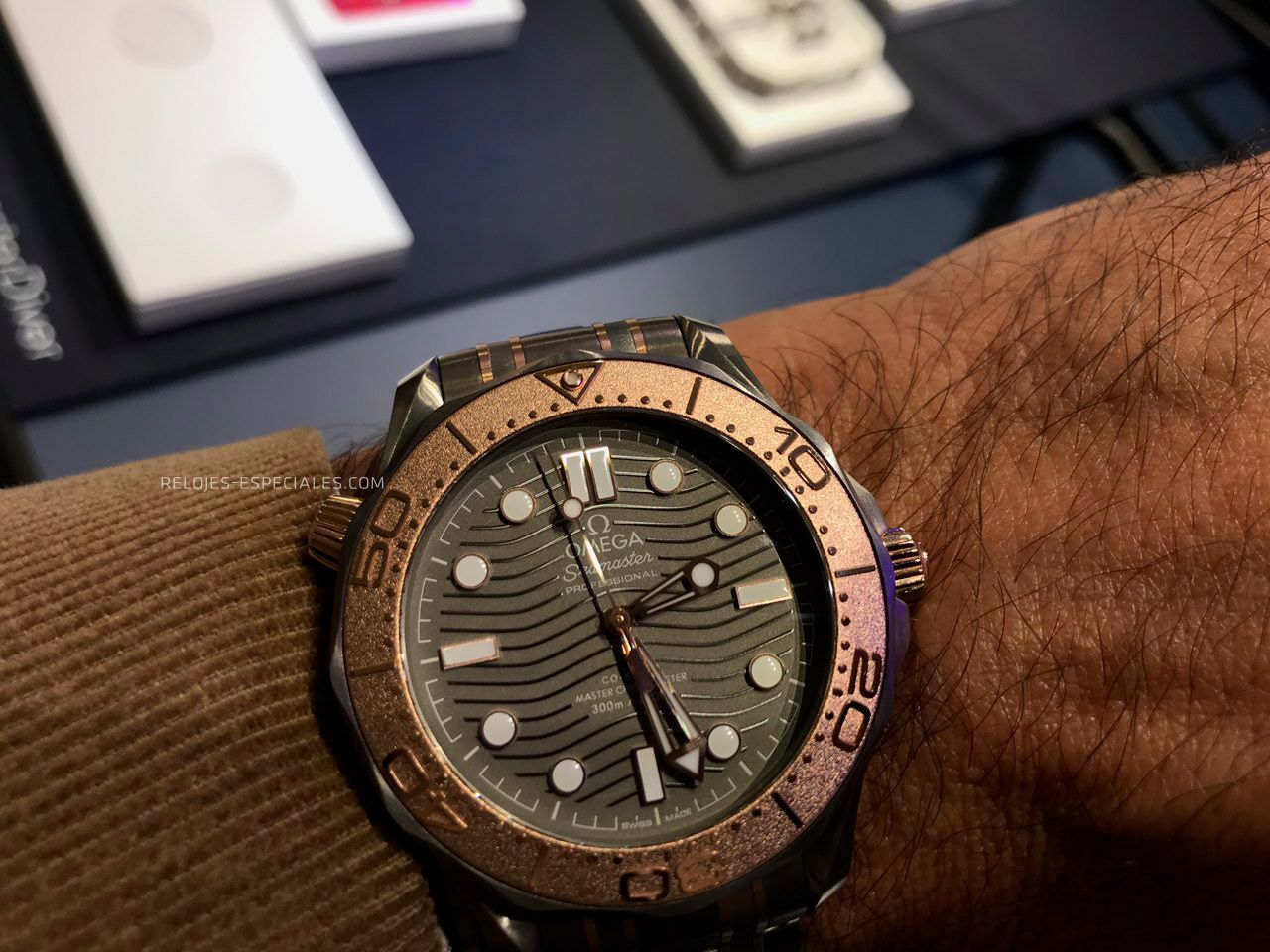
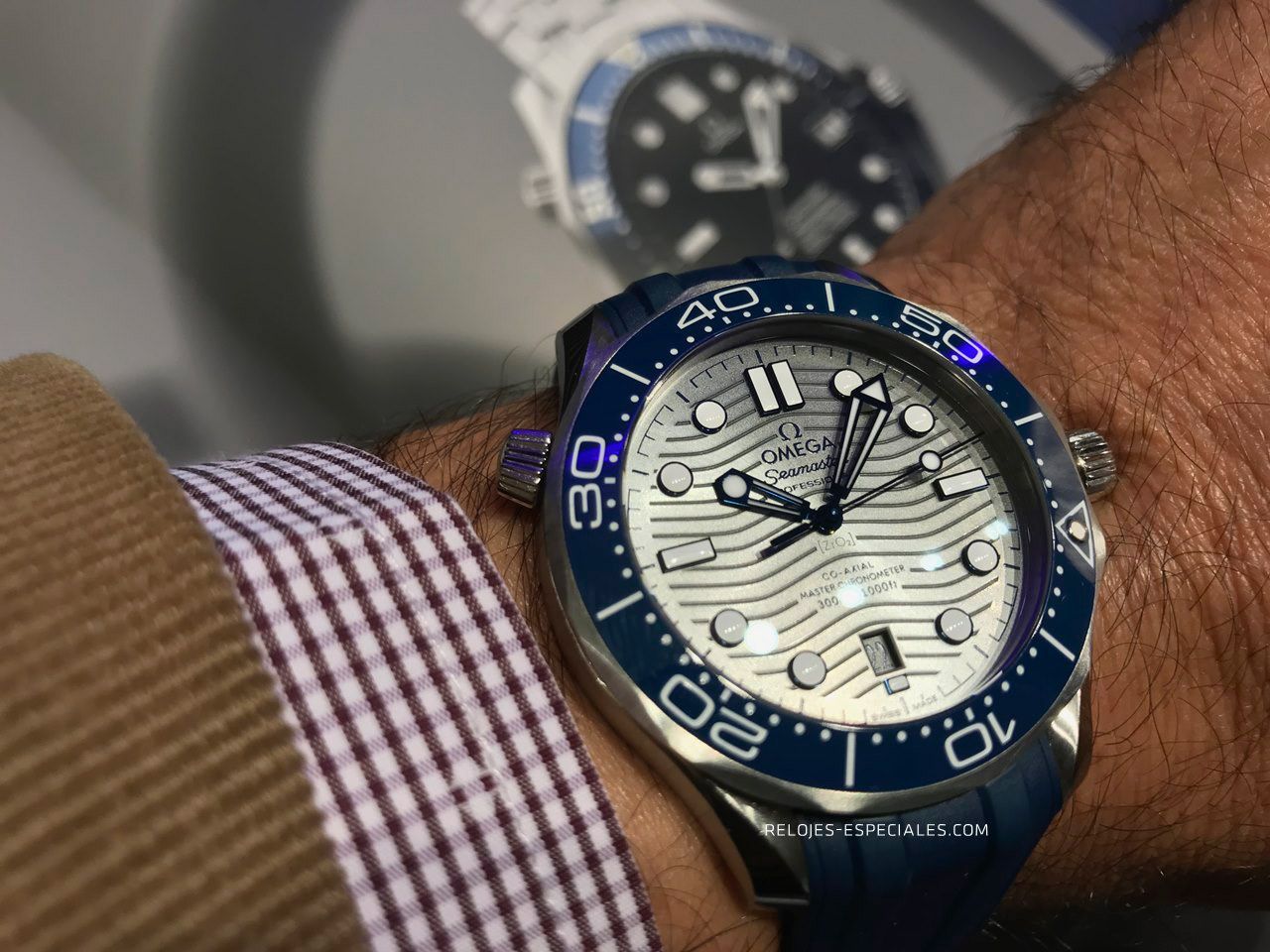
I admit it: I have never been a fan ofOmega Seamaster Professional 300m, also called “olitas” because of the “waves” motif that decorates its dial. I didn't like those waves, nor their blue color, but above all I didn't like their skeletonized needles, which seemed to me like tweezers - or compasses - catching slippery pearls, an evolution of those shown by the famous "negrito" reference 2254, now discontinued, I still don't know why. But maybe it's because I've seen it for many years (it just turned 25) or because this time Omega got it right, the fact is that I look at the new batch, the one celebrating the 25th anniversary, with different eyes.
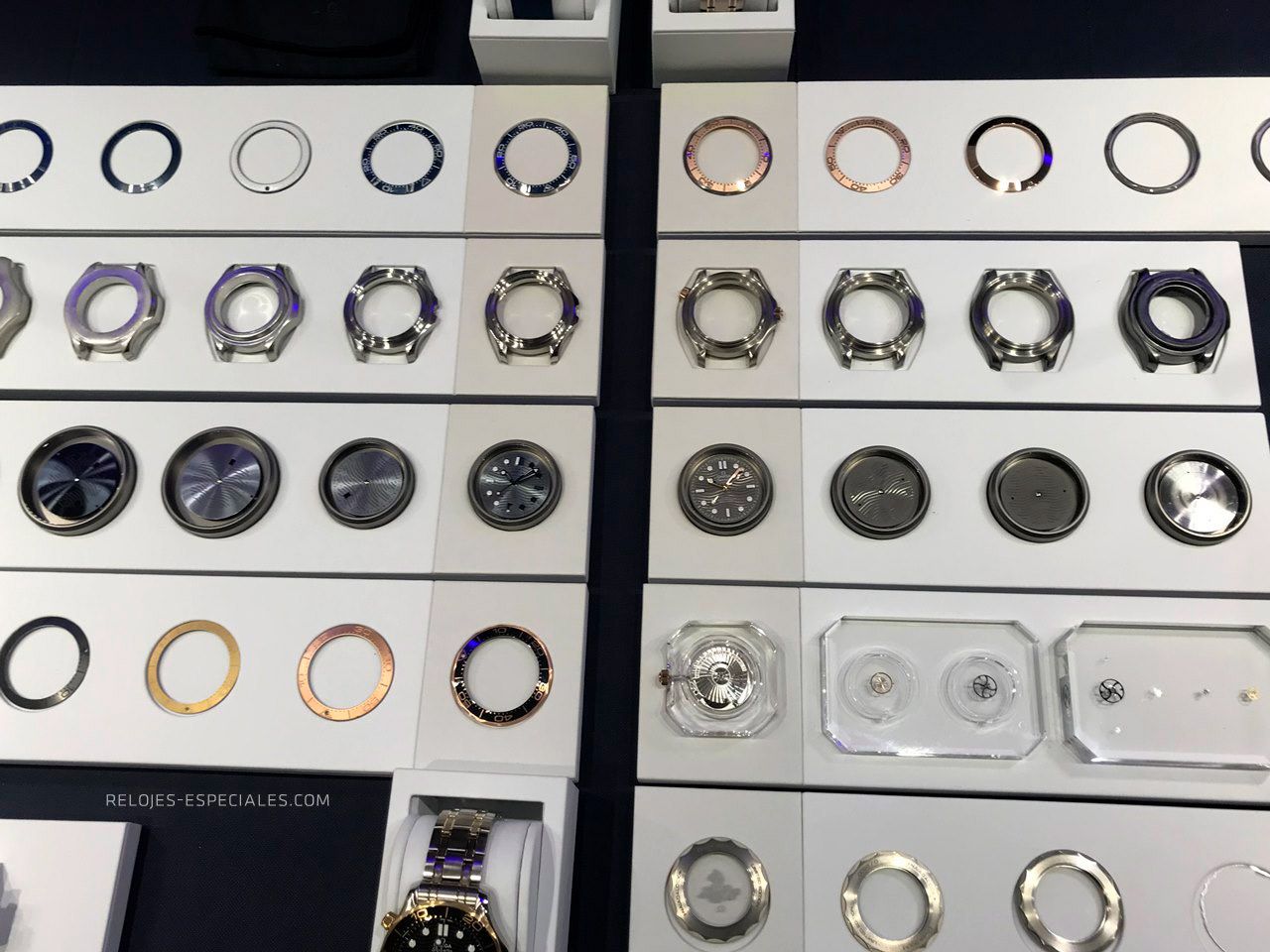
 This new look is not unrelated to the detailed explanation given to us by Maik Hirschi, Senior Product Manager, who came expressly from the Omega headquarters in Bienne to reveal to a few guests the ins and outs of the creation of this renewed 25-year veteran. To do this, he had brought a true didactic arsenal that we could play while we listened to him and watched the videos that supported his speech.
Find Bleeding Edge Supplements at Scandalous Prices on iHerb.


Thus, we learned that the cases come from a single block of steel that is formed through several pressing stages, interspersed with various passes through the oven to “relax” the material, that the ceramic bezels are “sintered” from Zirconium oxide powder or that a layer of PVD is applied before the final layer of yellow gold or Sedna, the alloy patented by Omega. Before that, however, the surface has been etched using a laser beam so that the figures, lines and points of the minute scale are perfectly defined. They call this ceramic and gold set Ceragold.
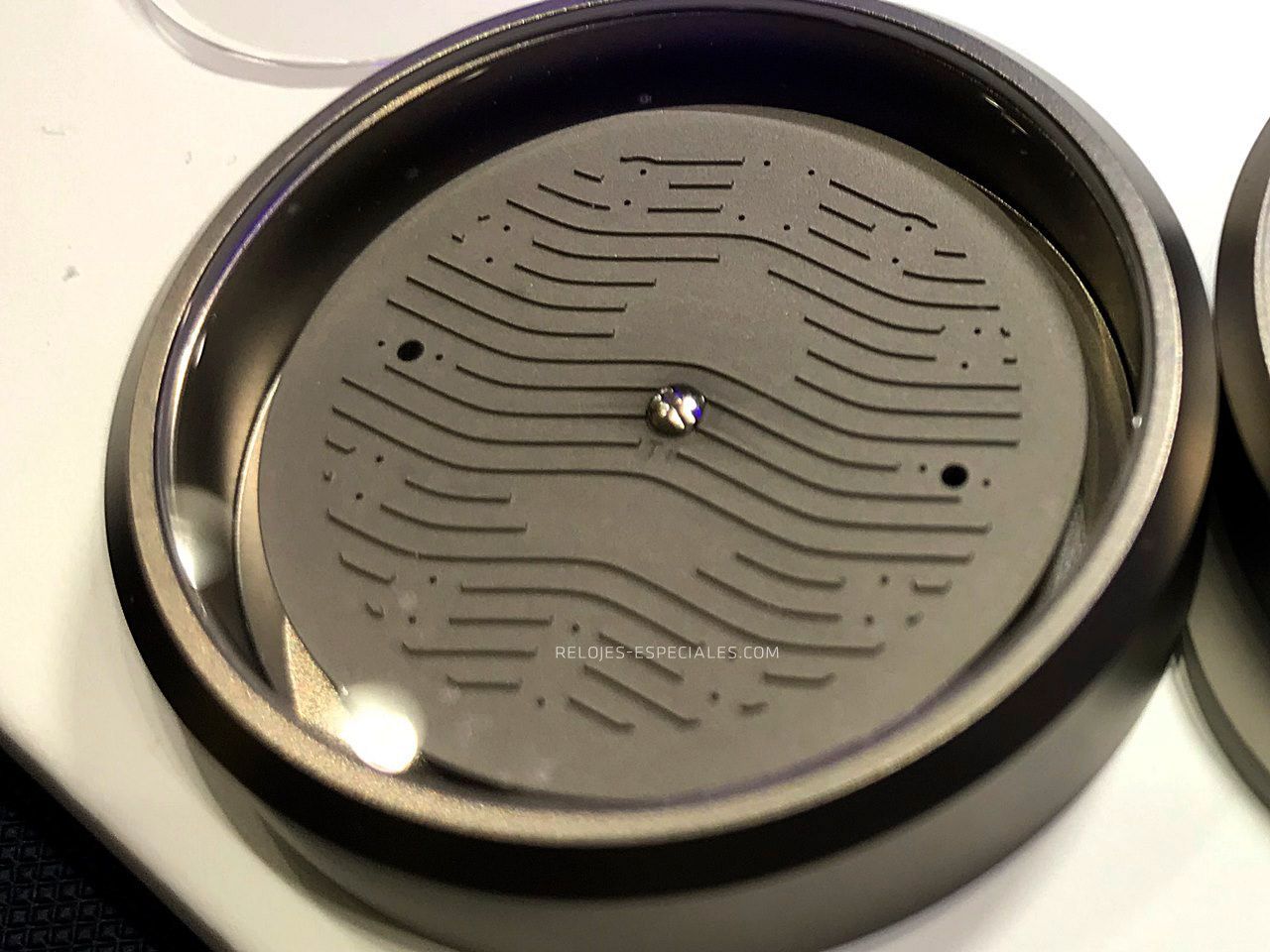
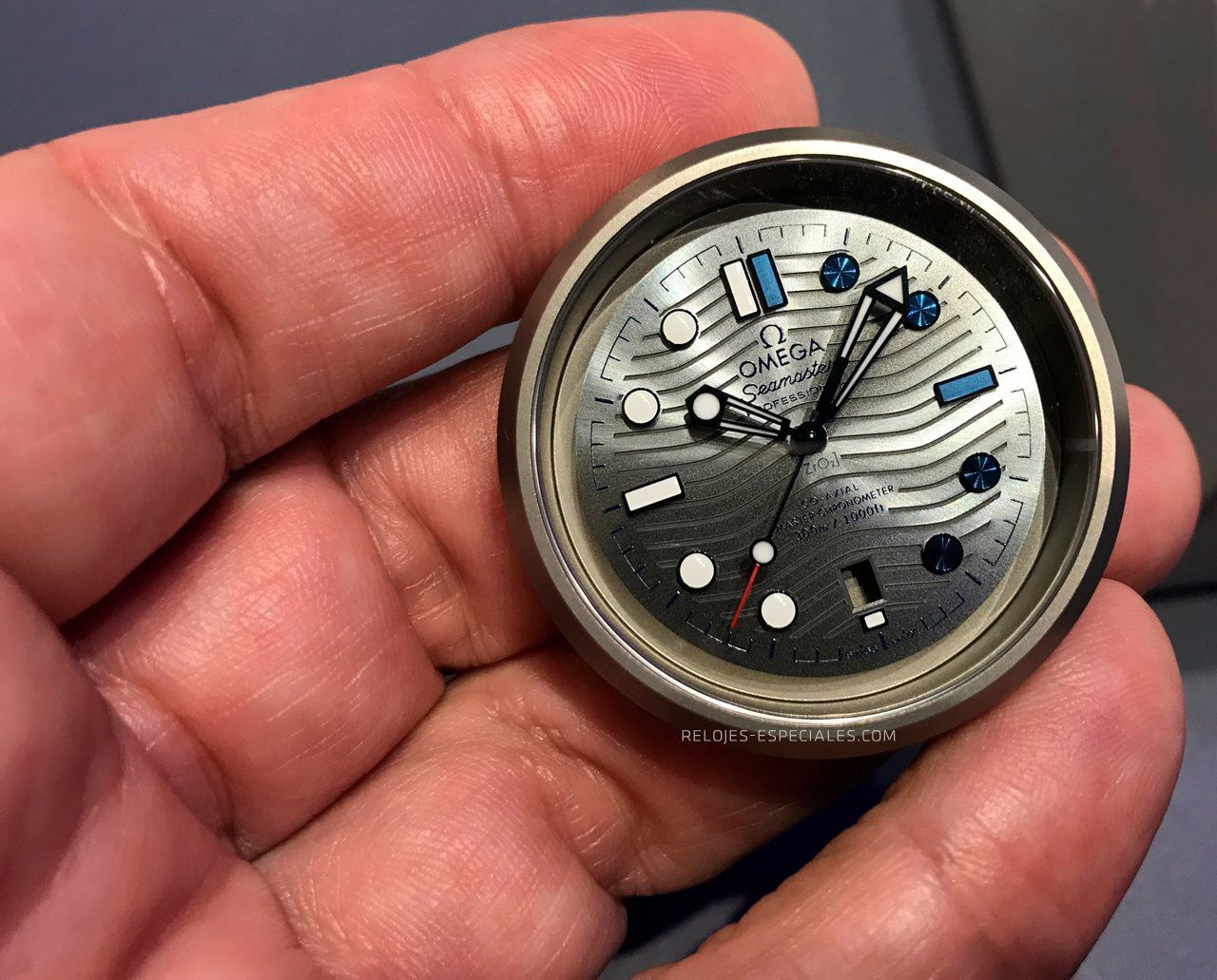
Or the spheres. Made on a steel or titanium disc, the characteristic waves are literally sculpted by laser, with the difference that in the steel ones they are in low relief (this is “plows” on the surface) while in the titanium series the entire surface is milled leaving only the waves, which are therefore in high relief. They will then be painted, polished and then the motifs will be stamped using a traditional rubber pad. The thing does not end here, because the indexes are missing: small containers or “glasses” placed by an ultra-precise machine that will be filled with Super Luminova by hand!, one by one. Yes, by hand. It sounds incredible, and that's why I asked the question three times, just before Maik started looking at me strangely... These indices, by the way, have grown in size compared to previous versions of the Seamaster 300m
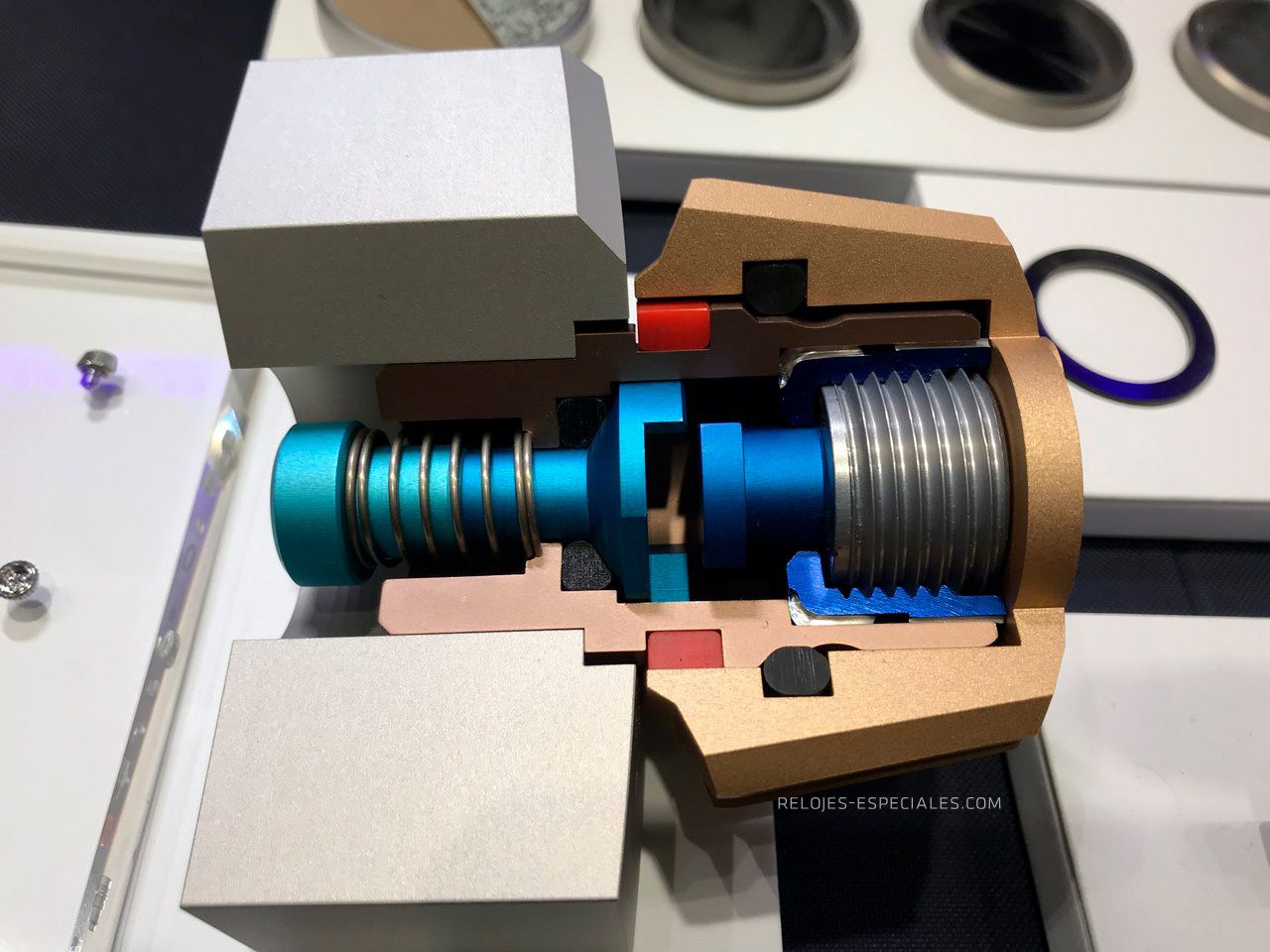
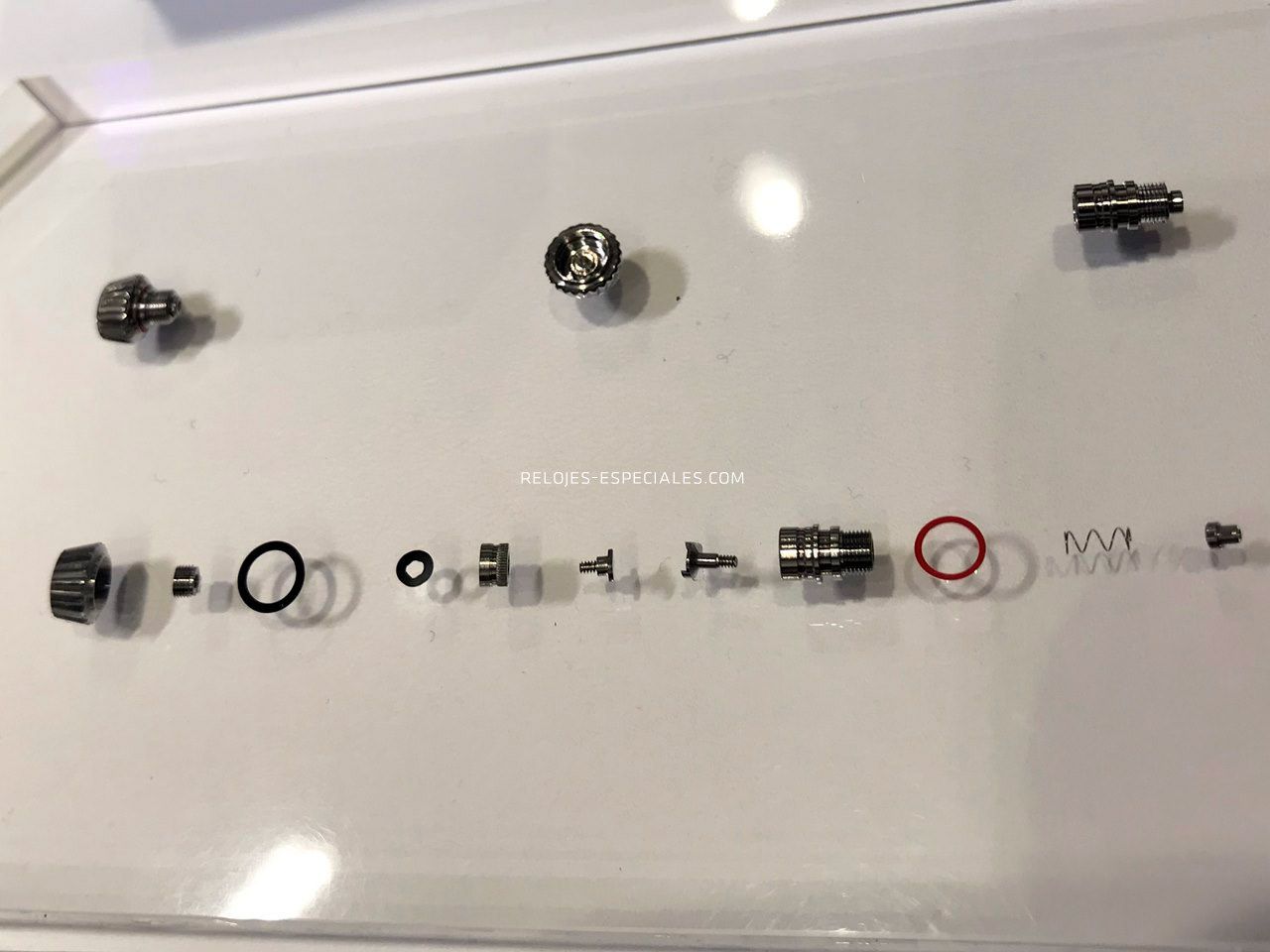
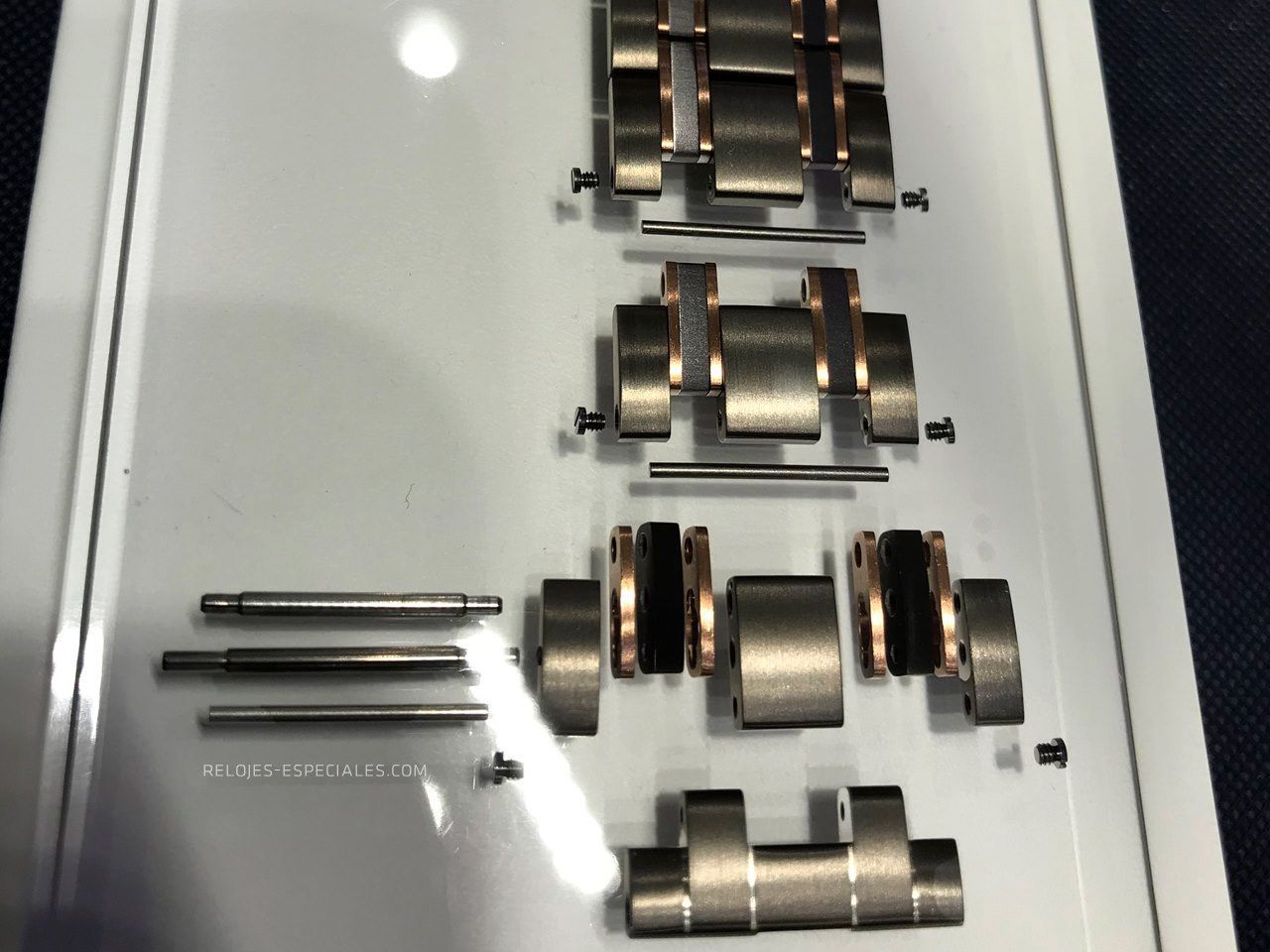
The titanium dial has been reserved for an old acquaintance of the unconditional followers of theOmega Seamaster Professional 300m: the combination of Tantalum and Sedna gold, limited to a series of 500 pieces and reminiscent of its predecessor also made of tantalum but then combined with yellow gold. Aesthetically, some modifications have been made to both the bracelet (the nine! components of each link have been better integrated) and the helium crown (which is used to decompress the watch after a prolonged immersion). The latter now has a conical shape instead of cylindrical, but inside it has been more sophisticated if possible. Anyone would think there could be so many pieces in there:
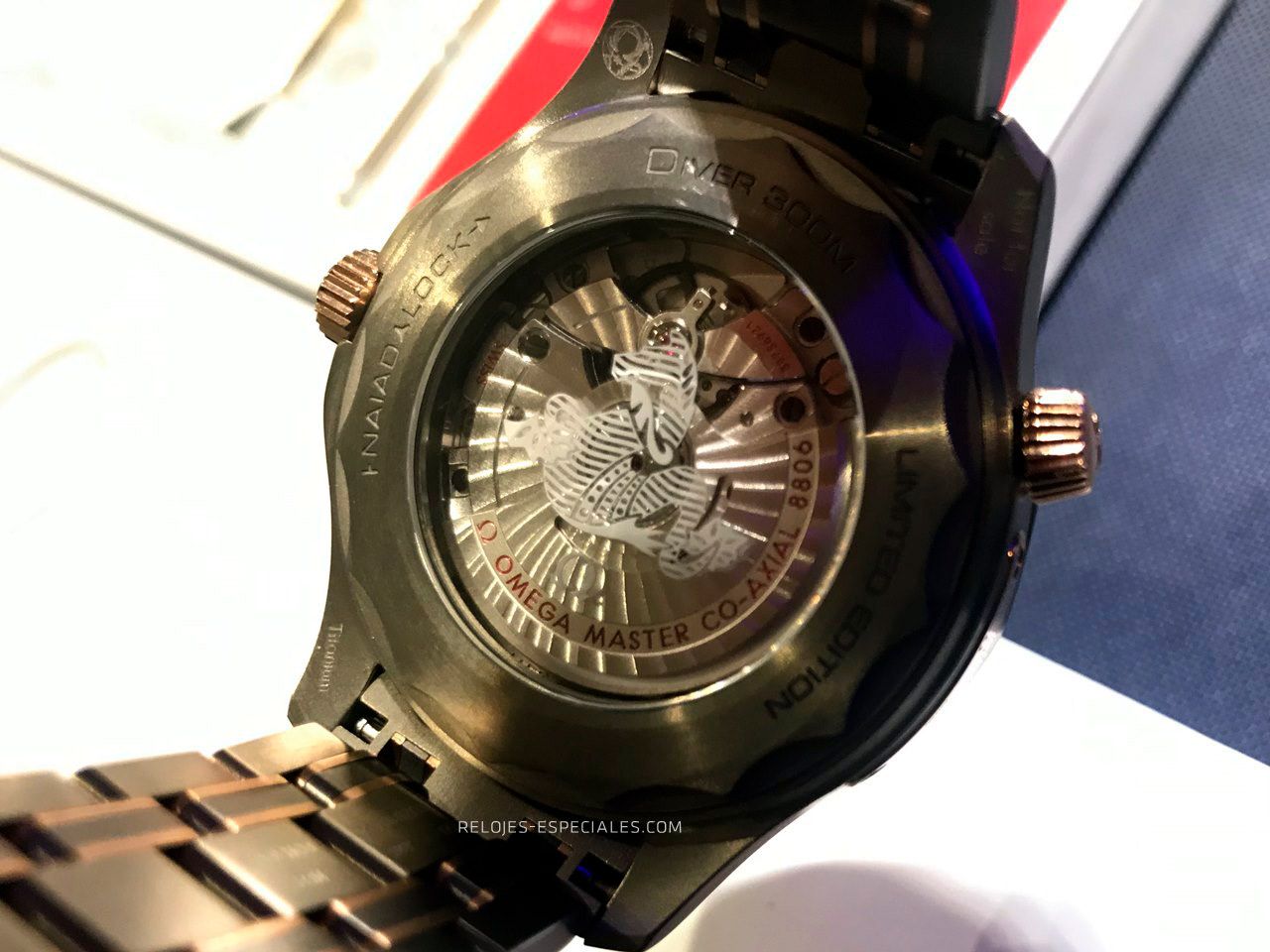
El Omega Seamaster Professional 300mIt is powered by the Omega Coaxial caliber 8806, COSC and METAS certified, which guarantees resistance to magnetic fields of 15,000 gauss (or 1.5 Tesla), more than enough for everyday use and even in technical environments. This is contributed to by its silicon spiral and the construction with non-ferrous materials, which makes the old soft iron case unnecessary and even allows for a visible back. Another day I tell what the Nayad System is.
I said at the beginning that I have never been a fan ofOmega Seamaster Professional 300m, but I have to admit that with this restyling Omega has come a little closer to my tastes, especially with the steel model with a gray dial and blue rubber, which at a price of €4,500 is in the first circle of interest.
It is the one that appears in this video:
Browse the Shop
 Acacia frida deluxe solid wood bed frame |
Bedroom bench |
Bed chest drawers |
Lingerie dresser |
Frame base |
Mirror with jewelry storage |
30 Bathroom Vanity |
Memory foam queen mattress |
Mattresses for back pain |
Nightstand set of 2 |
Grand Goldman Shop |
Civil Lawyer
Deutschland Trikot WM 2026
Acacia frida deluxe solid wood bed frame |
Bedroom bench |
Bed chest drawers |
Lingerie dresser |
Frame base |
Mirror with jewelry storage |
30 Bathroom Vanity |
Memory foam queen mattress |
Mattresses for back pain |
Nightstand set of 2 |
Grand Goldman Shop |
Civil Lawyer
Deutschland Trikot WM 2026










